
Bas Jacobs: Our tax system needs to be improved
Bas Jacobs: Our tax system needs to be improved
This interview was originally written in Dutch. This is an English translation.
The Dutch tax system is no longer adequate. There is a jumble of allowances, labour yields too little, and capital gains tax is a mess. Financial Investigator spoke with Prof. Bas Jacobs of VU University Amsterdam about how things could be improved. A hint: a universal basic income is not the way forward.
By Harry Geels
What is the current state of the Dutch tax system?
‘Based on the average tax burden, our income tax is progressive overall, except for a small group of wealthy individuals. We are talking about the richest 1% of Dutch people, who are able to optimise their tax situation and defer or postpone taxation for long periods of time. Tax avoidance by the very wealthy is undesirable. On the one hand, it undermines social cohesion, and on the other, it results in tax losses, which the government recovers from other groups.
Taxation on income from capital is a mess, with taxes on actual and fictitious returns, subsidies on capital accumulation in houses and pensions, and a box 2 that leaks like a sieve. We should move towards a new tax system in which income from capital – interest, rent, dividends and capital gains – and from savings, investments, businesses, real estate and pensions is taxed as symmetrically as possible. As far as possible, this should be done with a flat withholding tax at a single rate of around 25-35%, without exemptions. Ideally, we should also treat debt and equity equally, both at the corporate and private level. The latter step is complicated internationally and would need to be coordinated internationally.
I am expressly not advocating “limitarism”. Taxing income or assets above a certain threshold is nonsensical, because rates above that threshold go up to 100% and the income, assets or their owners will disappear. This is economically disastrous and actually leads to less, not more, tax revenue, ultimately leaving less for the state or people who need support.’
What about benefits?
‘Benefits and tax credits are also a problem. Poor tax design has created unnecessarily large poverty traps. Incidentally, the poverty trap itself is inevitable. People on low incomes receive a lot of support, which means their average tax burden is low. But if they start working more, they inevitably encounter high marginal rates – the rate on the last euro of income. High marginal rates may therefore be desirable if you want to do a lot to combat poverty. But it should not be the case that effective rates accumulate and go up to 100% or higher. Even more problematic, I think, is the enormous complexity. Not only in determining which benefits apply in which situation, but also in recovering them in the event of errors. Moreover, due to the complexity and the recovery machinery, a substantial proportion of the allowances are not claimed.’
How could we solve the problems with the allowances?
‘There are various possible solutions. We could make the things for which allowances are currently given – care, childcare and rent – cheaper. However, this would increase their use, which is economically inefficient. It is also possible to combine tax credits and benefits into a single payable tax credit or benefit, the amount of which is determined by the income of both partners, the household composition, assets, rent and age, and to pay this out via the Tax and Customs Administration as a provisional refund. Combining allowances and tax credits into a monthly tax credit amounts to a negative income tax. This would allow us to organise largely the same redistribution as we do now, but with far fewer levers in the tax system. Errors cannot be ruled out, but the complexity is greatly reduced and people are faced with a single phasing-in and phasing-out rate, so they know how much tax they are paying.’
Do you think the Dutch tax system is competitive compared to other countries?
‘Tax competition is generally harmful when you look at all countries together. Smaller countries, such as the Netherlands, Ireland or Luxembourg, can opportunistically use the tax system to attract companies or employees and thus serve their own interests. But in doing so, they cause damage to the countries from which those companies or people are leaving. The revenues for us are then smaller than the loss of revenues from other countries, otherwise people or companies would not leave. Tax competition between EU countries should therefore be prevented through greater coordination, because at present it mainly leads to a race to the bottom. The business climate must be based primarily on good preconditions, such as good infrastructure, good education and scientists, innovation-promoting policies, deep capital markets and a good competition policy.’
Does AI pose a threat to income equality and could a universal basic income (UBI) be a solution?
‘A UBI is nonsensical, because then everyone would receive an allowance, including all kinds of people who do not need it at all and do not receive it now, such as economics professors, people from the Quote 500 or non-working partners. A UBI is a haphazard distribution of public money. If the social minimum is not reduced, the UBI will require very high taxes, which will cause great damage to the economy and cause many women to stop working. If taxes do not rise, low-income earners will be hit hard, because the available resources will be shared with all kinds of people who currently receive nothing.
A universal basic income is a haphazard distribution of public money.
Incidentally, I have never understood the link between a UBI and social developments such as AI. Throughout history, there have always been developments – from steam engines to robots and AI – that doom-mongers claimed would lead to high unemployment. In the short term, you do indeed see friction in the labour market, but in the long term, unemployment does not increase. New technology leads to greater purchasing power and more employment in other sectors of the economy. Employment shifts, but does not decline. Karl Marx was wrong in thinking that new technologies would lead to the impoverishment of the proletariat. With AI, I can well imagine that in the short term, it will affect the higher educated relatively more than the lower educated, because much office work can be automated.’
What do you think of the idea of pricing (negative and/or positive) externalities through the tax system?
‘Many economists are passionate advocates of pricing CO₂ damage. This way, private interests no longer clash with social interests and the market itself will come up with the most efficient solution to the climate problem. However, there is a risk of displacement effects if we do this unilaterally. There are two ways to solve this: international coordination or fiscal border adjustments. Fortunately, at EU level, we have succeeded in pricing CO₂ through the emissions trading system (EU ETS), and this can be expanded. But even as an individual country, you can price climate damage without displacement effects by exempting exports and taxing imports.
Politically, pricing is often seen as a tax increase, which is a sensitive issue. But the aim here is to achieve the right price, not to levy more tax. All revenues must therefore be returned. The aim is to change behaviour, not to make people poorer. Correct pricing almost always works better than subsidies, because subsidies typically lead to much more waste of public money.’
Should a tax system – from a philosophical point of view – tackle/resolve inequality? And to what extent? Wouldn't you rather tackle the causes of inequality in the first place, rather than using taxes?
‘A rule of thumb for optimal redistribution policy is that it is almost always better to use the tax and benefit system to reduce inequality after the fact, rather than to reduce inequality before taxation, for example through minimum wages, price support or rent regulation. This almost always causes more economic damage than redistribution through taxes, allowances or benefits, because the market mechanism is completely eliminated when prices are fixed.
Market failure can increase income inequality, as in the case of tech companies with significant market power or financial institutions that are too big to fail, as we saw during the financial crisis. This market failure leads to “unearned income”: income that is not the reward for economic efforts, but for exploiting market power or government guarantees. It is better to tackle this market failure directly than to make taxation more progressive. Competition policy should address market power, and the “too big to fail” problem of banks can be solved by much higher capital requirements. But if we do not fundamentally reform the system, it is desirable to tax unearned income and windfalls through the tax system.’
Have you learned any other lessons in your life? Has your opinion on certain topics changed as a result of advancing insights?
‘Until 2008, I was a strongly neoclassical-oriented economist, but the financial crisis in particular has made me much more Keynesian. More generally, I think I have gained a greater appreciation for the complexity of the economy.
Perhaps most important are the lessons in humility that we as economists learn again and again with every major crisis. During the credit crisis, we saw how rotten and intertwined parts of the banking and rating systems were. It was only during the euro crisis that we discovered the systemic flaws in the eurozone. It was only during the COVID crisis that we really understood how strongly global production chains are intertwined. And it was only during the Ukraine crisis that we realised how dependent the world still is on fossil fuels and that our economies are still far from sustainable. A new major crisis can never be ruled out. It could arise in the monetary system at any moment, for example because the dollar has to relinquish its dominant position due to mismanagement in the US or because hidden risks in the crypto world come to the surface.
I believe that economics education currently focuses far too much on econometric techniques and mathematical models. Too many economists graduate without any knowledge of, for example, economic history or how certain institutions work in practice, such as the labour market, the tax system, the financial sector, pension funds, and so on.
I have always found additional roles to be enriching, as have guest lectures and media appearances. On the one hand, they give you more practical knowledge, and on the other, they prevent academic tunnel vision.’
What are your professional and personal goals for the “second half” of your life?
‘I have always had the ambition to operate at the intersection of science and policy and thus influence economic policy. That is why I studied economics. And I still have that ambition. Unfortunately, however, I have to conclude that in recent decades, politics has attached less and less value to substantive, scientific expertise. Voters mainly reward the words and not the deeds of politicians. The political battle for image has become truly all-consuming. Spin doctors and focus groups are much more important to many politicians than scientists with their policy proposals. And in almost all political parties – from left to right – we are now seeing a radicalisation of positions. The combination of less substance and more radicalisation ultimately leads to much worse economic policy, and we all suffer as a result.’
|
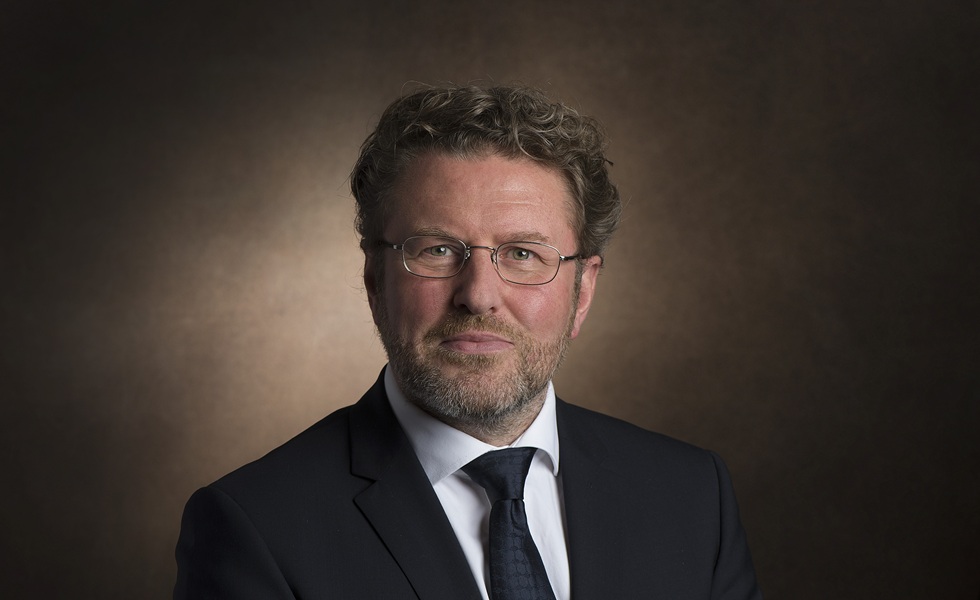
Prof. Dr Bas Jacobs Prof. Dr Bas Jacobs is Professor of Economics and Public Finance at the School of Business and Economics at VU University Amsterdam. His research is at the intersection of public finance, taxation, macroeconomics and welfare economics. He is a columnist for EW, where he also has a podcast. He previously worked at Erasmus University Rotterdam and was a consultant for the IMF and the World Bank. He is a regular guest on television and radio. |
Read the original interview in Financial Investigator magazine
Share this post!
Related posts
-
 Read more about "Schroders: Hoe groot is de druk van AI op de arbeidsmarkt?"
Schroders: Hoe groot is de druk van AI op de arbeidsmarkt?
-
 Read more about "Payden & Rygel: A productivity puzzle"
Payden & Rygel: A productivity puzzle
-
 Read more about "RBC BlueBay AM: ‘Ghost GDP’ maskeert sluimerend AI-risico"
RBC BlueBay AM: ‘Ghost GDP’ maskeert sluimerend AI-risico
-
 Read more about "LFDE: AI en energie, een politiek vraagstuk"
LFDE: AI en energie, een politiek vraagstuk
-
 Read more about "Han Dieperink: Jobless growth"
Han Dieperink: Jobless growth
-
Read more about "Crédit Mutuel AM: The beginning of a white collar recession driven by AI?"
Crédit Mutuel AM: The beginning of a white collar recession driven by AI?
-
Read more about "Principal AM: De impact van AI op personeelsbezetting"
Principal AM: De impact van AI op personeelsbezetting
-
 Read more about "Han Dieperink: It won’t be long before we're all French"
Han Dieperink: It won’t be long before we're all French
-
 Read more about "Harry Geels: Tackling ageism with a negative income tax"
Harry Geels: Tackling ageism with a negative income tax
-
 Read more about "LFDE: Markten overschatten politieke risico’s en Frans besmettingsgevaar"
LFDE: Markten overschatten politieke risico’s en Frans besmettingsgevaar