Faster, cheaper and immediate trust (roundtable “AI & Blockchain” part 3)
Faster, cheaper and immediate trust (roundtable “AI & Blockchain” part 3)
This report was originally written in Dutch. This is an English translation.
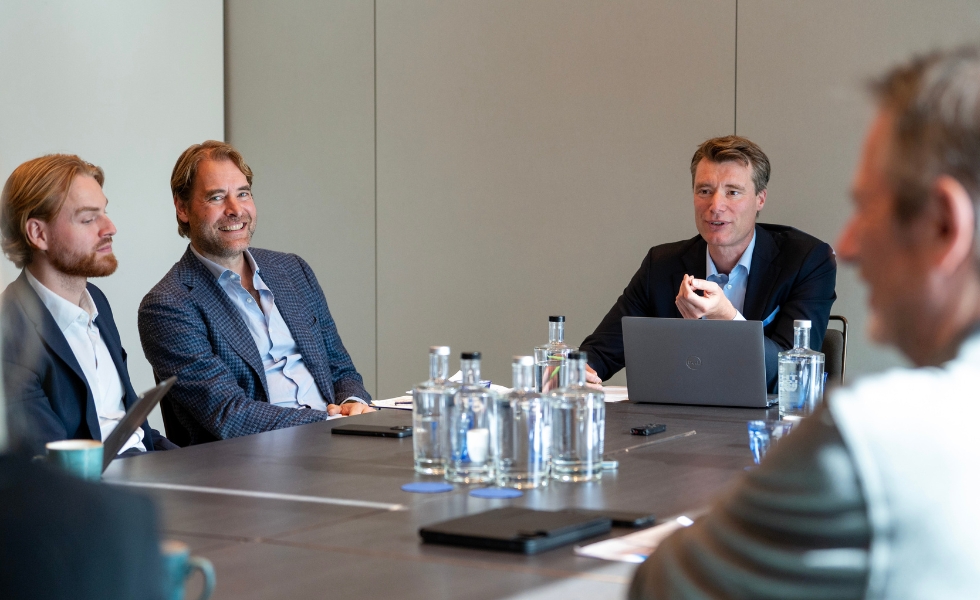
Part 3 of the roundtable report “AI & Blockchain” focuses on blockchain as a new basic infrastructure. The participants discuss how programmable money, real-time settlement and built-in trust remove friction from the system and why digital assets and tokenised investments are gradually finding their way into institutional portfolios.
By Hans Amesz
This is part 3 of the report. You can read part 1 here, part 2 here, and part 4 here.
|
CHAIR Ralph Wessels, Chief Investment Strategist, ABN AMRO Bank
PARTICIPANTS Han Dieperink, Auréus Ruud Hendriks, Startupbootcamp & The Innoleaps Group Patrick Lemmens, Robeco Axel Maier, MDOTM Stefan Singor, a.s.r. vermogensbeheer Ruud Smets, Theta Blockchain Ventures Pim Swart, Maven 11 Frans Verhaar, bfinance |
What problem does blockchain solve that the existing infrastructure cannot?
Dieperink: ‘It can modernise wealth management administration. We are still using legacy systems and settlement sometimes takes days. The transition is slow, but the potential is huge. One example is cross-border payments. In the past, I tried to transfer a few million euros for a client to purchase a yacht in New Zealand: impossible through traditional channels. With crypto, this can be done in a matter of minutes.’
Swart: ‘Exactly. This also has positive effects on financial inclusion. In sub-Saharan Africa, for example, people often send money across national borders to support their families. Thanks to crypto, this can now be done instantly, cheaply and 24/7, without the sky-high costs of traditional payment processors.’
Smets: ‘Today, trust is expensive because it depends on central intermediaries. That is exactly what blockchain solves: trust is built into the infrastructure itself, through open-source code, cryptography and financial incentives. If AI makes intelligence a commodity, then blockchain makes trust a commodity. And that fundamentally changes how we do business in the digital age.’
If AI makes intelligence a commodity, then blockchain makes trust a commodity.
Swart: ‘Blockchains turn money into software. They make financial systems programmable, controllable and transparent, and reduce the cost of trust by removing intermediaries who skim off value. It creates a system that is fully verifiable in real time, where trust comes from perfectly reliable code rather than an imperfect counterparty.’
Are digital assets investable? And do they offer sufficient liquidity?
Lemmens: ‘Absolutely. The opportunities are growing rapidly. Regulation has been the tipping point here: financial institutions are now much more open to it because the rules are clearer. Around 8% of our fintech fund is invested in digital assets. That share is growing with the arrival of new IPOs, such as Circle, Figure and Bullish. Valuations can fluctuate sharply – Circle's IPO rose 300% within a few weeks – but the market is maturing.’
Verhaar: ‘For most pension funds, digital assets are not yet directly investable. However, a survey we conducted among institutional investors shows that almost everyone wants to allocate more in the next five to ten years, especially in the US. Today, exposure is often indirect, for example through listed companies with Bitcoin on their balance sheets.’
Lemmens: ‘Pension funds are cautious and strongly focused on fixed income. Nevertheless, tokenisation is already taking place there too, for example in money market funds, and this will spread further. In the long term, investors may not even notice that their investments have been tokenised, because it will simply become the most efficient structure.’
Verhaar: ‘That's why family offices are leading the way here. Former entrepreneurs are more willing to experiment a little, while institutional investors are waiting for the market to become mainstream.’
Hendriks: ‘I am a shareholder in Amdax, the first crypto asset manager in the Netherlands to be licensed by the AFM. The company offers a Bitcoin Treasury strategy that allows anyone to gain exposure to Bitcoin via a regulated share on Euronext. It is not tokenised, which means that investors can easily participate even without any knowledge of crypto.’
When managers say “we use neural networks” or “random forests”, it's like saying “I cook with salt”.
Smets: ‘What makes blockchain unique is that investors can invest directly in the infrastructure itself, in the networks, and not just in the companies that build on it. The value ends up with the network itself, via tokens. This is a new paradigm that takes time for investors to understand. The US is leading the way in this, and American endowments, for example, are already investing heavily in it.’
|
Ralph Wessels Ralph Wessels is Chief Investment Strategy at ABN AMRO, where he has been working since 2011. He is jointly responsible for investment policy and communicating this to clients. He regularly shares his insights via RTL Z, the FD and BNR Nieuwsradio. He has been actively following developments in the crypto world since 2017. He started his career at Robeco and studied Business Economics at Erasmus University Rotterdam. |
|
Han Dieperink Han Dieperink is an experienced investment professional with over 30 years of expertise in asset management, as Chief Investment Officer at Auréus (2020-present), Rabobank (2009-2019) and Schretlen & Co (1995-2009). He is also the owner of HD Capital & Advisory, a columnist, and an advisor to various financial organisations. |
|
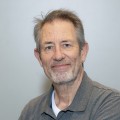
Ruud Hendriks Ruud Hendriks is a versatile entrepreneur with a rich background in start-ups, innovation and media. He holds important positions within Startupbootcamp and the Innoleaps Group, has a wide range of advisory positions and gives many international speeches, including his annual forecast for the next 18 months in the tech industry: The State of Tech. |
|
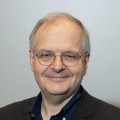
Patrick Lemmens Patrick Lemmens is Lead Portfolio Manager and a member of Robeco's Thematic Investing team, where he has worked since 2008. He focuses on financial institutions and fintech. He began his career in the investment world in 1993. Lemmens holds a Master's degree in Business Economics from Erasmus University Rotterdam and is a certified European financial analyst. |
|
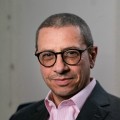
Axel Maier Axel Maier is Partner and Global Head of Business Development at MDOTM Ltd, a provider of AI-powered investment solutions. With over 30 years of experience in asset management, he has held senior positions at Macquarie Investment Management and Wellington Management, among others. He has extensive board experience in various markets and expertise in business development, team building and acquisitions. |
|
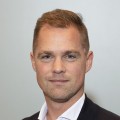
Stefan Singor Stefan Singor is a quantitative investment strategist with a PhD in Financial Mathematics and 15 years of experience in ALM for insurers. He specialises in strategic asset allocation, hedging strategies and scenario analysis, among other things. Within the Innovation Lab of a.s.r. asset management, he has senior responsibility for applying AI and data science to improve investment decisions. |
|
Ruud Smets Ruud Smets is Managing Partner and CIO at Theta Capital Management, an investor in blockchain venture capital. With master's degrees in information technology and investment theory, Smets combines financial insight with blockchain expertise. |
|
Pim Swart Pim Swart is an Associate Partner at venture capital fund and asset manager Maven 11. He has been active in the crypto sector since 2016. In 2020, he researched how arbitrage and market microstructure develop within blockchain networks during his MSc in Science and Business Management at Utrecht University. At Maven 11, he focuses on innovative investments in digital financial infrastructure. |
|
Frans Verhaar Frans Verhaar studied Business Administration and has been working at bfinance since 2007, an international consultancy firm specialising in investment issues for institutional investors. Verhaar has extensive experience in areas such as alternative investments, financial risk management, investment analysis and financial data science. |
Attachments
Share this post!
Related posts
-
 Read more about "etoro: SpaceX verrast met miljardenwinst, maar Musk legt de lat nog veel hoger"
etoro: SpaceX verrast met miljardenwinst, maar Musk legt de lat nog veel hoger
-
 Read more about "Nickel: AI is central to increasing digital asset allocations"
Nickel: AI is central to increasing digital asset allocations
-
 Read more about "Janus Henderson: Wereldwijde aandeleninkopen stijgen dankzij technologie en AI"
Janus Henderson: Wereldwijde aandeleninkopen stijgen dankzij technologie en AI
-
 Read more about "etoro: Energiesector verslaat de AI-rally"
etoro: Energiesector verslaat de AI-rally
-
 Read more about "Janus Henderson: Techreuzen voeren AI-investeringen verder op"
Janus Henderson: Techreuzen voeren AI-investeringen verder op
-
 Read more about "DWS: Optimisme over halfgeleiders grotendeels ingeprijsd"
DWS: Optimisme over halfgeleiders grotendeels ingeprijsd
-
 Read more about "CEIBS Forum: Europe and China must enter 'constructive engagement' on tech"
CEIBS Forum: Europe and China must enter 'constructive engagement' on tech
-
 Read more about "RS2: Could AI cybersecurity tools redefine control over banking infrastructure?"
RS2: Could AI cybersecurity tools redefine control over banking infrastructure?
-
 Read more about "eToro: Waarom de cijfers van Broadcom eigenlijk over Google gaan"
eToro: Waarom de cijfers van Broadcom eigenlijk over Google gaan
-
 Read more about "LFDE: Halfgeleiders, de geruisloze comeback van Europa"
LFDE: Halfgeleiders, de geruisloze comeback van Europa