
Decentralised AI and the role of humans (roundtable ‘AI & Blockchain’ part 4)
Decentralised AI and the role of humans (roundtable ‘AI & Blockchain’ part 4)
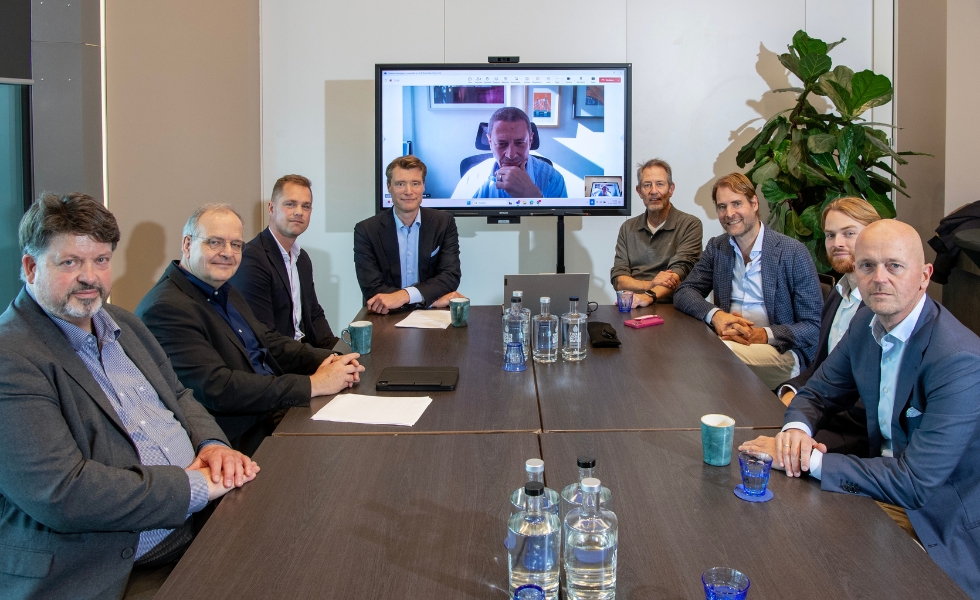
This report was originally written in Dutch. This is an English translation.
In part 4 of the roundtable report “AI & Blockchain”, participants explore how crypto and decentralised networks can challenge the power of Big Tech. They discuss new revenue models, distinguishing between hype and genuine innovation, and the question of how much room there is left for human judgement in an AI-driven investment world.
By Hans Amesz
This is part 4 of the report. You can read part 1 here, part 2 here and part 3 here.
|
CHAIR Ralph Wessels, Chief Investment Strategist, ABN AMRO Bank
PARTICIPANTS Han Dieperink, Auréus Ruud Hendriks, Startupbootcamp & The Innoleaps Group Patrick Lemmens, Robeco Axel Maier, MDOTM Stefan Singor, a.s.r. vermogensbeheer Ruud Smets, Theta Blockchain Ventures Pim Swart, Maven 11 Frans Verhaar, bfinance |
Can crypto help break the market power of big AI players like OpenAI, Google and Microsoft?
Swart: ‘Big Tech dominates because it controls three scarce resources: talent, data, and hardware. They pay the highest salaries, have access to proprietary data through their positions as market leaders, and have a technological monopoly on hardware and data centre infrastructure. Crypto can help break this concentration by building a user-owned, bottom-up, and incentivised system. Networks in which users contribute their knowledge, data, and hardware can create a distributed alternative. Tokens act as a bootstrapping mechanism: they coordinate contributions, creating an incentive-driven, bottom-up infrastructure owned by the users themselves rather than a few hyperscalers.’
Dieperink: ‘That sounds like the University of California's SETI@home programme, which searched for extraterrestrial life using millions of home computers.’
Swart: ‘Those early academic experiments proved the concept, but current technology also makes it commercially viable. Large research teams, even at Google and Meta, are now investigating decentralised AI and distributed training.’
Dieperink: ‘But doesn't bandwidth remain a bottleneck?’
Swart: ‘It used to be, but researchers are now solving this with various forms of parallelisation. In a few years” time, those kinds of problems will probably have disappeared.’
Verhaar: ‘Another important point of attention is the energy consumption of computer networks. Ideally, systems should run in locations where electricity is cheap and widely available and comes from renewable sources, rather than on home computers in the centre of Amsterdam. This brings us straight to the ESG domain.’
Swart: ‘Bitcoin mining already works this way. It keeps moving to places where energy is cheapest: from Kazakhstan to Africa.’
Smets: ‘A good example is Grass: a network that builds AI datasets through crowdsourced data scraping. Participants contribute from home, earn ownership rights, and each dataset has a cryptographic origin. Grass raised £15 million and now produces 2,000 terabytes of data per day, which I believe is the most in the world after Google. The best way to invest in AI is through blockchain infrastructure. That's what AI ultimately runs on.’
What investment or revenue models do you see emerging?
Maier: ‘From a business perspective, it's all about supply and demand. With traditional search engines, users 'pay” through advertisements and data. With AI models such as ChatGPT, people are willing to pay directly for quality and privacy. The value depends on what the model offers and how unique it is.’
Nevertheless, human contact remains essential. Doubt, debate, investment principles: they are all part of responsible decision-making.
Lemmens: ‘The money flowing into AI and the high valuations sometimes surprise me. It reminds me of the early 2000s: the dotcom bubble. The predictions about user growth were correct, but the valuations were not. That could happen again now. That is why we focus on projects that really build infrastructure and bring about sustainable change. Projects without revenue require a lot of imagination about their future value. So we have to remain critical. Much is still happening in the early venture capital phase.’
Hendriks: ‘Revenues are already rising at OpenAI, Claude and X. Their valuations are high, but they are not yet listed on the stock exchange. Apple is lagging behind, but with its huge iPhone base, it has a good chance of making a comeback once it takes AI seriously.’
Dieperink: ‘It's similar to the telecom boom of the 1990s: most companies disappeared, but the technology remained. The difference now is that the current players have a lot of cash in the bank. In 2000, there was hype without revenue, but now there are real products and cash flows. Nevertheless, if interest rates fall again, a new wave of speculation could arise, perhaps even bigger than the last one.’
How can investors assess claims about AI and blockchain, and how do you distinguish real innovation from marketing?
Verhaar: ‘More and more managers say they use AI. Our job is to verify whether that is really the case or just marketing. We ask: is the alpha really new, or just repackaged? Is the strategy scalable? Is AI at the heart of the process or an addition? How are models validated and performance explained? It's not about whether someone uses AI, but how. That's where the real innovation lies.’
Maier: ‘Exactly. Many companies say ‘we use AI’, but often that is superficial. The real question is: does it fit logically within the investment process? Is it explainable, scalable and compliant, and partly regulated? Those are the criteria that matter.’
Verhaar: ‘And suppose we could record every model decision on the blockchain: verifiable, controllable and transparent. That’s where these technologies really come together, and then the possibilities are endless.’
Maier: ‘Yes, but buzzwords mean nothing on their own. When managers say ‘we use neural networks’ or ‘random forests’, it’s like saying ‘I cook with salt’. It says nothing about the quality of the dish, or whether they can cook well. It’s about how they apply it.’
Verhaar: ‘In essence, machine learning is a refinement of what investors have always done: looking for connections in data. Where regression analysis reveals linear relationships, AI can find the subtle patterns that fall outside of that.’
The marketplace of ideas is flourishing, entrepreneurs are competing, the best ideas win, and everyone benefits.
Singor: ‘The growing use of AI will change the supply and demand dynamics for qualified personnel. There will be more demand for people with AI skills, but also for tools that improve portfolio management. Within our organisation, we use AI to support investment decisions, not to replace them. Human judgement remains crucial. Operationally, AI increases efficiency – especially through generative and agentic AI tools – but its long-term value has yet to be proven.’
Maier: ‘AI is not about replacing people, but about helping them do their jobs better. It takes over repetitive tasks so that people can focus on what really matters. For example, our automated reporting gives portfolio managers more time to concentrate during volatile markets, instead of having to constantly answer customer questions.’
Smets: ‘For me, blockchain unlocks the real internet economy, globally, frictionlessly and 24/7. Combined with AI, it redefines how human-machine collaboration works.’
Swart: ‘I understand that human control remains important, but people are fallible. In the long run, these systems will surpass us. They are verifiable, programmable and constantly learning. Their decision-making, for example in portfolio allocation, will be superior to what humans can ever do, even with the best tools.’
Dieperink: ‘That shift is already visible. In the US, companies are hiring fewer people under the age of 24 because AI is taking over a lot of analytical entry-level work.’
Verhaar: ‘That's right, we're seeing that in investment teams too. Junior roles are disappearing, which raises the question: who will form the new generation of portfolio managers if those roles no longer exist?’
Hendriks: ‘I'll be blunt: most asset managers will eventually disappear, just like taxi drivers or lift operators. Technology is taking over. I have managed my own portfolio for years without an advisor, and I have no qualms about getting on a plane without a human pilot, who may also have a bad day. Automation will do better, and the sector will have to accept that.’
Singor: ‘Nevertheless, human contact remains essential. Doubt, debate, investment principles: they are all part of responsible decision-making.’
Lemmens: ‘Tokenisation and digital assets will become essential to the financial system of the future. But human roles will not disappear overnight. People have to build, manage and interpret these systems. If companies stop hiring young talent, they will lose their future leaders. Consolidation is coming, for sure, but not extinction.’
Verhaar: ‘These are exciting times. My children will have jobs that don't exist yet, and that's fine. The marketplace of ideas is flourishing, entrepreneurs are competing, the best ideas are winning, and everyone is benefiting. If investors can capture a share of that, the potential is enormous.’
|
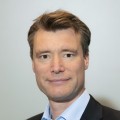
Ralph Wessels Ralph Wessels is Chief Investment Strategy at ABN AMRO, where he has been working since 2011. He is jointly responsible for investment policy and communicating this to clients. He regularly shares his insights via RTL Z, the FD and BNR Nieuwsradio. He has been actively following developments in the crypto world since 2017. He started his career at Robeco and studied Business Economics at Erasmus University Rotterdam. |
|
Han Dieperink Han Dieperink is an experienced investment professional with over 30 years of expertise in asset management, as Chief Investment Officer at Auréus (2020-present), Rabobank (2009-2019) and Schretlen & Co (1995-2009). He is also the owner of HD Capital & Advisory, a columnist, and an advisor to various financial organisations. |

|
Ruud Hendriks Ruud Hendriks is a versatile entrepreneur with a rich background in start-ups, innovation and media. He holds important positions within Startupbootcamp and the Innoleaps Group, has a wide range of advisory positions and gives many international speeches, including his annual forecast for the next 18 months in the tech industry: The State of Tech. |

|
Patrick Lemmens Patrick Lemmens is Lead Portfolio Manager and a member of Robeco's Thematic Investing team, where he has worked since 2008. He focuses on financial institutions and fintech. He began his career in the investment world in 1993. Lemmens holds a Master's degree in Business Economics from Erasmus University Rotterdam and is a certified European financial analyst. |

|
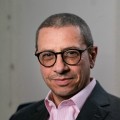
Axel Maier Axel Maier is Partner and Global Head of Business Development at MDOTM Ltd, a provider of AI-powered investment solutions. With over 30 years of experience in asset management, he has held senior positions at Macquarie Investment Management and Wellington Management, among others. He has extensive board experience in various markets and expertise in business development, team building and acquisitions. |
|
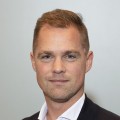
Stefan Singor Stefan Singor is a quantitative investment strategist with a PhD in Financial Mathematics and 15 years of experience in ALM for insurers. He specialises in strategic asset allocation, hedging strategies and scenario analysis, among other things. Within the Innovation Lab of a.s.r. asset management, he has senior responsibility for applying AI and data science to improve investment decisions. |
|
Ruud Smets Ruud Smets is Managing Partner and CIO at Theta Capital Management, an investor in blockchain venture capital. With master's degrees in information technology and investment theory, Smets combines financial insight with blockchain expertise. |
|
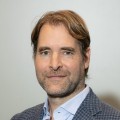
Pim Swart Pim Swart is an Associate Partner at venture capital fund and asset manager Maven 11. He has been active in the crypto sector since 2016. In 2020, he researched how arbitrage and market microstructure develop within blockchain networks during his MSc in Science and Business Management at Utrecht University. At Maven 11, he focuses on innovative investments in digital financial infrastructure. |

|
Frans Verhaar Frans Verhaar studied Business Administration and has been working at bfinance since 2007, an international consultancy firm specialising in investment issues for institutional investors. Verhaar has extensive experience in areas such as alternative investments, financial risk management, investment analysis and financial data science. |

Attachments
Share this post!
Related posts
-
 Read more about "etoro: SpaceX verrast met miljardenwinst, maar Musk legt de lat nog veel hoger"
etoro: SpaceX verrast met miljardenwinst, maar Musk legt de lat nog veel hoger
-
 Read more about "Nickel: AI is central to increasing digital asset allocations"
Nickel: AI is central to increasing digital asset allocations
-
 Read more about "Janus Henderson: Wereldwijde aandeleninkopen stijgen dankzij technologie en AI"
Janus Henderson: Wereldwijde aandeleninkopen stijgen dankzij technologie en AI
-
 Read more about "etoro: Energiesector verslaat de AI-rally"
etoro: Energiesector verslaat de AI-rally
-
 Read more about "Janus Henderson: Techreuzen voeren AI-investeringen verder op"
Janus Henderson: Techreuzen voeren AI-investeringen verder op
-
 Read more about "DWS: Optimisme over halfgeleiders grotendeels ingeprijsd"
DWS: Optimisme over halfgeleiders grotendeels ingeprijsd
-
 Read more about "CEIBS Forum: Europe and China must enter 'constructive engagement' on tech"
CEIBS Forum: Europe and China must enter 'constructive engagement' on tech
-
 Read more about "RS2: Could AI cybersecurity tools redefine control over banking infrastructure?"
RS2: Could AI cybersecurity tools redefine control over banking infrastructure?
-
 Read more about "eToro: Waarom de cijfers van Broadcom eigenlijk over Google gaan"
eToro: Waarom de cijfers van Broadcom eigenlijk over Google gaan
-
 Read more about "LFDE: Halfgeleiders, de geruisloze comeback van Europa"
LFDE: Halfgeleiders, de geruisloze comeback van Europa