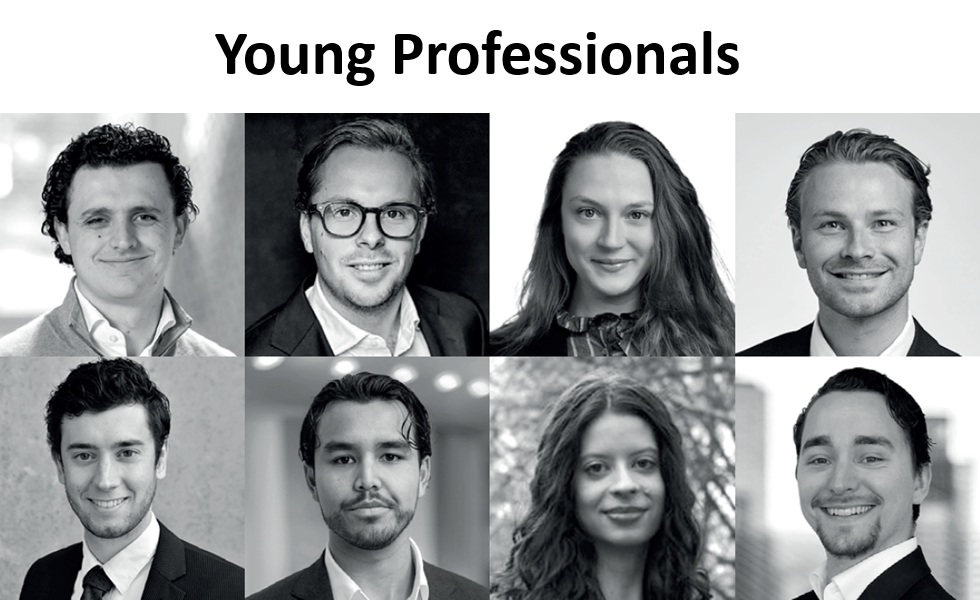
Young Professionals: Investing in a world without certainties
Young Professionals: Investing in a world without certainties
This special was originally written in Dutch. This is an English translation.
The world in which investors operate has become more complex and unpredictable in a short period of time. Geopolitical tensions, technological developments and structural transitions are increasingly setting the agenda. Financial Investigator explores how young professionals experience these developments in their daily work.
By Daan Nijssen
Whereas the financial sector could long rely on relatively stable assumptions about globalisation and market dynamics, that certainty has now disappeared. Conflicts, trade restrictions and political shifts have a direct impact on portfolios, risk models and allocation choices. At the same time, the question remains as to what extent geopolitical shocks actually cause structural damage or are absorbed by underlying economic forces. For pension funds and asset managers, the focus is therefore shifting to exposure, liquidity and resilience.
Financial Investigator spoke with young professionals from a variety of disciplines within the sector: from public and private markets to real estate, quantitative analysis and scenario research. We asked them how international developments are affecting their work, which risks require extra attention and where they see opportunities. This is not only about geopolitics, but also about the impact of technology and AI, changing regulations and the growing interdependence of climate and financial risks.
What is striking is that this generation sees the playing field changing rapidly. AI is not an abstract vision of the future, but a factor that is reshaping roles and requiring new skills. At the same time, there is a growing awareness that traditional models alone are no longer sufficient in a world of converging crises. Scenarios, narratives and a total portfolio approach are gaining in importance.
The contributions in this special edition show how young professionals navigate between uncertainty and ambition. Their perspectives not only offer a snapshot of the profession today, but also valuable insights into how the sector is preparing for tomorrow.
|
Daniël Asselbergs Investment & Portfolio Management Trainee, APG Asset Management
Which geopolitically driven themes and risks do you think deserve extra attention in pension and asset management? ‘Historically, geopolitical crises have not usually had a negative impact on long-term returns. In the past, markets have usually been able to absorb geopolitical shocks. Underlying drivers such as economic growth, profitability and interest rate policy ultimately drive the market. As long as those fundamentals remain intact, the market remains optimistic. This is currently also reflected in the bond market, which is important for the pension sector. Even the riskier emerging markets are showing historically low risk premiums, which indicates a willingness to take risks. In my opinion, what deserves attention is not so much which geopolitical event occurs, but whether the countries involved play an important role on the world stage, whether the portfolio is highly exposed and whether developments could be structural in nature. For Dutch pension funds, this consideration becomes relevant when policy choices made by major economies could influence financial markets. It is precisely then that asset managers need to pay extra attention to liquidity and risk management. Dutch funds have considerable international exposure and have expanded their illiquid positions. Listed investments generally remain liquid, but in a changing market environment it may be desirable to reassess assumptions and risks. Liquidity plays a greater role in private investments, which means that your return requirements increase, you take measures to ensure alternative options and you seek greater diversification.’ |
|
Isabelle Schleicher Private Markets Associate, ING
Which international development currently has the greatest impact on your daily work, and how? ‘The international development that currently has the greatest impact on my work in fund selection for private markets is the introduction of ELTIF 2.0. This European regulation stimulates the inflow of capital into long-term investments and strengthens supervision and transparency within unlisted investment categories such as private equity, private credit and infrastructure. We are seeing a shift in the market, with private investors gaining access to a broader investment universe, which offers new opportunities for portfolio diversification and decorrelation. (Semi-)institutional parties have long allocated a substantial portion of their assets to private equity. In my research into asset allocation at family offices, I saw that these professional investors often employ a buy-and-hold strategy and a cross-generational horizon, investing on average up to a third of their portfolio in private markets. I want to make this expertise and long-term vision accessible to individual investors as well. To achieve this, it is essential to further develop the unique factors of private markets and integrate them structurally into portfolio construction, paying attention to differences in structure and liquidity. Further steps are needed in the areas of benchmarking, data provision, portfolio screening and return calculation. Evergreen funds, with their continuous nature and tradability (within limits), already bring us an important step closer to this. My ultimate goal is to work from a “total portfolio view”, and to construct a portfolio based on in-depth discussions between advisor and client that precisely matches the position you want to occupy on the risk-return spectrum, with an appropriate investment horizon. A balanced interplay between public and private will make this possible.’ |

|
Koen Lamers Quantitative Consultant, Probability & Partners
Which international development currently has the most influence on your daily work, and how? ‘Broadly speaking, there are currently three major themes within international developments: geopolitics, tech & AI, and sustainability. When I look at what influences my average day the most, I can be brief. Not only because I can say very little about it, but also because it is undeniable to us as ‘young professionals’ which development has the greatest impact on our daily work: tech and the rise of AI. For our generation, this is an interesting addition to the list, which starts with serving as guinea pigs for the abolition of the basic student grant and the introduction of the loan system – in other words, being part of the unlucky generation. Secondly, there is the insane housing market for first-time buyers, and thirdly, the declining demand for juniors in the labour market. The last point on this list cannot be viewed separately from the rapidly growing impact of AI and other technologies, especially within the financial sector. Whether you are for or against it, it is now clear that the AI (bubble) has not yet reached its final stage. Just for fun, take a look at the astronomical amounts currently being invested in tech and AI by almost all leading companies. Within the financial sector, I see a decline in demand for juniors, which is understandable. In order to take over the original role of a junior, the aforementioned investments only need to live up to their grand expectations to a limited extent. In short, this international development is causing the demand for young professionals to decline and their substantive role to change. As a junior, it is essential to be skilled in working with this new technology: LLMs are now our newest competitors.’ |
|
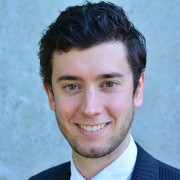
Paul van Kempen Portfoliomanager Real Estate, MN
How do geopolitical themes and risks affect your team or organisation, for example in analyses, decision-making or reporting? ‘Geopolitics is a recurring theme in our real estate team, both in our own investments and those of our co-investors. We see that many investors increasingly regard Europe as an interesting market and have also become more cautious about US allocations. Given our strong focus on impact, the political course in the US poses a real risk. Anti-ESG sentiment makes it difficult to make investments that meet our ESG standards, particularly in the area of sustainability. Within our organisation, our Thematic Research department plays an important role. They identify geopolitical trends and provide scenarios that we integrate into strategic discussions, due diligence and monitoring. Our analysis focuses on both direct and indirect effects. Directly, we look at policy proposals such as the One Big Beautiful Bill with section 899, and the discussion about possible restrictions on purchases of single-family homes by large institutional investors. Indirectly, we assess the broader geopolitical dynamics: possible tariffs affecting supply chains and changes in energy and sustainability policy as a result of conflicts. These types of uncertainties ultimately affect risk profiles, allocation choices and business plans. Our clients are also very much concerned with geopolitics. We see this reflected in their policies and discussions on the subject. That is why we take this risk into account when monitoring the portfolio and making investment and divestment proposals. Everyone agrees on one thing: geopolitics will continue to be an even bigger factor in the coming period than we have been accustomed to in the recent past.’ |
|
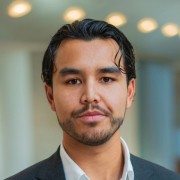
Robert Prins Portfolio Implementation Manager Special Mandates, ABN AMRO (op persoonlijke titel)
To what extent do geopolitical issues such as deglobalisation, energy transition and Europe's strategic autonomy influence the work of your organisation or your role in it? ‘In our department, discussions are currently dominated by geopolitical tensions and the return of transactional power politics. The course set by the US under Trump 2.0, further fragmentation and increasing trade tensions have turned the familiar world order upside down. Previously, we invested in a world that was becoming increasingly open, but now we see walls going up everywhere. The biggest challenge in my daily work is to navigate our clients' portfolios through this unpredictable storm. How do you offer resilience, security and returns when the rules of global trade can change based on one man's Truth Social posts? Yet I also see a very promising development: the forced search for European strategic autonomy. The need to be less dependent on other superpowers is forcing us to innovate closer to home. From a Dutch perspective in particular, this presents enormous opportunities. I was born and raised in Veldhoven. Although this used to be nothing more than an average village in Brabant, it is now in the geopolitical spotlight. With our ‘Silicon Delta’, we as the Netherlands are an indispensable player in the global economy. As the world fragments, I see capital increasingly finding its way to companies that are building the foundations of our future sovereignty: from local high-tech to sustainable energy infrastructure. In my view, this quest for self-reliance offers a hopeful growth perspective for an autonomous Europe, provided the cards are played right. In short, this makes it a challenging and interesting period for investors.’ |
|
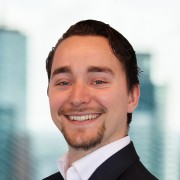
Tijmen Janssen Consultant Climate Scenarios & Sustainability, Ortec Finance
To what extent has increased geopolitical complexity affected your profession? ‘In 2026, geopolitical tensions will be central to the financial world. Policy choices can change from day to day, meaning that traditional, stable assumptions may no longer suffice. For investors, this means lower (real) growth, higher inflation and rising risk premiums. The increasing uncertainty is mainly causing higher volatility, a world where markets are under stress, correlations are rising and diversification is less effective. This has major consequences for the strategic decisions of institutional investors and requires extra attention in risk management. Geopolitical conflicts are also multidisciplinary in nature: they affect macroeconomics, energy security, international trade, technological rivalry, institutional risk management and security policy. At the same time, economic fragmentation, climate risks, migration flows and security shocks reinforce these dynamics. The result is a so-called polycrisis. Think of the coincidence of high inflation, geopolitical trade tensions and extreme weather conditions. Each effect is complex on its own, but in combination they are potentially disruptive. In this context, there is a greater need to combine traditional risk models with narrative-driven stress scenarios to make portfolios resilient. Scenarios should not only include quantitative parameters, but also describe the specific characteristics of geopolitical tensions. In my work at Ortec Finance, we are increasingly focusing on the importance of polycrisis scenarios, in which geopolitical and climate risks are considered in conjunction. Building robust scenario architectures and explicitly quantifying these risks is necessary for the current risk management of institutional investors. Only through this integrated approach can investors prepare for a world in which uncertainty is increasing and resilience is essential.’ |
|
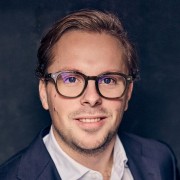
Herman Henken Associate Investment Manager, Providence Capital
Which international development currently has the greatest impact on your daily work, and how? ‘International developments influence my work on a daily basis, with technological advances being the most decisive factor. Technology not only influences the markets in which we invest, but also the questions that clients ask and the way in which we structure our investment process. On the client side, I am seeing a sharp increase in questions about topics such as artificial intelligence, digitisation and large technology companies. At the same time, global stock markets are becoming increasingly concentrated in a small group of large tech players. A limited number of companies determine a large part of the index return. This offers opportunities, but also increases vulnerability when performance depends on a few names. Changes in sentiment or regulations can quickly affect returns. That is why we consciously look beyond just the biggest names and focus on diversification. By spreading portfolios across sectors and themes, we aim for greater stability and more consistent long-term returns. I have also noticed that technology is significantly changing my daily work process. When analysing ESG data and testing data providers, more and more AI-driven solutions are coming onto the market. These are innovative, but often still expensive and not always more reliable than established players such as Morningstar Direct. At the same time, AI helps me in my work by enabling me to understand and apply new systems more quickly, allowing me to master programmes such as Microsoft Power BI, Morningstar Direct and Bloomberg Terminal more quickly and use them more efficiently for analyses and customer queries. In short, technology influences both where we invest and how I do my work.’ |
|
Soraya Grarji Analist, AF Advisors
Which geopolitical development currently has the most influence on your work, and how? ‘The unrest surrounding the American takeover of Solvinity, which is crucial to the functioning of DigiD, shows how vulnerable (semi-)public services become as soon as essential links fall outside European regulations. Those who do not control the digital infrastructure also surrender geopolitical resilience. The financial sector is in the same trap. Banks and pension providers are increasingly relying on external IT service providers for business-critical processes. AI is accelerating this trend. The result: dependence on a handful of dominant providers, often outside the EU. As the AFM and DNB have repeatedly warned, this creates considerable systemic risks: an incident at such a supplier can affect entire sections of the sector and thus jeopardise the stability of the system. Intervention or obligations from the home country, for example through legislation, sanctions or executive orders, can also have an impact. If vital processes run on non-European infrastructure, these risks become structural, including for the financial sector. Digital autonomy therefore requires more than just attractive policy documents. We therefore support the establishment of a proportionate ICT risk management framework to provide the board with insight into ICT-related risks and cyber threats. In addition, we negotiate outsourcing contracts that are both legally enforceable and operationally feasible. This requires clear agreements on data processing, continuity and exit provisions, among other things. In this way, risks are limited and, if they do arise, identified and mitigated. Finally, our work requires us to stay constantly up to date with new regulations, such as the AI Regulation. This enables us to advise our clients in a timely manner on appropriate policies, business processes and supervisory expectations. Digital autonomy is therefore not a project for the future, but a task for today.’ |

Read the original special in Financial Investigator magazine
Share this post!
Related posts
-
 Read more about "Young Professionals: Koen Lamers (Probability & Partners)"
Young Professionals: Koen Lamers (Probability & Partners)
-
 Read more about "PIMCO: Energy shocks, rising yields, and the case for bonds"
PIMCO: Energy shocks, rising yields, and the case for bonds
-
 Read more about "Young Professionals: Soraya Grarji (AF Advisors)"
Young Professionals: Soraya Grarji (AF Advisors)
-
 Read more about "Young Professionals: Robert Prins"
Young Professionals: Robert Prins
-
 Read more about "Nickel: AI is central to increasing digital asset allocations"
Nickel: AI is central to increasing digital asset allocations
-
 Read more about "Janus Henderson: Wereldwijde aandeleninkopen stijgen dankzij technologie en AI"
Janus Henderson: Wereldwijde aandeleninkopen stijgen dankzij technologie en AI
-
 Read more about "etoro: Energiesector verslaat de AI-rally"
etoro: Energiesector verslaat de AI-rally
-
 Read more about "Janus Henderson: Techreuzen voeren AI-investeringen verder op"
Janus Henderson: Techreuzen voeren AI-investeringen verder op
-
 Read more about "Strategen Natixis IM: AI blijft de markten stuwen in de tweede helft 2026, ondanks de geopolitieke onzekerheid en aanhoudende inflatie"
Strategen Natixis IM: AI blijft de markten stuwen in de tweede helft 2026, ondanks de geopolitieke onzekerheid en aanhoudende inflatie
-
 Read more about "DWS: Optimisme over halfgeleiders grotendeels ingeprijsd"
DWS: Optimisme over halfgeleiders grotendeels ingeprijsd