Joeri de Wilde: Leaving the super-rich untouched is a danger to democracy
This column was originally written in Dutch. This is an English translation.
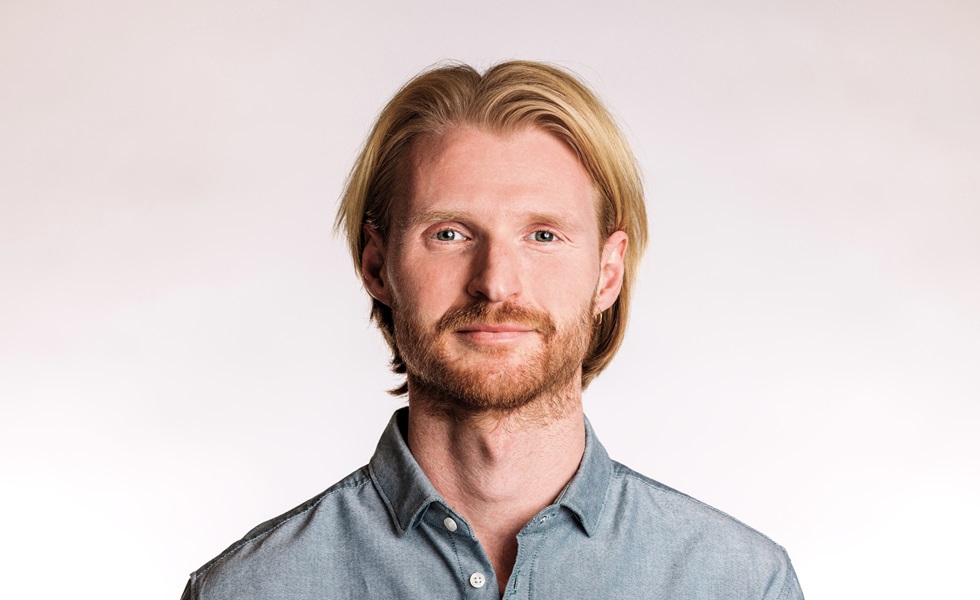
By Joeri de Wilde, Senior Economist at Triodos Investment Management
The government is going to “get thing done”, but not about wealth inequality. Not only are the ultra-rich being left untouched, they are even being helped to pay even less tax. This means the country will remain locked in its current situation.
The message from French star economist Gabriel Zucman earlier this month was clear: the super-rich should pay as much tax as the average taxpayer. Unless your name is Musk or Heineken, it's hard to disagree with this. This explains the global popularity of the so-called Zucman tax.
Yet the new coalition agreement makes no mention of such a wealth tax for the ultra-rich. This was the perfect moment to do so, because we are already in the midst of a reform of box 3 (taxable income from savings and investments). More importantly, because you can only unlock a country that is locked down on multiple fronts if you distribute the burden fairly.
The richest can defer tax indefinitely
The new coalition agreement only gives a gift to the very richest: the coalition wants to “develop” the brand-new box 3 tax on capital growth, which will apply from 2028, into a capital gains tax. That sounds technical, but it has major consequences. With a capital gains tax, tax is only levied when investments are actually sold. Those who are wealthy enough can easily postpone the sale, indefinitely if necessary. At the same time, they can still have access to the money by taking out loans with the investments as collateral.
For the very wealthy, however, box 3 is a side issue. Their assets are mainly in companies in which they have a substantial interest. They only pay tax when they distribute profits (box 2) or pay themselves a salary (box 1). And they do that as little as possible. What they do do is borrow from their companies in order to access their money and find additional ways to avoid tax. As a result, the tax burden on the Dutch super-rich is only 28%, while for workers on an average salary it is almost 40%. The very richest in the Netherlands pay virtually no tax at all.
Because of this systematic postponement, it is therefore much more logical to tax the total assets of the very richest. According to Zucman, a levy of up to 2% of total assets would already make a big difference: then households with 100 million euros or more would pay as much tax as the average taxpayer. This is not a “penalty tax”, but merely a correction to a system that is currently structurally skewed.
Wealth tax: symbolism, democracy and revenue
Such a Zucman tax would have been a logical starting point for a coalition facing major social challenges. Network congestion, the nitrogen problem, our weakened army, spiralling healthcare costs – everything cries out for the creation of the broadest possible support for necessary reforms. A higher tax burden for the richest would contribute to this. Nevertheless, the new cabinet has chosen to have the “freedom contribution” paid for by labour, not by capital. A Zucman tax would generate roughly 1 billion euro annually for the Dutch treasury, and a progressive wealth tax even more.
In doing so, the new cabinet is also ignoring the democratic threat posed by the increasingly extreme concentration of wealth. Worldwide, a small group of billionaires now has significant interests in more than half of the largest media companies, and nine out of ten social media platforms are owned by just six billionaires. And even if it was short-lived, with Elon Musk in an American ministry, lobbying power in the US last year turned into undisguised direct political billionaire power.
In the Netherlands, too, the influence of the richest is worrying: only 11 Quote 500 members were responsible for 20% of all donations to political parties in the last election year. Just under 90% of these went to centre or right-wing parties, some of which are unashamedly pushing for the erosion of our democratic constitutional state.
Who will put a stop to the oligarchy this time?
Rigorous intervention in the tax system is therefore not only a matter of fairness or budgetary scope, but above all of democratic resilience. In the United States, a century ago, after a period of extreme wealth inequality, a highly progressive income tax was introduced to break the oligarchic concentration of power. Today, we are facing a similar tipping point. This time, a highly progressive wealth tax seems to be the only correct answer.