
Roundtable 'AI & Blockchain'
Roundtable 'AI & Blockchain'
This report was originally written in Dutch. This is an English translation.
Blockchain and AI will radically change the financial system, with far-reaching consequences for private and institutional investors. Digital assets are on the rise, tokenisation will change markets, and asset managers' back offices are on the verge of an AI revolution. How fast is it happening, and where are the limits?
By Manno van den Berg
|
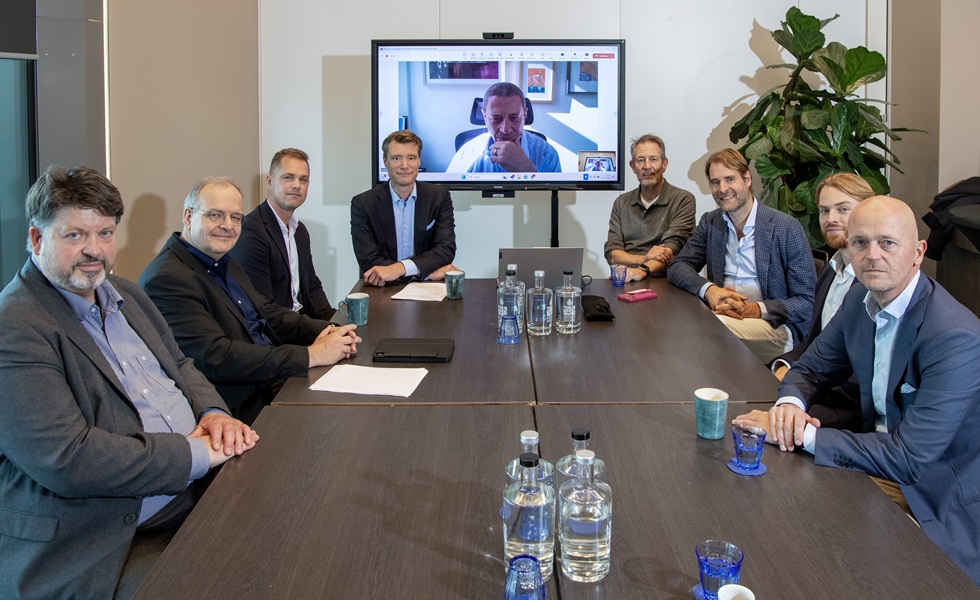
CHAIR Ralph Wessels, Chief Investment Strategist, ABN AMRO Bank
PARTICIPANTS Han Dieperink, Auréus Ruud Hendriks, Startupbootcamp & The Innoleaps Group Patrick Lemmens, Robeco Axel Maier, MDOTM Stefan Singor, a.s.r. vermogensbeheer Ruud Smets, Theta Blockchain Ventures Pim Swart, Maven 11 Frans Verhaar, bfinance |
Eight experts shared their views on the revolution that blockchain and AI will unleash in the investment industry during a roundtable discussion organised by Financial Investigator. How do they see developments unfolding in the future? What are the participants already seeing happen? And is the sector responding to the opportunities and risks in a timely manner?
Moderator Ralph Wessels, Chief Investment Strategist at ABN AMRO, opened the discussion with an observation about the speed of AI's advance. ‘This revolution is happening so fast that many are unable to keep up. Resistance is normal when change happens faster than people can handle. For mass adoption, people need to be able to trust technology. That's where regulation comes in.’
The discussion focused on how artificial intelligence and blockchain reinforce each other and will reshape the financial sector. The participants also shared their views on the similarities between AI and blockchain, the role of regulation and politics, Europe's lag and the opportunities for investors in the new digital age.
What is the connection between AI and blockchain and where do they converge?
Ruud Smets: ‘As we enter the era of artificial intelligence, blockchain provides the necessary underlying infrastructure. For example, by distinguishing between humans and machines. After all, AI makes it more difficult to tell the difference between human and AI activities. And when AI systems themselves become economically active, blockchain is the rails on which they can operate. Blockchain can also assign intellectual property rights to AI systems. Finally, the decentralised nature of blockchain networks provides an essential counterbalance to the centralising power of large AI platforms.’
Pim Swart: ‘Blockchain can provide transparent and verifiable guardrails for AI: it offers a reliable infrastructure. It does indeed counterbalance the centralising power of AI, which could also become commercially valuable in the long term. Think of decentralised networks that can make all kinds of resources for AI, such as data and hardware, available without an intermediary, or, for example, micropayments between AI agents.’
How are institutional investors integrating AI and blockchain, and which applications are promising?
Han Dieperink: ‘We mainly use AI to optimise our software and networks. What used to take months now takes days. AI also supports data analysis and stock selection, although the results remain mixed. On the client side, AI can automate administration – notes, summaries and input for client visits – so that advisors can really focus on the client relationship.’
Big Tech dominates because it controls three scarce resources: talent, data and hardware.
Patrick Lemmens: ‘Everyone wants to use AI, but success depends on the quality and accessibility of data. I think we have seen this year that IT infrastructure companies have struggled to increase their revenues. They are achieving less revenue growth because many companies are still figuring out exactly what they want to do with AI. Many companies are still experimenting.’
Axel Maier: ‘We are seeing a “pilot project paradox”: many companies are launching small AI pilots in investment processes, research or reporting, but these are failing without an overarching vision from senior management. Without that direction, the use of AI remains fragmented. Asset managers are using it for mass personalisation, but without a strategic plan, progress is stalling.’
Stefan Singor: ‘We approach AI strategically and link it to our core objectives: cost efficiency, buy-out propositions, balance sheet management and, increasingly, ESG. One priority is machine learning, with neural networks and predictive models to forecast variables such as inflation that influence investment decisions. Another is reinforcement learning, which allows us to improve traditional optimisation models such as Markowitz and Black-Litterman with more data and more accurate calibration. Generative AI is also a priority: from internal chatbots to emerging agentic AI systems. The idea that agents can autonomously build and refine AI models is both exciting and transformative for the asset management industry.’
Research from MIT suggests that only 5% of AI applications in companies are profitable, mainly because people don't know how to apply them effectively.
Maier: ‘That's right. Our research with EY shows that isolated pilots rarely scale up. Successful companies first formulate a ‘North Star’ for AI, start small, and then expand step by step. Once AI takes over repetitive work and people can focus on interpretation, productivity and profitability increase.’
Ruud Hendriks: ‘I don't recognise that 5% figure at all. My productivity has increased enormously: AI answers most of my emails and WhatsApp messages.’
Dieperink: ‘Once something becomes free – such as emails instead of letters – further productivity growth is difficult to measure. The same applies to AI: the impact is real, but only appears later in the statistics. Replacing someone with an AI machine is not a productivity increase, but you only see that when people do more or better work with AI.’
Singor: ‘It's not just about efficiency; quality also improves. For example, I now trust chatbots more than my own translation skills.’
Smets: ‘It's interesting that we mainly talk about AI. Blockchain is a different type of technology: not an efficiency tool but a new decentralised layer of infrastructure, built from the ground up by start-ups. It will completely replace many centralised systems. For example, why would you pay 10% to Western Union when you can send money directly over the internet, immediately, 24/7, and for a few pence?’
The productivity gains may seem small now, but in ten or fifteen years' time, the impact will be enormous. However, the risks are just as great.
Dieperink: ‘As investors, we focus primarily on the front office. The real impact of blockchain lies in the back office, in tokenised securities and transaction processing.’
Maier: ‘AI learns and makes decisions, blockchain records and verifies. The combination can redefine transparency and governance in asset management. Blockchain guarantees data quality – crucial for AI models – and creates systems that are both intelligent and reliable. Once companies jump on the AI bandwagon, they can no longer avoid using blockchain.’
Frans Verhaar: ‘Since 2022, we have seen a clear acceleration in the use of AI among asset managers. It is no longer experimental; everyone is applying it somewhere: in research, risk, reporting or operations. The question now is whether it really adds value or is still mainly marketing. On the equity side, some managers are building entirely AI-driven models. Others use AI to refine quantitative models and find signals that older models miss. In discretionary strategies, AI does not replace humans, but it does accelerate important processes, such as screening equities and collecting data. That saves a lot of time. It allows smaller teams to compete more effectively.’
How does AI enable greater customisation for clients?
Maier: ‘It enables asset managers to deliver efficient customisation on a scale and at a speed that humans can never match. Where you used to offer five portfolios, AI can translate this into tens of thousands of variants. AI also enables highly personalised reporting: controlled generative AI can generate real-time reports for each client, replacing the old quarterly reports. If the market collapses, AI can immediately provide explanations to clients and what this means for their portfolios.’
Verhaar: ‘Among institutional investors, we see that AI contributes to customised benchmarks. Providers such as MSCI, S&P and Qontigo, for example, have developed AI tools for climate-aligned indices. Among investors, AI is often used to tailor portfolios to specific sustainability preferences. Platforms such as Clarity AI and MSCI ESG link business activities to the SDGs. Arabesque uses AI for analysis and portfolio construction as part of its sustainable services.’
What are the main risks of AI in terms of technology, ethics, regulation and reputation?
Singor: ‘From a technological point of view, data quality is crucial. We rarely have complete data sets, only samples, which can lead to biases. Hallucinations by chatbots are another major problem. Model outcomes are uncertain and must be interpreted with caution. From a reputation point of view, we take ESG very seriously. Due to its high energy consumption, AI can have a negative impact in this area.’
Politics remains necessary for clear rules to protect people and prevent abuse. Not only with AI, but also with tokenisation and digital assets.
Maier: ‘Ethics is essential. Ethically responsible AI starts with explainability. If you can't explain it, you can't control it. Transparency and avoiding the ‘black box’ problem are crucial.’
Hendriks: ‘What worries me is that people don't understand exponential growth. The productivity gains may seem small now, but in ten or fifteen years” time, the impact will be enormous. However, the risks are just as great. People see me as an AI optimist, but in terms of potential, AI is just as dangerous as the atomic bomb. Big Tech is not using AI to improve the world, but to control it. Even within the sector itself, many people do not know exactly what is happening in their algorithms. That lack of insight should be a cause for concern.’
How do you see the role of politicians in the application of AI?
Hendriks: ‘There is a complete lack of urgency in The Hague, even though we are in the midst of the greatest revolution since the discovery of fire. No education minister has given schools or universities guidelines on how to deal with AI. Teachers say they lack both the time and the knowledge to teach it.’
Lemmens: ‘Younger generations are learning on their own, and universities are adapting. But politics remains necessary for clear rules to protect people and prevent abuse. Not only with AI, but also with tokenisation and digital assets. Regulation is essential, and governments are indeed lagging behind.’
Verhaar: ‘Governments can go in three directions: restrict AI, do nothing, or encourage it. At the moment, they don't know which direction to choose. The market is still figuring out where AI adds the most value. But do we really want politicians to decide to restrict its use?’
Hendriks: ‘I would be happy with some urgency in The Hague. At the moment, that is completely lacking. Politicians are not looking further than four years ahead.’
Swart: ‘To be honest, we've already missed the boat. Regulation will always lag behind.’
How can AI tools support ESG engagement, analysis and climate risk?
Dieperink: ‘AI has already fundamentally changed ESG analysis. Whereas companies used to fill in annual questionnaires, we can now track data in real time and in detail through machine reading and news scraping. The challenge is that data availability remains limited. If data is missing, there is a risk of greenwashing because AI will interpret things itself. And now there is also AI washing by companies that overestimate their AI capabilities because it increases their valuation.’
Singor: ‘ESG is one of our core principles and AI is playing an increasingly important role in this. We are collaborating with the University of Amsterdam on various AI themes, such as quantifying the actual impact of impact investing. With the explosion of available data, AI helps us to assess whether funds are delivering on their promises. AI also helps us detect greenwashing by comparing ESG scores from different providers. And in our mortgage and real estate portfolios, we use AI to assess physical climate risks – from flooding to land subsidence.’
Where companies used to fill out annual questionnaires, we can now track data in real time and in detail through machine reading and news scraping.
Hendriks: ‘ESG reporting remains difficult for smaller companies, but sustainability is central to our investments. AI and sustainability are increasingly going hand in hand. AI itself is indeed not very sustainable yet, but I am optimistic: ultimately, AI will even help to make its own processes greener.’
How will blockchain influence the financial markets in terms of products?
Swart: ‘Fundamentally and on virtually all fronts. Crypto has become a driver of financial innovation, giving rise to entirely new financial primitives. The automated market maker (AMM), which makes it possible to trade assets without intermediaries such as market makers and exchanges via a mathematical curve, was one of the first examples of this type of crypto-native mechanism. Ultimately, crypto will enable a completely new, permissionless financial system. And as tokenisation brings more traditional assets on-chain, we are increasingly connecting the old financial system with the new.’
Smets: ‘It will remove much of the friction and opacity of the old system. Blockchain offers a single internet-native infrastructure layer on which financial products are transparently recorded, easily combinable and accessible to everyone. And all this with built-in regulatory compliance.’
Lemmens: ‘As the CEO of Robinhood said, tokenisation is a freight train that cannot be stopped. It will completely transform the financial system over the next five to fifteen years. Regulation is crucial – both to enable adoption and to prevent abuse – but the direction is clear: tokenisation is coming and will fundamentally change the way financial markets operate.’
What problem does blockchain solve that the existing infrastructure cannot?
Dieperink: ‘It can modernise wealth management administration. We are still using legacy systems and settlement sometimes takes days. The transition is slow, but the potential is huge. One example is cross-border payments. In the past, I tried to transfer a few million euros for a client to purchase a yacht in New Zealand: impossible through traditional channels. With crypto, this can be done in a matter of minutes.’
Swart: ‘Exactly. This also has positive effects on financial inclusion. In sub-Saharan Africa, for example, people often send money across national borders to support their families. Thanks to crypto, this can now be done instantly, cheaply and 24/7, without the sky-high costs of traditional payment processors.’
Smets: ‘Today, trust is expensive because it depends on central intermediaries. That is exactly what blockchain solves: trust is built into the infrastructure itself, through open-source code, cryptography and financial incentives. If AI makes intelligence a commodity, then blockchain makes trust a commodity. And that fundamentally changes how we do business in the digital age.’
If AI makes intelligence a commodity, then blockchain makes trust a commodity.
Swart: ‘Blockchains turn money into software. They make financial systems programmable, controllable and transparent, and reduce the cost of trust by removing intermediaries who skim off value. It creates a system that is fully verifiable in real time, where trust comes from perfectly reliable code rather than an imperfect counterparty.’
Are digital assets investable? And do they offer sufficient liquidity?
Lemmens: ‘Absolutely. The opportunities are growing rapidly. Regulation has been the tipping point here: financial institutions are now much more open to it because the rules are clearer. Around 8% of our fintech fund is invested in digital assets. That share is growing with the arrival of new IPOs, such as Circle, Figure and Bullish. Valuations can fluctuate sharply – Circle's IPO rose 300% within a few weeks – but the market is maturing.’
Verhaar: ‘For most pension funds, digital assets are not yet directly investable. However, a survey we conducted among institutional investors shows that almost everyone wants to allocate more in the next five to ten years, especially in the US. Today, exposure is often indirect, for example through listed companies with Bitcoin on their balance sheets.’
Lemmens: ‘Pension funds are cautious and strongly focused on fixed income. Nevertheless, tokenisation is already taking place there too, for example in money market funds, and this will spread further. In the long term, investors may not even notice that their investments have been tokenised, because it will simply become the most efficient structure.’
Verhaar: ‘That's why family offices are leading the way here. Former entrepreneurs are more willing to experiment a little, while institutional investors are waiting for the market to become mainstream.’
Hendriks: ‘I am a shareholder in Amdax, the first crypto asset manager in the Netherlands to be licensed by the AFM. The company offers a Bitcoin Treasury strategy that allows anyone to gain exposure to Bitcoin via a regulated share on Euronext. It is not tokenised, which means that investors can easily participate even without any knowledge of crypto.’
Smets: ‘What makes blockchain unique is that investors can invest directly in the infrastructure itself, in the networks, and not just in the companies that build on it. The value ends up with the network itself, via tokens. This is a new paradigm that takes time for investors to understand. The US is leading the way in this, and American endowments, for example, are already investing heavily in it.’
When managers say “we use neural networks” or “random forests”, it's like saying “I cook with salt”.
Can crypto help break the market power of big AI players like OpenAI, Google and Microsoft?
Swart: ‘Big Tech dominates because it controls three scarce resources: talent, data, and hardware. They pay the highest salaries, have access to proprietary data through their positions as market leaders, and have a technological monopoly on hardware and data centre infrastructure. Crypto can help break this concentration by building a user-owned, bottom-up, and incentivised system. Networks in which users contribute their knowledge, data, and hardware can create a distributed alternative. Tokens act as a bootstrapping mechanism: they coordinate contributions, creating an incentive-driven, bottom-up infrastructure owned by the users themselves rather than a few hyperscalers.’
Dieperink: ‘That sounds like the University of California's SETI@home programme, which searched for extraterrestrial life using millions of home computers.’
Swart: ‘Those early academic experiments proved the concept, but current technology also makes it commercially viable. Large research teams, even at Google and Meta, are now investigating decentralised AI and distributed training.’
Dieperink: ‘But doesn't bandwidth remain a bottleneck?’
Swart: ‘It used to be, but researchers are now solving this with various forms of parallelisation. In a few years” time, those kinds of problems will probably have disappeared.’
Verhaar: ‘Another important point of attention is the energy consumption of computer networks. Ideally, systems should run in locations where electricity is cheap and widely available and comes from renewable sources, rather than on home computers in the centre of Amsterdam. This brings us straight to the ESG domain.’
Swart: ‘Bitcoin mining already works this way. It keeps moving to places where energy is cheapest: from Kazakhstan to Africa.’
Smets: ‘A good example is Grass: a network that builds AI datasets through crowdsourced data scraping. Participants contribute from home, earn ownership rights, and each dataset has a cryptographic origin. Grass raised £15 million and now produces 2,000 terabytes of data per day, which I believe is the most in the world after Google. The best way to invest in AI is through blockchain infrastructure. That's what AI ultimately runs on.’
What investment or revenue models do you see emerging?
Maier: ‘From a business perspective, it's all about supply and demand. With traditional search engines, users 'pay” through advertisements and data. With AI models such as ChatGPT, people are willing to pay directly for quality and privacy. The value depends on what the model offers and how unique it is.’
Nevertheless, human contact remains essential. Doubt, debate, investment principles: they are all part of responsible decision-making.
Lemmens: ‘The money flowing into AI and the high valuations sometimes surprise me. It reminds me of the early 2000s: the dotcom bubble. The predictions about user growth were correct, but the valuations were not. That could happen again now. That is why we focus on projects that really build infrastructure and bring about sustainable change. Projects without revenue require a lot of imagination about their future value. So we have to remain critical. Much is still happening in the early venture capital phase.’
Hendriks: ‘Revenues are already rising at OpenAI, Claude and X. Their valuations are high, but they are not yet listed on the stock exchange. Apple is lagging behind, but with its huge iPhone base, it has a good chance of making a comeback once it takes AI seriously.’
Dieperink: ‘It's similar to the telecom boom of the 1990s: most companies disappeared, but the technology remained. The difference now is that the current players have a lot of cash in the bank. In 2000, there was hype without revenue, but now there are real products and cash flows. Nevertheless, if interest rates fall again, a new wave of speculation could arise, perhaps even bigger than the last one.’
How can investors assess claims about AI and blockchain, and how do you distinguish real innovation from marketing?
Verhaar: ‘More and more managers say they use AI. Our job is to verify whether that is really the case or just marketing. We ask: is the alpha really new, or just repackaged? Is the strategy scalable? Is AI at the heart of the process or an addition? How are models validated and performance explained? It's not about whether someone uses AI, but how. That's where the real innovation lies.’
Maier: ‘Exactly. Many companies say ‘we use AI’, but often that is superficial. The real question is: does it fit logically within the investment process? Is it explainable, scalable and compliant, and partly regulated? Those are the criteria that matter.’
Verhaar: ‘And suppose we could record every model decision on the blockchain: verifiable, controllable and transparent. That’s where these technologies really come together, and then the possibilities are endless.’
Maier: ‘Yes, but buzzwords mean nothing on their own. When managers say ‘we use neural networks’ or ‘random forests’, it’s like saying ‘I cook with salt’. It says nothing about the quality of the dish, or whether they can cook well. It’s about how they apply it.’
Verhaar: ‘In essence, machine learning is a refinement of what investors have always done: looking for connections in data. Where regression analysis reveals linear relationships, AI can find the subtle patterns that fall outside of that.’
The marketplace of ideas is flourishing, entrepreneurs are competing, the best ideas win, and everyone benefits.
Singor: ‘The growing use of AI will change the supply and demand dynamics for qualified personnel. There will be more demand for people with AI skills, but also for tools that improve portfolio management. Within our organisation, we use AI to support investment decisions, not to replace them. Human judgement remains crucial. Operationally, AI increases efficiency – especially through generative and agentic AI tools – but its long-term value has yet to be proven.’
Maier: ‘AI is not about replacing people, but about helping them do their jobs better. It takes over repetitive tasks so that people can focus on what really matters. For example, our automated reporting gives portfolio managers more time to concentrate during volatile markets, instead of having to constantly answer customer questions.’
Smets: ‘For me, blockchain unlocks the real internet economy, globally, frictionlessly and 24/7. Combined with AI, it redefines how human-machine collaboration works.’
Swart: ‘I understand that human control remains important, but people are fallible. In the long run, these systems will surpass us. They are verifiable, programmable and constantly learning. Their decision-making, for example in portfolio allocation, will be superior to what humans can ever do, even with the best tools.’
Dieperink: ‘That shift is already visible. In the US, companies are hiring fewer people under the age of 24 because AI is taking over a lot of analytical entry-level work.’
Verhaar: ‘That's right, we're seeing that in investment teams too. Junior roles are disappearing, which raises the question: who will form the new generation of portfolio managers if those roles no longer exist?’
Hendriks: ‘I'll be blunt: most asset managers will eventually disappear, just like taxi drivers or lift operators. Technology is taking over. I have managed my own portfolio for years without an advisor, and I have no qualms about getting on a plane without a human pilot, who may also have a bad day. Automation will do better, and the sector will have to accept that.’
Singor: ‘Nevertheless, human contact remains essential. Doubt, debate, investment principles: they are all part of responsible decision-making.’
Lemmens: ‘Tokenisation and digital assets will become essential to the financial system of the future. But human roles will not disappear overnight. People have to build, manage and interpret these systems. If companies stop hiring young talent, they will lose their future leaders. Consolidation is coming, for sure, but not extinction.’
Verhaar: ‘These are exciting times. My children will have jobs that don't exist yet, and that's fine. The marketplace of ideas is flourishing, entrepreneurs are competing, the best ideas are winning, and everyone is benefiting. If investors can capture a share of that, the potential is enormous.’
|
SUMMARY AI en blockchain veranderen hoe data, markten, waarde en beslissingen worden georganiseerd: een nieuwe financiële realiteit. Zonder duidelijke regels en toezicht blijft massale adoptie van nieuwe technologie lastig. AI versnelt processen, blockchain verlaagt de cost of trust en maakt transacties controleerbaar. Institutionele beleggers experimenteren volop met AI en tokenisation, maar missen vaak een overkoepelende visie en strategie. Tokenisation en digitale assets hervormen markten, maken kapitaalstromen sneller en creëren nieuwe beleggingskansen wereldwijd. Mens en machine vullen elkaar aan. Menselijke intuïtie blijft cruciaal in een steeds digitaler ecosysteem. |
|
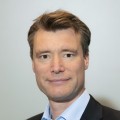
Ralph Wessels Ralph Wessels is Chief Investment Strategy at ABN AMRO, where he has been working since 2011. He is jointly responsible for investment policy and communicating this to clients. He regularly shares his insights via RTL Z, the FD and BNR Nieuwsradio. He has been actively following developments in the crypto world since 2017. He started his career at Robeco and studied Business Economics at Erasmus University Rotterdam. |
|
Han Dieperink Han Dieperink is an experienced investment professional with over 30 years of expertise in asset management, as Chief Investment Officer at Auréus (2020-present), Rabobank (2009-2019) and Schretlen & Co (1995-2009). He is also the owner of HD Capital & Advisory, a columnist, and an advisor to various financial organisations. |

|
Ruud Hendriks Ruud Hendriks is a versatile entrepreneur with a rich background in start-ups, innovation and media. He holds important positions within Startupbootcamp and the Innoleaps Group, has a wide range of advisory positions and gives many international speeches, including his annual forecast for the next 18 months in the tech industry: The State of Tech. |

|
Patrick Lemmens Patrick Lemmens is Lead Portfolio Manager and a member of Robeco's Thematic Investing team, where he has worked since 2008. He focuses on financial institutions and fintech. He began his career in the investment world in 1993. Lemmens holds a Master's degree in Business Economics from Erasmus University Rotterdam and is a certified European financial analyst. |

|
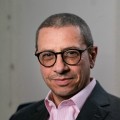
Axel Maier Axel Maier is Partner and Global Head of Business Development at MDOTM Ltd, a provider of AI-powered investment solutions. With over 30 years of experience in asset management, he has held senior positions at Macquarie Investment Management and Wellington Management, among others. He has extensive board experience in various markets and expertise in business development, team building and acquisitions. |
|
Stefan Singor Stefan Singor is a quantitative investment strategist with a PhD in Financial Mathematics and 15 years of experience in ALM for insurers. He specialises in strategic asset allocation, hedging strategies and scenario analysis, among other things. Within the Innovation Lab of a.s.r. asset management, he has senior responsibility for applying AI and data science to improve investment decisions. |

|
Ruud Smets Ruud Smets is Managing Partner and CIO at Theta Capital Management, an investor in blockchain venture capital. With master's degrees in information technology and investment theory, Smets combines financial insight with blockchain expertise. |

|
Pim Swart Pim Swart is an Associate Partner at venture capital fund and asset manager Maven 11. He has been active in the crypto sector since 2016. In 2020, he researched how arbitrage and market microstructure develop within blockchain networks during his MSc in Science and Business Management at Utrecht University. At Maven 11, he focuses on innovative investments in digital financial infrastructure. |

|
Frans Verhaar Frans Verhaar studied Business Administration and has been working at bfinance since 2007, an international consultancy firm specialising in investment issues for institutional investors. Verhaar has extensive experience in areas such as alternative investments, financial risk management, investment analysis and financial data science. |

Attachments
Share this post!
Related posts
-
 Read more about "Edward Roozenburg: € 690 million for cyber security? A bargain!"
Edward Roozenburg: € 690 million for cyber security? A bargain!
-
 Read more about "Decentralised AI and the role of humans (roundtable ‘AI & Blockchain’ part 4)"
Decentralised AI and the role of humans (roundtable ‘AI & Blockchain’ part 4)
-
 Read more about "Mirova: Softwareaandelen onder druk door AI-onzekerheid"
Mirova: Softwareaandelen onder druk door AI-onzekerheid
-
 Read more about "BlackRock: Software-aandelen onder druk door AI-disruptie"
BlackRock: Software-aandelen onder druk door AI-disruptie
-
 Read more about "Faster, cheaper and immediate trust (roundtable “AI & Blockchain” part 3)"
Faster, cheaper and immediate trust (roundtable “AI & Blockchain” part 3)
-
 Read more about "Customisation, risk and new market structures (roundtable ‘AI & Blockchain’ part 2)"
Customisation, risk and new market structures (roundtable ‘AI & Blockchain’ part 2)
-
Read more about "RBC Bluebay AM: AI legt kwetsbaarheid van software bloot"
RBC Bluebay AM: AI legt kwetsbaarheid van software bloot
-
 Read more about "Nickel: AI will drive the development of the digital assets sector"
Nickel: AI will drive the development of the digital assets sector
-
 Read more about "Foundation of the revolution (roundtable ‘AI & Blockchain’ part 1)"
Foundation of the revolution (roundtable ‘AI & Blockchain’ part 1)
-
 Read more about "eToro: ASML profiteert volop van de Amerikaanse investeringen in AI"
eToro: ASML profiteert volop van de Amerikaanse investeringen in AI