Capital for energy infrastructure (roundtable ‘From Energy Transition to Energy Security’ – part 2)
Capital for energy infrastructure (roundtable ‘From Energy Transition to Energy Security’ – part 2)
This report was originally written in Dutch. This is an English translation
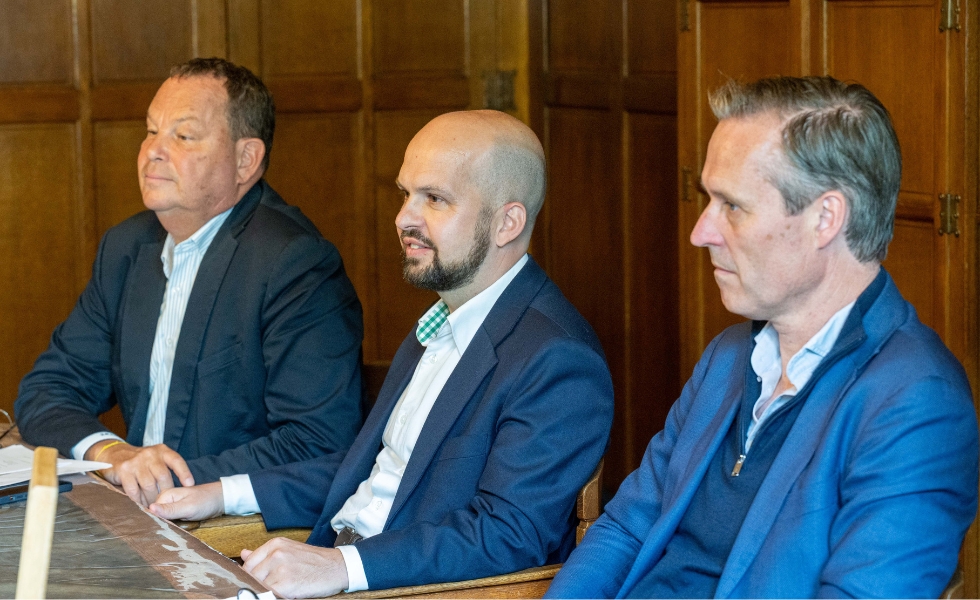
In part 2 of the roundtable discussion ‘From Energy Transition to Energy Infrastructure’, the participants discuss how the enormous investment challenge for energy infrastructure can be financed. They examine the role of institutional investors, the expertise required, and the opportunities offered by networks, storage and batteries.
By Hans Amesz
|
CHAIR: Harry van den Heuvel, Achmea Investment Management
PARTICIPANTS: Joost Bergsma, Nuveen Infrastructure Ita Demyttenare, BlackRock Jocelyn Dioux, Mirova Marco van de Geugten, MN Mark Gilligan, BNP Paribas AM Alts Igor Lukin, Allianz Global Investors Bart van Merriënboer, a.s.r. real assets investment partners Roger Pim, NTR (in partnership met L&G) Albena Vassileva, IFM Investors |
Where does the biggest gap lie between the infrastructure Europe needs for energy security and what institutional investors can finance on a large scale?
Demyttenaere: ‘In the field of electrification and networks, we are seeing a very large and growing investment need in Europe. Governments are investing heavily to build strategic autonomy, for example in defence, but their fiscal scope is limited. Since the financial crisis, banks have been more cautious in utilising their balance sheets, and this is precisely where a clear role for the capital markets emerges: private investors can help bridge the investment gap, and pension funds can be a natural partner in this. The Savings and Investment Union, faster licensing procedures and less fragmented regulation are crucial to further stimulating this flow of capital. This combination could give Europe a real competitive advantage.’
Pim: ‘One of the interesting areas where I believe there is currently a gap is long-term storage. If you look at the overall European energy mix, this is an area where many breakthroughs are still needed. Government frameworks still have some catching up to do in this regard.’
The question is not only whether it is low-carbon, but also whether it is resilient and whether the costs are stable.
Dioux: ‘From a macroeconomic perspective, work must be done as quickly as possible to strengthen the electricity grids across Europe, in order to accommodate both the electrification of consumption and the increase in renewable energy. This could be financed through public-private partnerships, with strict regulation and government support. At present, we do not see many opportunities for private investment funds such as ours in this area in Europe, but that may yet change. What is immediately available and needed, however, is BESS. Financing BESS, using both equity and debt, is no simple matter, particularly as there is a wide range of investment scenarios, whether they involve standalone, hybrid, trader-exposed or tolling agreement-based projects. For investors, the aim is to strike the right balance and achieve diversification in terms of countries, the risks taken and how these are mitigated, the level of financing, and so on.’
Van de Geugten: ‘I think our clients are certainly willing to invest in the electricity grid, but on the European mainland this is really complicated. Many electricity grids here are (semi-)publicly owned.’
As energy systems become more complex, how should investors approach the in-depth expertise and analytical skills required to invest in infrastructure assets with confidence?
Vassileva: ‘We must ensure we target the right opportunities with the right capital in terms of risk-return. This also helps in managing the expectations of institutional clients. For example, if we say we are pursuing a core or core-plus strategy, this means we must stick to it, which entails focusing on a stable risk profile and investing, under controlled conditions, in renewable energy and storage projects, rather than in unproven technologies or generation in locations where it shouldn’t be.’
Van Merriënboer: ‘One of the crucial aspects from the LP’s perspective is selection – finding the right manager. Be prepared and ensure you have the right expertise in-house.’
Lukin: ‘When you look at the challenge ahead of us, I don’t think that we in Europe, as a society, will be able to mobilise sufficient capital within the current framework for the energy transition, and I believe that transferring some of the knowledge and experience from our usual infrastructure playbook could play an important role. Business models for the energy transition that are closer to the infrastructure sector would enable us to attract more capital by mitigating risks.’
Given what is happening in the world, we are increasingly realising that we must supply energy safely and at affordable prices
Bergsma: ‘One of the key risk factors that has changed over the past five to seven years is the revenue side. It is crucial to keep a close eye on that revenue risk. For onshore wind, solar energy and battery storage, our approach is to, let’s say, work backwards from the revenue.
We start with the revenue, we identify the customer, and then we find the right assets to meet the customer’s needs. We do this through very large platforms, including by combining different technologies across several countries. In this way, we try to find the right revenue mix and manage revenue risks.’
Dioux: ‘We take a balanced approach and do not take on excessive risk with debt financing. We have built up our internal strength in the electricity market with dedicated people who secure revenue and are proactive in hedging risks.’
Which types of energy infrastructure are currently most crucial to resilience, and to what extent are these assets suitable for long-term investment with institutional capital, given the current market structure?
Demyttenaere: ‘For us, it is crucial to consistently analyse how three megatrends interact: the rise of digitalisation and AI, geopolitical fragmentation with a stronger focus on national security, and the transition to a low-carbon economy. These megatrends clash and reinforce one another, and it is precisely at that intersection that we see the most interesting investment opportunities. Energy infrastructure in transition sits at that crossroads, and grids and storage in particular are uniquely positioned to support multiple long-term themes simultaneously: electrification, energy security, affordability and decarbonisation. In our view, these assets are structurally supported by these forces, rather than being merely exposed to the shocks they cause.’
Gilligan: ‘Over the next ten years, around six trillion will need to be invested in electricity grids worldwide – particularly in China, Europe and the United States. In China, this is straightforward due to the government’s full support and the ability to finance it within the Chinese capital markets. In Europe and the United States, it is more complicated, because we still have regulatory systems that were established in the twentieth century and were designed to regulate existing monopolies. We are now looking at a system that requires the actual Regulated Asset Base, or RAB, to be doubled in a very short space of time, and the regulatory frameworks are not really adapted to that. Regulators need to think deeply and engage in dialogue with the government and the electorate to make it clear that these are difficult issues, often involving significant sums of money.’
You need to examine much more closely how things might come back to haunt you later, because infrastructure is, by its very nature, a long-term endeavour
Pim: ‘In Ireland, an island with a fairly high penetration rate of renewable energy, we were already confronted some three to five years ago with many of the structural problems the rest of Europe is now facing. This has enabled us to gain experience with and a better understanding of a number of potential challenges, and to develop solutions. One of the lessons we have learnt is that it is vital to build relationships with all stakeholders, including the government, in order to develop the necessary infrastructure and thereby create resilience.’
Vassileva: ‘The costs of electricity grids in most countries need to be socialised. There is an enormous amount of physical infrastructure in the world. Much of it has been neglected and needs to be put to better use. If we truly want to move towards a world in which sustainable molecules are abundant, a great deal is required – sometimes even diverse physical infrastructure, ranging from ships to ports and moorings, and so on. This brings us back to the theme of also cherishing existing infrastructure and preparing it for the transition.
The energy transition also requires large quantities of rare-earth minerals, which must be extracted in a sustainable and ethically responsible manner and transported around the world.’
Van Merriënboer: ‘Batteries are the most important, especially those for the short term. They are affordable and, apparently, easy to implement and use to hybridise existing assets. They are used in brownfield projects but, these days, increasingly in greenfield projects as well. It’s all very promising.’
If you look at safety, affordability and sustainability, clean energy is in fact the winner on all three counts
Pim: ‘At the moment, we’re seeing many of the most attractive opportunities in batteries with a storage duration of two to possibly four hours. However, that will continue to evolve and change. In any case, the market for this is maturing: financing options are improving and, over time, we’ll see a wider range of solutions.’
Bergsma: ‘Batteries can relieve a large part of the load on the grid. Lithium-iron therefore seems to be the clear winner. The positives are a very extensive supply chain (in China there are at least ten suppliers offering high-quality batteries at low cost) and sound technology. The negatives are, of course, the risks involved. This is much less of an issue with a wind farm than with battery storage. Who knows what a battery will still be worth after, say, ten years? In five years’ time, there might be a cheaper battery that also performs better. Ideally, you’ll see your investment in batteries double within six or seven years.’
Dioux: ‘Whether you make the best investment in BESS depends on your risk appetite, whether it involves mature markets with lower IRRs but greater certainty regarding revenue thanks to fixed tolling agreements, or emerging markets where you can capitalise on the ‘pioneer premium’ through revenue from ancillary services.’
Vassileva: ‘We have also given careful thought to what the situation on the electricity market will look like in a few years’ time. Will volatility on the electricity market still be the same? Could there, technically speaking, even be some deterioration? With an infrastructure investment, it’s all about predictability and staying true to the risk profile that has been communicated to investors.’
Lukin: ‘We spent about three years assessing the best opportunities in the green hydrogen market before deciding to enter it. We wanted to gain an understanding of the prospects for mitigating risk in cash flows before it actually fitted into our investment strategy, because we didn’t want to do exactly what some players in the energy sector have done and are currently doing, such as a ‘gradual’ change of strategy or shift in investment style. For us, it was absolutely crucial to see that you can structure high-quality, long-term off-take agreements in the green molecules market.’
|
Harry van den Heuvel Harry van den Heuvel has been with Achmea since 2007 and has been responsible for infrastructure investments for Achmea Investment Management’s pension and insurance clients since 2016. Prior to that, he managed alternative investments and property on the insurer’s balance sheet. He previously worked at Van Lanschot Bankiers, Van der Moolen, Alpha Options and Optiver. He holds qualifications in Economics (MSc), Investment Analysis (RBA), Alternative Investments (CAIA) and Real Estate (MSRE). |

|
Joost Bergsma Joost Bergsma is Global Head of Clean Energy at Nuveen Infrastructure, formerly Glennmont Partners, where he previously served as CEO and Managing Partner. He has developed the platform into one of the largest clean energy investment platforms in Europe. In 2024, Bergsma was honoured with the Inspiratia Energy Transition 2024 Lifetime Achievement Award for his contributions to the sector. |

|
Ita Demyttenaere Ita Demyttenaere has been working as a Sustainable and Transition Solutions Manager at BlackRock since November 2024. In this role, he supports Dutch clients in integrating sustainability, transition, impact and climate objectives into their investment policies. Prior to this, he spent more than ten years advising financial institutions across Europe on responsible investment whilst at Morningstar Sustainalytics. |

|
Jocelyn Dioux Jocelyn Dioux has been Investment Director and a voting member of Mirova’s investment committee since 2019. In this role, he identifies, executes and manages asset and corporate transactions in Europe, with a focus on France, Eastern Europe and Northern Europe. Previously, he worked for KPMG TS, Rive Private Investment and 123 IM, where he specialised in the energy transition sector. |
|
Marco van der Geugten Marco van der Geugten is a Senior Portfolio Manager at MN and, in this role, is responsible for advising clients and managing the infrastructure portfolios. He is also jointly responsible for the forestry portfolio and advises MN’s clients on impact investments. Van der Geugten has been with MN for over 18 years and has held various positions, including a long spell as a fiduciary adviser. |
|
Mark Gilligan Mark Gilligan is a member of the Management Board at BNP Paribas AM Alts and, as Head of Infrastructure, is responsible for the infrastructure equities platform. Before joining the company in 2016, he worked at UBS Asset Management as Head of European Infrastructure. Prior to that, he spent ten years practising as a solicitor in Sydney, Australia. Gilligan began his career as a technical geologist. |

|
Igor Lukin Igor Lukin is Managing Director at Allianz Global Investors in Munich, within the Direct Infra Equity Team. Since 2012, he has been working on infrastructure transactions in the energy, telecoms and transport sectors. He focuses on the energy transition and has led investments in Ren-Gas and FUELLA. He previously worked at UniCredit. Lukin holds a Master’s degree in Business Administration and Computer Science from the University of Darmstadt. |

|
Bart van Merriënboer Bart van Merriënboer is a Senior Portfolio Manager at a.s.r. real assets investment partners and has worked in the financial industry for over 30 years. Since 2007, he has been responsible for the selection, monitoring and implementation of asset managers, as well as portfolio construction and management for institutional investors. Van Merriënboer specialises in private investment asset classes, particularly infrastructure. |

|
Roger Pim Roger Pim joined NTR in 2025 as Head of Strategy and Capital Raising and a member of the Management Committee. He has over 25 years’ experience in private markets, with expertise in investments, asset management, ESG and business development. He previously worked at Aberdeen, SL Capital and Goldman Sachs. Pim holds an MA in Economics. |
|
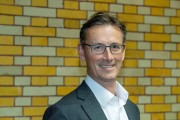
Albena Vassileva Albena Vassileva is Executive Director in the Infrastructure Investment Team at IFM Investors, where she is responsible for infrastructure investments in Europe. She works on the energy transition and strategies relating to renewable energy and green fuels, and has been involved in investments in companies including Naturgy and SQ Renewables. Previously, she headed the M&A Energy Team at ABN AMRO and worked at Advent International and ABN AMRO Capital. |

Read the report in the digital magazine
Share this post!
Related posts
-
 Read more about "Schroders: Amerikaanse energietransitie groeit door ondanks weerstand overheid"
Schroders: Amerikaanse energietransitie groeit door ondanks weerstand overheid
-
 Read more about "Schroders: Europa’s zoektocht naar eigen energie biedt kansen voor biomethaan"
Schroders: Europa’s zoektocht naar eigen energie biedt kansen voor biomethaan
-
 Read more about "Panel discussion 'Infrastructure for the Energy Transition'"
Panel discussion 'Infrastructure for the Energy Transition'
-
 Read more about "Schroders: Vraag naar energietransitie-infrastructuur blijft groeien"
Schroders: Vraag naar energietransitie-infrastructuur blijft groeien
-
 Read more about "Invesco: Energienet dreigt rem te zetten op AI-investeringsgolf"
Invesco: Energienet dreigt rem te zetten op AI-investeringsgolf
-
 Read more about "Triodos IM: Opkomende landen versnellen overstap naar duurzame energie"
Triodos IM: Opkomende landen versnellen overstap naar duurzame energie
-
 Read more about "Webinar 'Impact & Green Bonds'"
Webinar 'Impact & Green Bonds'
-
 Read more about "BNP Paribas: Amerikaanse import van Chinese zonnepanelen stijgt met 178%"
BNP Paribas: Amerikaanse import van Chinese zonnepanelen stijgt met 178%
-
 Read more about "Building the energy system of the future (roundtable ‘From Energy Transition to Energy Security’ – part 3)"
Building the energy system of the future (roundtable ‘From Energy Transition to Energy Security’ – part 3)
-
 Read more about "Schroders: Energiezekerheid maakt infrastructuur aantrekkelijk voor belegger"
Schroders: Energiezekerheid maakt infrastructuur aantrekkelijk voor belegger