
Roundtable 'Local Impact'
Roundtable 'Local Impact'
This report was originally written in Dutch. This is an English translation.
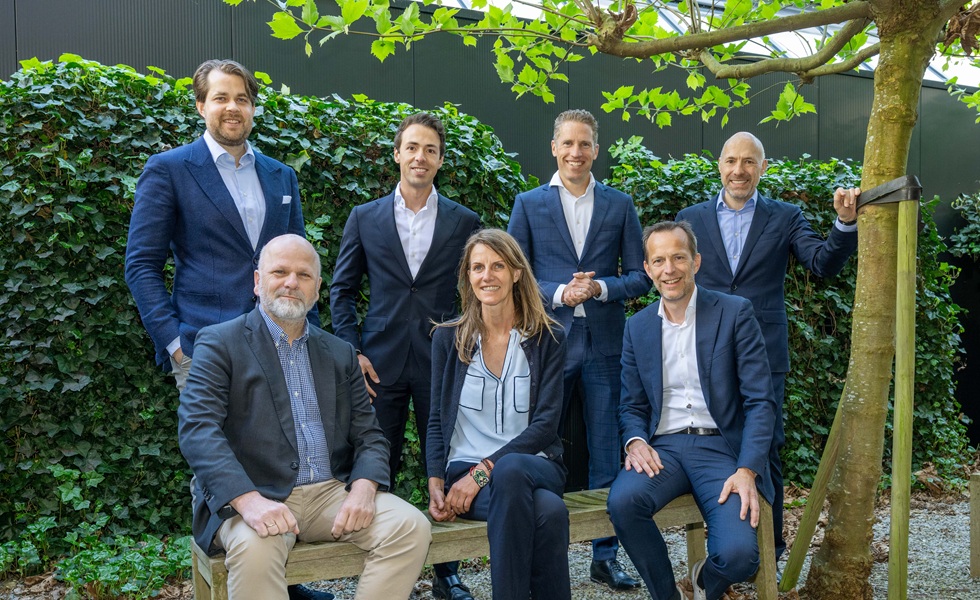
Local impact investing is attracting increasing attention within the pension sector. During the Financial Investigator roundtable discussion, it became clear that interest in social impact is growing, but that pension funds are simultaneously grappling with issues relating to implementation, scalability and risk management. There was also a call for pragmatism. ‘Let’s not spend the first ten years discussing a perfect plan; let’s just get started and learn as we go.
By Baart Koster
|
CHAIR: Marlene Stam, Collective Action
PARTICIPANTS: Jorrit Arissen, Van Lanschot Kempen Vincent van Bijleveld, GREEN, Finance Ideas Bob Crans, Montae & Partners Ronald van Dijk, Rail & Public Transport Pension Fund Fabio Rodrigues dos Santos, Eiffel Investment Group Hans de Ruiter, TNO Pension Fund |
Early on in the discussion, chaired by Marlene Stam, Co-Creator of Collective Action, it becomes clear that ‘local impact investing’ means different things to different participants. Bob Crans of Montae & Partners observes that pension fund participants are increasingly showing an interest in investments closer to home. In his view, this is not only down to emotion, but also to the fact that such investments are more recognisable and easier to explain. Participants like to see exactly where their pension money is going. Fabio Rodrigues dos Santos of Eiffel Investment Group believes that the direct link between capital and social returns is a key advantage of local impact. ‘When you can make a local impact, those providing the capital actually experience the social benefits of it. That makes it more tangible and transparent.’
According to several panellists, local investment aligns well with broader global trends. Geopolitical tensions, economic uncertainty and debates about strategic autonomy have led investors to take a more critical look at their dependence on international supply chains and foreign markets. This, too, is fuelling growing interest in investments closer to home. At the same time, several panellists immediately raised reservations about the concept of ‘local’. Vincent van Bijleveld of Finance Ideas warns against defining the desire for local impact too narrowly. According to Van Bijleveld, participants are keen to invest in the Netherlands or Europe, but are often quite open to impact in emerging markets as well.
Local feel
The chosen investment theme also makes a clear difference. For many funds, affordable housing feels more logically ‘close to home’, whilst climate and biodiversity are less readily associated with a local context. Jorrit Arissen of Van Lanschot Kempen Investment Management also sees this distinction reflected among clients. ‘Social themes are often interpreted in a more local way. To make an impact on the climate theme, people are quicker to look at international opportunities.’ Furthermore, it appears that participants do not always focus exclusively on financial returns. According to several participants, there is a growing need for investments that are transparent and socially accountable.
Gradually, the discussion takes on a broader economic dimension. For instance, Ronald van Dijk of the Rail & OV Pension Fund explicitly places local impact within the context of strategic autonomy, innovation and economic resilience within Europe. ‘It’s also about technology, jobs, security and economic strength. Ultimately, that relates just as much to social impact,’ says Van Dijk. Van Bijleveld recognises this. Research by Finance Ideas shows that Dutch pension funds’ dependence on the US is prompting them to reconsider their allocations in favour of Europe. This also shifts the discussion towards the question of how Europe can remain economically competitive. According to several participants, whilst Europe does have various strong technological sectors, it often lacks sufficient capital to enable companies on our continent to continue growing.
The fact that many funds are still postponing local impact investing is not because they do not want to, but simply because they do not have the time for it at the moment.
In this context, the participants highlighted challenges relating to venture capital, scale-ups and the so-called ‘valley of death’. According to Van Dijk, this is one of the areas where a structural problem lies. ‘In Europe, we are not particularly good at scaling up innovative technology. As a result, companies ultimately end up moving to the US, where larger capital markets are available.’
Hans de Ruiter of the TNO Pension Fund can attest to this issue from a practical perspective. For a fund with a membership base that is keenly interested in innovation and technology, he says, this discussion is very much on the agenda. De Ruiter highlights photonics, quantum technology and deep tech, amongst others, as sectors in which the Netherlands holds a strong international position. ‘We’re very strong technologically,’ says De Ruiter. ‘But the scale-up capital is often lacking to keep innovative technology companies here.’
Additionality through growth capital
This gives the discussion a broader economic dimension, as it is no longer just about sustainability or impact in the traditional ESG sense, but also about how pension capital can contribute to innovation, economic activity and development in Europe. Van Bijleveld notes that it is precisely in the early growth phase that the additionality of investments can be significant. In his view, investing in a company that would otherwise struggle to secure funding makes a greater difference than when capital goes to companies that could easily be financed even without an impact fund.
This also raises the question of where impact investing makes a substantial difference. According to Dos Santos, this is precisely where the strength of private credit often lies: financing can be directly linked to specific sustainability targets or operational changes within companies. He cites a PVC manufacturer that is investing heavily in recycling capacity. Through interest rate incentives, sustainability targets can be directly linked to the financing terms. Van Bijleveld does, however, offer a critical nuance here. In his view, financing sustainable businesses makes sense, and a manager can steer a company to some extent through interest rate incentives and other support. But as a pension fund, you do need to distinguish between capital that ‘contributes to’ change and capital that ‘makes a difference’. It is precisely this discussion about additionality and impact that shows the participants are constantly seeking nuance. Consequently, no one at the table presents local impact investing as a simple solution to major social issues. More often, the conversation centres on the practical question of where pension funds can actually make a difference.
The discussion then turns to risk and feasibility. After all, anyone wishing to take local impact seriously will soon find themselves looking at private markets, infrastructure, venture capital or private debt. And with that come higher costs, less liquidity and greater complexity. According to De Ruiter, impact investing does not automatically mean that pension funds have to take a fundamentally different view of risk. ‘We first construct a portfolio based on risk and return,’ he says. ‘Then we look at where we want to generate impact within that portfolio.’
Portfolio balance is crucial
Van Dijk, too, puts into perspective the idea that investing in more complex private asset classes would automatically lead to irresponsible risks. In his view, it ultimately comes down to the overall portfolio balance. Liquidity, interest rate risk and currency risk remain at least as important for pension funds. At the same time, several participants acknowledge that, in practice, local impact investing often involves private markets, infrastructure, venture capital and other less liquid investments. This automatically places higher demands on governance, monitoring and specialist knowledge. According to several participants, smaller and medium-sized funds in particular do not always have the capacity to analyse and oversee complex investments in depth. This makes collaboration with specialist parties crucial, according to several panellists.
With local impact investing, those providing the capital actually experience its social benefits. This makes it more tangible and transparent.
Reputational risk also plays a role. Arissen cites the example of a sustainable property developer in the Netherlands. Despite strong sustainability performance, he says it can sometimes be difficult to raise institutional capital for such projects. ‘Pension funds often harbour the fear: what if this ends up on the front page of the FD?’ According to Arissen, a contributing factor is that institutional investors must be able to continually justify their choices not only in financial terms but also in social terms. He believes this leads to greater caution, particularly when it comes to private markets, higher costs or innovative structures, even when the underlying social impact appears convincing.
Several participants recognise this reluctance. High costs, private equity and high-risk investments are socially sensitive issues. According to De Ruiter, this has consequences for the way in which pension funds invest. ‘In the Netherlands, we sometimes focus more on risk management than on return management. We could do with being a bit more enterprising at times.’ Van Dijk sees not only media coverage but also the broader public debate as a key factor. He believes that as soon as the media focus primarily on costs, incidents or failures, reluctance towards innovative or less liquid investments tends to arise more quickly. ‘Then you have to explain time and again why private equity is, after all, a sensible choice,’ he says. According to Van Dijk, this reluctance applies not only to impact investing, but much more broadly to private markets and more complex investments.
Participants at the helm
At the same time, the panellists note that pension scheme members’ preferences actually seem to offer more scope for social investments. Pension funds are increasingly conducting surveys that explicitly take sustainability, social impact and local investments into account. According to Crans, members regularly show a willingness to accept slightly higher costs or greater risk, provided that the social added value remains concrete and explainable. ‘If you provide tangible examples, it also becomes easier for boards to take that step,’ he says.
Van Dijk sees this as an important development towards the new pension system, in which members’ preferences are becoming more clearly visible. In his view, this also increases the need to explain more clearly where pension funds are invested and why certain choices are made. Ultimately, it is not solely up to board members or fiduciary managers to determine what impact is desirable. When making that choice, they must explicitly take participants’ preferences into account. ‘Otherwise, there is no clear mandate from the participants,’ he says. ‘Ultimately, it must be based on participants’ preferences.’
The general expectation among those present is that this issue will gain further importance in the coming years once the pressure to implement the Wtp eases. As long as funds are busy with the transition to the new system, the participants believe there will be only limited scope for new initiatives and innovative forms of collaboration.
In Europe, we’re not very good at scaling up innovative technology. As a result, companies end up moving to the US after all.
Strengthen the chain
From this point, the discussion shifts from vision to implementation. Because if pension funds genuinely want to scale up local impact investing, how do you organise that in practice? That is precisely where the complexity seems to begin. Collaboration sounds logical, but who takes the initiative? Who organises the governance? And how do you prevent each party from having to set up the infrastructure, expertise and assessment frameworks from scratch all over again? Van Dijk advocates a stronger financial ecosystem in which pension funds, venture capital firms, fiduciaries and asset managers work together. In his view, local impact investing is not just about capital, but also about the capacity to properly assess and support companies. ‘You need people who can screen, analyse and support such companies,’ he says. ‘That requires capacity, knowledge and organisation.’
De Ruiter therefore sees great value in strategic partnerships. In his view, the biggest challenge lies not so much in funding, but in organisational strength and execution. The TNO pension fund therefore deliberately collaborates with specialist firms in private equity and venture capital, precisely because not every fund can build up all the necessary expertise in-house. He believes there is generally a willingness to collaborate within the sector, but organising such collaboration often proves difficult in practice. According to De Ruiter, you run into questions such as: who takes the initiative, who is in charge, and how do you ensure that collaboration actually leads to implementation? Crans notes that smaller pension funds in particular regularly struggle with translating ambition into concrete implementation. Boards are keen to take steps towards impact investing, but do not always have sufficient capacity or specialist knowledge to assess complex private markets independently. According to Crans, impact investing in private markets requires not only ambition, but also sufficient knowledge, capacity and time within the organisation. He believes that smaller funds, in particular, regularly run into this problem.
This explains the general perception that local impact investing often takes a long time to get off the ground. Whilst interest is clearly growing, the capacity to implement it does not always keep pace. Another factor is that many pension funds have been heavily occupied in recent years by the transition to the new pension system. Crans therefore expects the discussion on local impact investing to gather momentum in the coming years. ‘The fact that many funds are still postponing local impact investing is not because they do not want to, but simply because they do not have the time for it at the moment,’ says Crans.
Additionality makes the difference
A key topic of discussion is whether impact investing should actually still be regarded as a separate asset class. According to several participants, impact is shifting ever more emphatically towards mainstream portfolio construction. Van Dijk sees a clear trend in this. ‘Ten years ago, pension funds were still experimenting with separate impact mandates,’ he says. ‘Now you see much more often that impact is simply organised within existing asset classes.’ By this he means categories such as infrastructure, private credit and private equity, within which pension funds then seek to make specific impact choices. According to Van Dijk, this also aligns more closely with the way in which pension funds traditionally build portfolios.
De Ruiter recognises this trend. In his view, pension funds are increasingly seeking to integrate impact within existing investment structures rather than setting up separate impact categories. ‘We’re already heavily involved in venture capital and private credit anyway,’ he says. ‘Then you start looking at where you can make an impact within that.’ However, this view is not universally shared. Van Bijleveld emphasises that research carried out by Finance Ideas shows that a significant proportion of pension funds are willing to consider (small) allocations to new asset categories precisely because of economic or sustainability-related real-world impact objectives. He was particularly pleasantly surprised by the recognition amongst pension funds that venture capital can have a significant impact and therefore warrants further investigation. ‘Venture capital can deliver excellent returns. The experiences of the TNO Pension Fund demonstrate this. Large allocations aren’t necessary, and governance requires commitment. But it is precisely the willingness to take that step that enables you to make a real impact here.’
Our research shows that not everything that sounds ‘green’ actually leads to change. That is precisely why a clear theory of change is so important.
This highlights a difference in approach during the round-table discussion. On the one hand, there is a conviction that impact should be integrated into existing portfolios as much as possible. On the other hand, there is also the view that separate impact allocations can provide scope for investments that would otherwise never get off the ground. Van Bijleveld emphasises that the amounts required are often relatively modest. In his view, only a small proportion of total pension assets needs to be channelled into venture capital or innovative growth financing to have a visible economic impact. ‘If all Dutch pension funds were to allocate half a per cent of their assets to venture capital, that would already give that market a huge boost,’ he says.
Data, measurability and frustration
Whenever impact investing is discussed, the debate about measurability almost automatically follows. How do you actually demonstrate that an investment has a genuine social impact? Opinions on this matter at the table appear to diverge markedly. De Ruiter cites data infrastructure as a major bottleneck, particularly for start-ups and scale-ups.
Large listed companies generally have comprehensive reporting systems, but young growth companies are often far less advanced in this respect. ‘Ultimately, you do want to be able to show something,’ says De Ruiter. ‘If you claim that something has an impact, you need to be able to substantiate that to some extent.’ Dos Santos also recognises this problem in the practice of private credit. With some investments, that impact is relatively easy to see, for example in energy storage, offshore wind or solar energy. However, according to Dos Santos, the situation is more complicated when it comes to social impact themes. ‘That is why, together with an external partner, we developed an analysis tool based on CBS data and demographic information. We are using this to try to make the social effects that investments can have at a local level more visible.’
According to Dos Santos, this not only helps to make impact more measurable, but also to gain a clearer insight into where social interventions have the greatest effect locally. It is precisely with social impact themes that regional context makes a significant difference, says Dos Santos. He cites investments in labour market participation as an example. When companies help people who are distanced from the labour market to find work, the social impact of this can vary greatly from region to region. ‘If you do something like that in an area where unemployment is already low, it has a different impact than in a region where that problem is much greater,’ says Dos Santos.
Does impact need to be measurable?
During the discussion, scepticism is voiced about the ever-increasing emphasis on measurability. Van Dijk, in particular, raises serious questions about the way in which impact is sometimes approached in practice. ‘The impact sector constantly insists that everything must be measurable, but I wonder whether that is always necessary.’ According to Van Dijk, impact measurement sometimes risks becoming an end in itself, whilst the costs and administrative burdens rise sharply as a result. Moreover, he believes there is a risk that investors will focus primarily on reporting rather than on actual social change. ‘If something quacks like a duck and walks like a duck, then perhaps it’s just a duck,’ he says. In other words, some investments are so obviously socially relevant that endless measurement models add little value. According to Van Dijk, it ultimately comes down to being able to explain things to participants and the board.
Pension funds often harbour a fear nonetheless: what if this ends up on the front page of the FD?
Van Bijleveld takes a middle ground. In his view, impact does not always need to be fully quantifiable – an initial proof of concept is likely to save less CO2 than the thousandth solar park – but there must be trust in the process and in the way the manager assesses the impact of investments. ‘There does need to be a well-founded Theory of Change: which problem is being tackled and to what extent does this investment solve it? Our research shows that not everything that sounds green actually leads to change. That is precisely why a clear Theory of Change is so important,’ he says. Crans also observes that many pension funds are struggling with the increasing complexity of impact definitions and reporting requirements.
In his view, an overly strict approach can actually be paralysing. ‘Some boards simply want to invest in companies they feel are socially relevant,’ he says. ‘In that case, you don’t want to get bogged down first in a huge debate about definitions.’ This tension between pragmatism and measurability runs like a common thread through the discussion. No one at the table advocates making non-binding claims about impact, but at the same time, there is also a warning that impact investing must not become bogged down in bureaucracy.
Blended finance and the government’s role
The question of how risks can be better shared then leads the discussion to blended finance and the government’s role. Van Dijk wonders aloud why blended finance is still used relatively sparingly in the Netherlands, whilst comparable structures have existed internationally for some time. In such arrangements, for example, a public body absorbs the first loss, making it easier for institutional investors to get on board. According to Van Dijk, such an arrangement could act as a key catalyst, particularly for innovative growth financing. ‘Perhaps a single euro of public money could mobilise many times that amount in private capital.’ He refers, amongst other things, to international development projects, where, in his view, blended finance has been successfully applied for some time. De Ruiter also recognises that blended finance can help to lower certain barriers, particularly in markets where there is still little track record available. After all, many impact funds and venture capital firms are still at a relatively early stage of development. ‘The pool simply isn’t that big yet,’ says De Ruiter. ‘So sometimes you have to accept that you’re taking a bit more entrepreneurial risk.’
According to De Ruiter, this also means that the assessment is shifting more strongly towards the quality of teams and implementers. When a fund has not yet built up a long track record, trust in the people behind the strategy becomes more important. At the same time, Arissen observes that many institutional investors continue to struggle with that sort of entrepreneurial risk. In his view, pension funds’ risk appetite is often lower than that of private entrepreneurs or family offices. ‘An entrepreneur who has just sold his business views risk very differently,’ he says. ‘With pension funds, you tend to see more caution.’
According to Arissen, a contributing factor is that institutional investors do not just look at returns, but also pay close attention to reputation, governance and the social accountability of investments. In his view, this can lead to extra caution, particularly in innovative or less mature markets. Furthermore, pension funds ultimately manage collective pension funds and are accountable to the public. According to Arissen, this automatically makes them less willing to take risks than private investors or family offices. Van Bijleveld adds an important nuance here: there are impact solutions to suit everyone’s wishes and constraints, ranging from in-depth proof-of-concept impact to contributions to change at scale. That’s perfectly fine, because both are necessary, as long as you know what you’re buying and communicate that clearly.
Just start small. So don’t spend ten years talking about a perfect plan; just get started and learn as you go.
Logical priorities
As the discussion progresses, it focuses more specifically on the question of which themes pension funds wish to make a local impact on. Health emerges as a recurring topic. This is not entirely surprising, as several of the funds present have a membership base directly linked to healthcare, technology or social services. For the TNO Pension Fund, for example, innovation is a logical priority, according to De Ruiter. As a result, the fund naturally gravitates towards technology, venture capital and deep tech. ‘If innovation is important to your members, you’ll soon find yourself on that side of the market,’ he says. ‘Because that’s where most of the innovation is.’ The energy transition is also frequently cited as a logical ‘local impact’ theme. According to Dos Santos, this is also an area where impact can be made relatively visible and easy to explain. Investments in energy infrastructure, battery storage and renewable energy projects directly address social issues that members recognise. ‘With the energy transition, you can demonstrate quite concretely what you’re financing,’ says Dos Santos.
With other themes, the situation is more complex. Whilst various participants do view biodiversity as a major societal risk, they also find it difficult to develop clear investment categories for it. Van Bijleveld even describes biodiversity as a greater structural risk than climate change, but at the same time acknowledges that, in practice, it is still difficult for investors to invest in it in a concrete way. Unlike with the energy transition, there are fewer investment opportunities relating to biodiversity in which institutional capital can be deployed at scale with relative ease.
Security and defence are also briefly discussed, particularly in relation to strategic autonomy and European resilience. According to Van Dijk, a significant portion of some funds’ portfolios indirectly touches on such issues. At the same time, these themes transcend the local and even the national level. ‘When it comes to security, you quickly end up at the European level,’ he says. This brings us back to a previous point of tension: whilst local impact investing is all about proximity and recognisability, social issues rarely adhere strictly to national borders.
Start small
De Ruiter believes that the biggest challenge in local impact investing lies not primarily in vision or ambition, but mainly in implementation. In his view, there is a great deal of analysis and consultation within the sector, but it proves more difficult to actually get initiatives off the ground. ‘We’re very good at analysing and making plans in the Netherlands,’ he says. ‘But ultimately, you just have to get started.’ In his view, stakeholders sometimes wait too long for perfect structures, full consensus or fully developed governance frameworks, whereas small-scale pilot projects can actually help to build up experience. Crans recognises this. In his view, the demand for local impact products often only emerges in practice once such propositions actually become available. Pension funds are still regularly seeking to define exactly what local impact investing entails. According to Crans, concrete products can actually help to further stimulate that discussion.
De Ruiter refers to previous examples of joint product development within the Dutch pension sector. In his view, this demonstrates that collaboration is indeed possible when parties are prepared to work together. At the same time, he warns against making local impact investing any larger or more complex than necessary. ‘Just start small. So don’t spend ten years talking about a perfect plan; just get started and learn as you go.’
|
SUMMARY Local impact investing is rapidly gaining prominence within the pension sector, partly due to geopolitical uncertainty and the growing need for explainable investments. Pension funds are seeking a balance between social impact, returns, scalability and risk management. Venture capital, private credit and infrastructure, in particular, are seen as areas where additionality and economic impact can converge. Impact must remain sufficiently substantiated and transparent, without getting bogged down in bureaucracy. Institutional investors remain cautious due to governance requirements, reputational risks and public accountability. The biggest challenge lies not in ambition, but in implementation, collaboration and actually launching concrete initiatives. |
|
Marlene Stam Marlene Stam has been focusing on impact investing since 2010 and uses her in-depth knowledge in this field to accelerate the transition to a sustainable financial system. She is currently a Partner at Collective Action and a member of the Investment Committee at Planet&People One. Previously, she held positions at companies including Russell Investments, XS Investments and Twelve Capital. |
|
Jorrit Arissen Jorrit Arissen has been with Van Lanschot Kempen since 2015, where, as Co-Head of Alternative Manager Research, he advises institutional clients on strategic allocations within private markets. In recent years, he has pioneered innovative, locally rooted impact solutions for sectors including property and private debt. Arissen has over twenty years’ experience and previously worked at PGGM Investments and APG Asset Management. |

|
Vincent van Bijleveld Vincent van Bijleveld is a Managing Consultant on the sustainable investment team at Finance Ideas. Together with this team, he works on designing, implementing and evaluating MVB policy and its implementation. The team also initiates numerous collaborations between Dutch pension funds and/or international investors, such as within the Dutch & Health Engagement Networks and the Global Real Estate Engagement Network. |
|
Bob Crans Bob Crans has been working at Montae & Partners as a Senior Investment Consultant in Asset Management since 2023. He advises pension funds on investment policy, with a strong focus on sustainability and impact. Prior to this, he worked as an Investment Consultant at Willis Towers Watson. Crans is a CFA Charterholder and holds an MSc in Quantitative Finance and an LLB in Tax Law. |
|
Ronald van Dijk Ronald van Dijk is Chief Investment Officer and a member of the board of the Rail & OV Pension Fund. He has over 25 years’ experience in institutional asset management, gained at organisations including APG and ING, and is Professor of Investment Management at the University of Groningen. He obtained his PhD in Econometrics from Erasmus University. |

|
Fabio Rodrigues dos Santos Fabio Rodrigues dos Santos has over 10 years’ experience in the financial sector. Since June 2025, he has been working with the Private Credit team at Eiffel Investment Group SAS, where he contributes to transactions in the Benelux and focuses on impact investments. Prior to his current role, he worked at HSBC, where he was involved in corporate coverage and investment banking. |
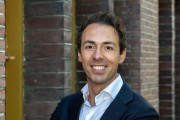
|
Hans de Ruiter Hans de Ruiter is Chief Investment Officer at TNO Pension Fund. He has extensive experience in the financial sector, primarily within the pension fund industry. He previously worked at Hoogovens Pension Fund and APG. He is currently also a board member at Achmea Pension Fund and PMT. At both pension funds, he also chairs the investment committee. |
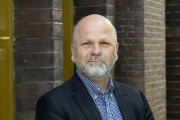
Read the report in the digital magazine
Share this post!
Related posts
-
 Read more about "Roundtable 'Impact Investing in Private Equity'"
Roundtable 'Impact Investing in Private Equity'
-
 Read more about "Achmea IM en ILX bundelen krachten voor impactbeleggen in opkomende markten"
Achmea IM en ILX bundelen krachten voor impactbeleggen in opkomende markten
-
 Read more about "Impact in private debt: the closer, the more powerful"
Impact in private debt: the closer, the more powerful
-
 Read more about "Jori Arts: Why impact investing needs the stock market"
Jori Arts: Why impact investing needs the stock market
-
 Read more about "Van Lanschot Kempen: 34% deelnemers bereid pensioen in te leveren voor impact"
Van Lanschot Kempen: 34% deelnemers bereid pensioen in te leveren voor impact
-
 Read more about "Webinar 'Impact & Green Bonds'"
Webinar 'Impact & Green Bonds'
-
 Read more about "BlackRock gaat samenwerking aan met Phenix Capital Group"
BlackRock gaat samenwerking aan met Phenix Capital Group
-
Read more about "NAB en PwC bundelen krachten voor State of the Sector Survey 2026"
NAB en PwC bundelen krachten voor State of the Sector Survey 2026
-
 Read more about "Roundtable 'Measurable Impact'"
Roundtable 'Measurable Impact'
-
 Read more about "PME investeert € 100 miljoen in zorgvastgoedproject DSLIF van Bouwinvest"
PME investeert € 100 miljoen in zorgvastgoedproject DSLIF van Bouwinvest