Van Lanschot Kempen IM: From niche to core component - the rise of impact investing

This interview was originally written in Dutch. This is an English translation.
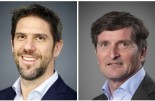
Impact investing has come of age in the Netherlands in a short period of time. What began as a niche for pioneers is now becoming an established component of institutional portfolios. Eszter Vitorino Fuleky, Impact Lead, and Robin Schouten, Executive Director of Fiduciary Management, both at Van Lanschot Kempen Investment Management, explain how to integrate impact into investment policy without compromising on expected risk and return, and what narratives will truly bring impact investing to life.
By Michiel Pekelharing
Why do you focus on impact investing?
Schouten: 'Our roots lie in serving institutional investors. Increasingly, they want not only to achieve financial returns but also to create social value. We don’t have a ‘mandatory client portfolio,’ as insurers do, for example. Clients consciously choose us. That means we must continuously align with their ambitions. Those ambitions have clearly broadened in recent years. A good pension remains the core, but increasingly, pension funds and insurers also want to demonstrably contribute to solutions for climate, healthcare, or inclusive growth. For us, impact investing is not a standalone product, but a logical step in the evolution of sustainable investing. We already started investing with clients who explicitly wanted to make an impact back in 2017. What was then still pioneering has now become a serious allocation question.'
Is impact investing the next step in sustainable investing, or does it go beyond that?
Vitorino Fuleky: 'In my view, impact is more than just a deepening of sustainable investing. Sustainable investing is often about limiting risks and reducing negative effects. Impact investing, on the other hand, focuses explicitly on achieving positive, measurable outcomes. This means that as an investor, you actively choose to allocate capital to solutions that contribute to systemic change. As a society, we are undergoing a number of major transitions, such as the energy transition, the food transition, and digitalization. Within these broad movements, we distinguish between different types of investments: existing sustainable solutions, solutions that truly help accelerate the transition, and pure impact solutions with a strong additional character. This requires a systemic perspective. Investors who want to contribute to a better climate should not fixate on CO2 emissions and ignore a theme like biodiversity. Themes such as biodiversity, social inclusion, and economic resilience are interconnected. Impact investing means explicitly taking that interconnection into account.'
How do you fit impact KPIs within the traditional risk-return framework?
Schouten: 'The idea that impact automatically comes at the expense of returns is persistent but outdated. In practice, we analyze impact investments just as thoroughly as other private market investments. We build the expected return based on cash flows, costs, value growth, and risks. We introduce impact as a third dimension alongside risk and return. Every investment has a positive or negative impact. By explicitly aiming for positive impact, you don’t add ‘extra risk,’ but you make more conscious choices. The key is to be transparent about expectations and uncertainties. Just like with any investment, results can be better or worse than expected. The difference is that, in addition to financial returns, you also aim for concrete social outcomes.'
How do you measure and quantify your impact at the portfolio level?
Vitorino Fuleky: 'Measuring impact starts with the ‘theory of change.’ We ask what problem we’re addressing and how an investment contributes to the solution. Only then do you choose measurable KPIs. In doing so, we look to the IRIS+ database from the Global Impact Investing Network. It contains approximately 2,000 indicators, which we’ve narrowed down to a workable set of fewer than fifty core KPIs. We assess those KPIs for measurability, reliability, and relevance per investment category. Examples include avoided CO2 emissions, the amount of megawatt-hours of renewable energy, or the number of people with access to affordable healthcare. But numbers alone aren’t enough. Impact must align with the narrative of value creation and is incorporated into due diligence and manager selection. If a strategy cannot credibly substantiate or report its impact objectives, that is a red flag. The impact objective must guide capital allocation; otherwise, it loses its meaning.'
In ten years, I hope we won’t even need the term ‘impact investing’ anymore. By then, impact will simply be part of how you deploy capital responsibly.
Is the investable impact universe large enough for institutional scale?
Schouten: 'A theme like climate mitigation is now well-investable in key market segments such as private equity, infrastructure, and private debt. For more specific themes such as water scarcity or certain biodiversity solutions, the market is even less deep. That calls for careful diversification and realistic expectations. Concentration risk is a real concern, especially for smaller investment funds or niche managers.'
How do you bring impact to life for investors?
Vitorino Fuleky: 'You do this by—in addition to measurable KPIs—sharing concrete stories about the changes that impact investing sets in motion. A great example is a venture capital firm in the aviation sector working on hydrogen-electric propulsion systems as an alternative to traditional jet engines. Discovering the world through travel is wonderful, but unfortunately not very sustainable at the moment. This innovation could lead to a 90% reduction in CO2 emissions compared to conventional turbine technology and also requires lower maintenance costs. If this technology is rolled out globally, it is estimated to avoid 1.3 gigatons of emissions by 2040. Solutions like these capture the imagination and demonstrate that capital can accelerate innovation. Another great example is an investment in electric motor taxis in East Africa. This initiative contributes to emission reductions while also increasing the income of local drivers. These drivers are often women who serve as the primary breadwinners for their families. This is a direct and human story with a broad societal impact. We support pension fund communications specialists with these types of case studies and data on specific investments. Ultimately, it’s about connection: showing that pension assets can not only generate returns but also contribute to solutions that participants can relate to.'
Where will impact investing be in five years?
Schouten: 'That question is actually just as difficult to answer today as it was when we started with impact investing in 2017. You now see that more and more large players are adding impact to their investment portfolio. That’s positive, but it also requires focus. You have to keep assessing whether impact is truly additional and not just a green label on existing activities. In ten years, I hope we won’t even need the term ‘impact investing’ anymore. By then, impact will simply be part of how you deploy capital responsibly. Not as a separate category, but integrated into investment decisions.'
Vitorino Fuleky: 'Impact is ultimately about intention. Money in and of itself has no morality. It is a means to an end. If you consciously use that means to choose solutions that can generate both financial returns and create social value, why wouldn’t you do that? I think that in five years, more professionals in the sector will be aware of this. By then, impact will no longer be a niche, but a natural part of portfolio construction. That is the direction we are moving toward.'
|
SUMMARY Impact investing is rapidly gaining ground within institutional portfolios and is shifting from a niche area to a serious asset class. According to Van Lanschot Kempen Investment Management, impact is about consciously steering toward positive social outcomes, without compromising on financial analysis, risk assessment, and financial return expectations. By making impact measurable with clear KPIs and telling concrete stories, pension funds can better show participants how their assets contribute to sustainable solutions. |