M&G: At what point does private credit stop trading and start its transformation?
M&G: At what point does private credit stop trading and start its transformation?
This interview was originally written in Dutch. This is an English translation.
Private credit has been very much in the spotlight in recent months. Anna Skarborg, Managing Director & Director of Sustainability at P Capital Partners (part of M&G Investments), emphasises that this asset class can provide the sustainable boost that the European real economy so desperately needs right now.
By Michiel Pekelharing
|
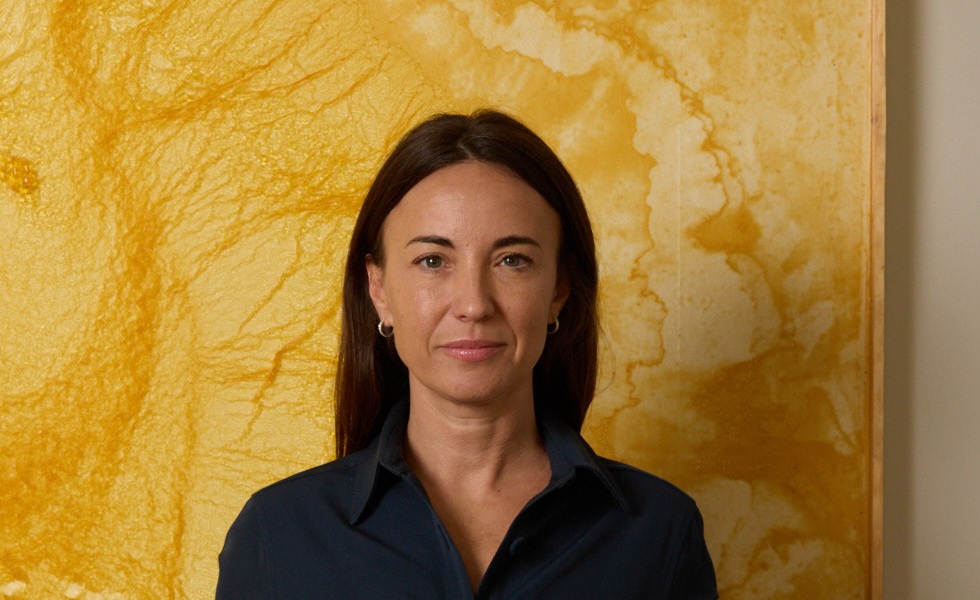
Anna Skarborg Anna Skarborg joined P Capital Partners in April 2024. As a member of the management team, she is responsible for the strategic integration of sustainability, AI and communications aimed at attracting new projects. In addition to having founded two companies herself, she has over 15 years’ experience in the field of sustainable finance. Before joining P Capital Partners, she headed up the sustainable investment department at Northzone VC. |
Private credit has grown significantly in recent years, but is now under pressure as some funds are finding it difficult to honour exit requests. How do you view this development, and what risks do you currently see in the market?
‘We are actually seeing two trends unfolding simultaneously. On the one hand, there have been massive capital inflows into private credit as a whole. On the other hand, the market has become increasingly fragmented. On one side, you have the large funds that use their loans to finance private equity transactions. On the other, the more specialised players who lend directly to companies, without the involvement of a private equity buyer. By far the most capital has flowed into the first category. This has led to fierce competition for the same deals, causing debt ratios to keep rising, interest margins to shrink and the terms protecting investors to become increasingly meagre. There is simply too much capital chasing the same deals. At the same time, the exit windows for private equity funds are limited, meaning we are seeing more and more funds extending their terms and reinvesting capital internally rather than returning it to investors. This creates a double squeeze, and it comes at precisely the moment when the protective structures are at their weakest. That is a cause for concern.’
How does the situation in that segment relate to your own portfolio?
‘In certain parts of the market, debt levels have risen significantly, whilst interest rates are under pressure. Our corporate portfolio, by contrast, maintains a more conservative debt profile combined with strong, risk-adjusted returns. This is no coincidence, but the direct result of our approach. We lend directly to entrepreneurs and family businesses and do not follow a private equity firm’s acquisition strategy. As a result, we are not dependent on that deal flow and do not compete with the dozens of funds all vying for the same transactions. This enables us to charge a realistic risk premium and negotiate robust terms that protect us as a lender. These are not minor nuances, but fundamentally different risk profiles.’
Why do you lend primarily to family businesses and entrepreneurs?
‘First and foremost, there is a significant opportunity here. Family businesses account for over 50 per cent of the European economy, but these companies often struggle to raise capital. Furthermore, family businesses share the same interests as us when it comes to lending. When we lend money to a family business or an entrepreneur-owner, we are lending to someone for whom this business is their most important asset. He or she has invested all their time, money and reputation in it. The time horizon is long, and the motivation is intrinsic.
There is no financial owner who wants to exit in four years’ time and who, to that end, sometimes makes decisions that are not necessarily in the company’s long-term best interests. That difference in mindset is directly reflected in the quality of our discussions and in the way we work together to solve problems when a company is facing difficulties.’
Family businesses account for around 70 per cent of the European corporate sector and more than half of Europe’s GDP. Yet only a fraction of the European direct lending market reaches this group. How do you explain that, and why do you see this as an opportunity?
‘It’s all down to complexity. Family-owned and entrepreneur-led businesses are less experienced when it comes to raising finance. They don’t have a large private equity firm behind them to guide the fundraising process and draw up the information memoranda. When we look at a deal of this kind, we almost always start from scratch. The companies are sound enough, but for one reason or another they do not have access to conventional bank financing. This could be for any number of reasons, such as a more complex market or a specific project that falls outside the models banks use. So we do not take on the role of a bank, and above all I do not wish to suggest that banks should become more active in this market. We are paid for the extra work and the additional risk involved, and we also negotiate genuine protection in return. For us, this combination of a complexity premium and a strong covenant structure forms the basis for attractive risk-adjusted returns.’
You do refer to ‘fishing in the ocean’ when comparing your approach to the sponsor-backed market. What do you mean by that?
‘If you’re looking for deals in the sponsor-backed market, you’re standing, as it were, on the banks of a river. You wait for the fish to swim past, and there’s a structured deal process you can join. The party making the best offer catches the fish. In the non-sponsor-backed market, you’re fishing in an ocean. There is no structured process. It’s all about relationships, ecosystems and the reputation you’ve built up as a partner. The sources of deal flows are our own network, recommendations from other parties and gatherings such as board meetings where we can join in. The other board members see how we work, what role we play and who we are. They then advise companies within their own networks to consider our type of capital as well. In this way, we have been building an ecosystem for over twenty years. Our experience and our network act as barriers to new entrants who think that unsolicited lending is simply a matter of tweaking their existing strategy.’
If you’re looking for deals in the sponsored market, you’re standing, as it were, on the banks of a river. In the unsupported market, you’re fishing in an ocean.
It is estimated that Europe needs an additional €800 billion a year to close its competitiveness gap and accelerate the energy transition. Which sectors and opportunities do you see as the most promising in this regard?
‘Our transition strategy is specifically focused on three pillars: decarbonisation, resource efficiency and resilient infrastructure. And that last category is particularly interesting at the moment. I’ve been working for fifteen years on channelling capital towards a sustainable transition. It’s almost ironic that geopolitical tensions may now prove to be the most powerful catalyst.
Due to the current crisis in Iran, there is a strong likelihood that more countries will prioritise energy self-sufficiency and resilient infrastructure. They are doing so not so much out of ideology, but out of a need for national security. For us, this means that the projects we finance – ranging from wind farms in Finland and plastic recycling plants in Ireland to biogas plants in Germany – have become strategic investments for pension funds and other major investors. This is a shift that we will see accelerate further in the coming years.’
You emphasise the importance of providing primary capital to the real economy. How does that differ from the way the vast majority of private credit capital is currently deployed?
‘Around 90 per cent of the private credit capital deployed in Europe today is sponsor-backed, financing the transfer of a company from one buyer to another within the existing system. It follows a private equity deal and facilitates what that private equity player wants to do. In most cases, this involves existing activities and companies rather than unlocking new economic activity. The capital does not go to an entrepreneur who wants to enter a new market, expand a factory or scale up a technology. We fundamentally believe in something else: namely, the other 10 per cent. This capital unlocks something that would not exist without it. Take Foodji, our first investment under our growth strategy. This is a company that installs fresh food vending machines in large industrial estates across Germany where employees have little access to healthy food. It’s not an AI company, nor is it a hyped-up growth story, but a business that solves a real social problem and is growing steadily. Or take Ovzon, a satellite company we funded when no one else was willing to do so. That is primarily capital that unlocks something that would otherwise not exist. For long-term investors – and certainly for family offices that have built something genuine themselves – that distinction is invaluable.’
What can investors expect in terms of returns and risk from an asset-backed European transition portfolio, compared with traditional sponsor-backed direct lending?
‘The comparison is structurally interesting. In the sponsor-backed market, we are now seeing compressed spreads, despite higher leverage and less covenant protection. We operate with lower leverage, stronger protective structures and higher returns for investors. Virtually everything we do is senior secured, and the vast majority is asset-backed. That was out of fashion two years ago, but now, in a world where AI companies can be disrupted overnight, it’s proving to be a strength. Ships aren’t built by algorithms. Biogas plants don’t move to the cloud. The real economy, with its real assets, forms a foundation that stands the test of time. And if a company does run into difficulties – which is rare – we, as a senior secured lender, have several tools at our disposal to take corrective action. We guided Better Energy, a solar park operator, through a restructuring in early 2026 by providing additional capital, and we expect to recover the full amount invested.’
You apply the so-called ‘stage test’ when making investment decisions. What does that entail, and why do you consider it relevant for your target group of long-term investors?
‘Although we have a solid responsible investment policy and ESG framework, I believe that investment decisions ultimately benefit from a simple, pragmatic test that enforces genuine accountability. That is the idea behind the “stage test”. It poses a simple question: ‘Would you feel comfortable standing on a stage and publicly defending this company, both financially and, above all, morally? Can you explain why it still deserves to exist in twenty years’ time?’ If the answer is no, then we must seriously ask ourselves whether we want to invest. What sounds idealistic is, in fact, a disciplined form of risk management. If you cannot defend a company clearly and with confidence, it often means there are underlying risks or consequences that you do not fully understand.
For long-term investors such as pension funds, insurers and family offices, that lack of clarity is crucial. Their returns depend on companies remaining viable, relevant and trustworthy over decades. That is why the ‘stage test’ is particularly relevant to our investor base. It aligns capital allocation with long-term social and economic sustainability. In this way, our returns are not only sustainable but also based on genuine value creation. As our investor base becomes increasingly global, we are seeing growing recognition of this approach. Long-term performance is inextricably linked to the long-term legitimacy of the companies in which you invest.’
|
SUMMARY Private credit is becoming increasingly divided between sponsor-backed and direct lending. Family-owned businesses offer opportunities due to their long-term focus and limited access to capital. The energy transition and infrastructure are creating new investment opportunities. Asset-backed loans combine strong protection with attractive returns. The ‘stage test’ helps assess investments for sustainability and social value. |
Read the interview in the digital magazine
Share this post!
Related posts
-
 Read more about "Danny Dieleman: Is Private Credit’s NAV the whole truth, or only half the truth?"
Danny Dieleman: Is Private Credit’s NAV the whole truth, or only half the truth?
-
 Read more about "Impact in private debt: the closer, the more powerful"
Impact in private debt: the closer, the more powerful
-
 Read more about "Savills IM: European real estate debt finds its moment"
Savills IM: European real estate debt finds its moment
-
 Read more about "PIMCO: What BDC markets are signaling about private credit valuations"
PIMCO: What BDC markets are signaling about private credit valuations
-
 Read more about "BNP Paribas AM Alts: Revitalising European securitisation by re-establishing a strategic funding channel"
BNP Paribas AM Alts: Revitalising European securitisation by re-establishing a strategic funding channel
-
 Read more about "AllianzGI: Momentum builds for Europe’s private credit, but structure still matters"
AllianzGI: Momentum builds for Europe’s private credit, but structure still matters
-
 Read more about "Symbiotics: Private debt in emerging markets is mature, scalable, and relevant for Dutch institutional investors"
Symbiotics: Private debt in emerging markets is mature, scalable, and relevant for Dutch institutional investors
-
 Read more about "Aegon AM: De-banking and the growing influence of Dutch private lending"
Aegon AM: De-banking and the growing influence of Dutch private lending
-
 Read more about "Mirova: De grote schoonmaak in private credit is begonnen"
Mirova: De grote schoonmaak in private credit is begonnen
-
Read more about "Danny Dieleman: The invaluable value of a reliable valuation"
Danny Dieleman: The invaluable value of a reliable valuation