
M&G: It is not innovation, but scaling up that is Europe’s real problem
M&G: It is not innovation, but scaling up that is Europe’s real problem
This interview was originally written in Dutch. This is an English translation.
Whilst American technology companies have grown into mega-caps in recent years, Europe is falling further and further behind in this area. According to Niranjan Sirdeshpande of M&G Investments, this gap can be traced back to the scaling-up process. ‘It is precisely here that opportunities lie for investors who wish to contribute to the growth of companies that can shape the European economy of the future.
By Michiel Pekelharing
|
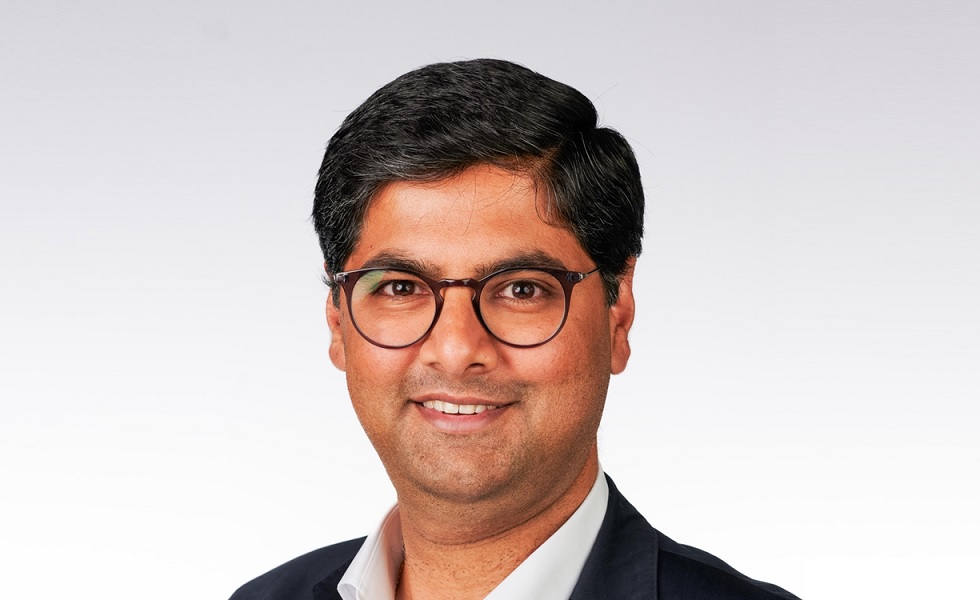
Niranjan Sirdeshpande Niranjan Sirdeshpande is Head of the Catalyst Strategy at M&G Investments and is based in London. The Catalyst team invests in leading technology and life sciences companies that have a positive impact on society and the environment. He has successfully executed transactions in sectors such as life sciences, clean energy, enterprise SaaS, fintech/consumer credit and microfinance. In addition, he represents M&G on the boards of directors and investment committees of various portfolio companies. |
Europe has significantly fewer megacaps in strategic sectors such as technology than the US. What is the cause of this significant difference? And to what extent is this gap a relevant issue for professional investors?
‘The main misconception is that Europe has an innovation problem. That is not correct. Europe has world-class science and research. If you look at universities, research institutes and the quality of deep-tech innovation, Europe can easily compete with the United States and China. The problem lies one step further down the value chain. Europe does not have an innovation problem, but an industrialisation problem. We are very good at generating ideas and technological breakthroughs, but less good at scaling them up into globally leading companies. And that is precisely where megacaps emerge.
In the US, you see successful technology companies growing into massive platforms with scale, network effects and market dominance. In Europe, by contrast, many companies get stuck in an intermediate phase, are acquired prematurely, or move to other markets where more growth capital is available. As a result, you simply build fewer companies that can grow into strategic heavyweights.
For investors, it is precisely this trend that is very interesting, because a large part of the value creation in recent decades has come from megacaps. A good example is the Magnificent 7. If Europe does not develop these companies itself, investors on our continent will miss out on structural returns and influence in sectors that are decisive for the economy of the future.’
Where exactly does the scaling-up process go wrong?
‘The crux lies in the availability of capital during the growth phase. In the early stage, when companies are valued at no more than 15 million, the European ecosystem functions well. European investors are strongly represented there. Over 80% of the capital in that phase comes from Europe itself. But as soon as companies continue to grow and require larger funding rounds, you see a clear shift. For investments of around €100 million or more, foreign parties account for roughly half of the capital. That is a fundamental problem.
European investors do finance the early, high-risk stage in which technology still has to prove it works. But they do not participate, or participate insufficiently, in the phase in which companies really scale up and create value. That is precisely the phase in which future megacaps emerge. That is where companies go global, build scale, strengthen their competitive position, and achieve the greatest leaps in value. If, as a region, you do not invest sufficiently in that, you are effectively relinquishing some of that value creation. In the US, things are organised differently. There, deep pools of private capital are available, particularly from institutional investors such as pension funds and endowments. They actively invest in growth companies, allowing firms to remain private for longer and grow exponentially during that phase.’
Why is that particular growth phase so crucial for the emergence of megacaps?
‘The growth phase is the moment when a company makes the leap from a promising technology to a scalable enterprise. In venture capital, you’re still at a stage where the fundamental risk is whether or not the technology works. That’s a binary outcome. In the growth phase, a significant portion of that risk has already been taken. The product works, there are customers, there is evidence of traction. But the company still has to prove that it can scale up to multiple markets, larger volumes, and a robust business model. That scaling up requires capital, but also patience. Certainly with deep-tech companies, such as those in semiconductors, energy storage or quantum computing, it simply takes longer for a technology to reach full commercial maturity.
In the US, that phase is financed by large institutional investors. This allows companies to invest for longer, remain private, and build up enormous value during that period. A large part of value creation nowadays takes place before an IPO. In Europe, that mechanism is still partially lacking. As a result, you see companies either going public too early or becoming dependent on foreign capital. In both cases, as a region, you lose some of the control and some of the value creation.’
To what extent does the difference between the European and American market structures play a role here?
‘That certainly plays a role. The United States is essentially a single integrated market with uniform regulations. Companies can scale up relatively easily across states. Europe is more fragmented. Different countries, different rules, different tax systems. In sectors such as healthcare and financial services, this still constitutes a barrier to rapid scaling up.
At the same time, you can see that progress is being made here. There is increasing focus on harmonising regulations and strengthening the single market. That is essential, because scale is crucial for building world-class technology companies.
What is often underestimated is that Europe also has advantages. Regulation may be slower, but it is predictable and stable. For companies with long development cycles, such as deep-tech firms, this is precisely an important factor. It enables them to make long-term decisions without the risk of sudden policy changes.’
So where exactly does the investment opportunity lie for institutional investors?
‘The opportunity lies precisely in the segment between venture capital and private equity. We also refer to that growth phase as growth equity. It is a segment that is still underdeveloped in Europe, but one where significant value can be created. Venture capital takes companies to the point of product-market fit. Private equity steps in when companies are mature, profitable and often already stable. In between lies a phase in which companies need to grow geographically, operationally and commercially. That is capital-intensive, but also the moment when they can grow exponentially.
For investors, this offers an attractive risk-return profile. It is less risky than venture capital, as the technology has already been partially proven. At the same time, it offers greater growth potential than traditional private equity, where the emphasis is often on optimisation and efficiency. For institutional investors, this is a logical extension of the portfolio. It fills a gap that currently remains largely untapped.’
How does this segment fit within a professional portfolio? Is it part of private equity, or is it seen as an alternative category?
‘If you look at most private markets portfolios, you often see a clear allocation to venture capital and buyout private equity. What is missing is exposure to the growth phase. This has two consequences. Firstly, you miss out on a significant part of the value creation. Secondly, your risk profile is less balanced. In venture capital, you take binary risks. In private equity, the emphasis is on operational improvement and financial structures. Growth equity sits right in between. The risk shifts towards adoption and scalability.
By investing in that segment as well, you spread risks across different phases of the corporate life cycle. You build a portfolio that is less dependent on a single type of risk or a single type of outcome. Furthermore, it fits perfectly with the long-term horizon of institutional investors. Pension funds and insurers have obligations stretching decades into the future. The companies in which we invest create value precisely over that time horizon. So it is not only a diversifier in terms of risk, but also in terms of time horizon and return patterns.’
What is a good example of a company in this phase?
‘A good example is Nearfield, a Dutch deep-tech company in which we have invested. It operates in semiconductor metrology. This technology is essential for measuring and improving chip production. We all know that semiconductors form the basis for AI and the digital economy. But what is often less visible are the companies that make progress possible. Nearfield is one such company. When we came on board, it had a strong scientific foundation but was still at the very beginning of commercialisation. It has since developed a production facility, attracted several customers and is clearly on its way to further scaling up.
This is precisely the type of company that can grow into a key player in a strategic sector. If Europe succeeds in supporting these kinds of companies during their growth phase, this is where the future European technology giants could emerge. That is where the opportunities lie for both Europe’s economy and for investors.’
What does the exit strategy look like in this segment?
‘Our strategy is to build companies up to a level where they are ready for the public market. That means they have scale, governance, predictability and operational quality. That process in itself creates value. You build an organisation with strong processes, good management and robust systems. That makes the company attractive to various types of buyers. The exit can take the form of an IPO, but also a sale to a strategic buyer or to private equity. The most important thing is that you create optionality. By bringing companies up to a high standard of quality, you are not dependent on a single exit route. You can respond to market conditions and choose whatever delivers the best value at that moment. That is a key difference from earlier phases, where exits are often more limited. In the growth phase, you build in flexibility.’
Why is now a particularly interesting time for investors to capitalise on this?
‘Because we are at a tipping point. The gap between Europe and the US has become increasingly apparent in recent years. There is growing recognition of the need to bridge that gap. At the same time, there is sufficient capital available in Europe to solve this problem. It is not a question of a lack of resources, but of their allocation.
Furthermore, the current market climate, with greater uncertainty and less abundant capital, is creating more attractive entry points. Valuations are more realistic and competition for deals is less intense. If investors enter the growth phase of European technology companies now, they are positioning themselves for the next generation of value creation. Not only from a return perspective, but also from a strategic standpoint. Because ultimately, this is about more than just returns. It is about building the companies that will shape the European economy of the future, with our strategy playing a role in keeping the value created here within Europe.’
|
SUMMARY Europe does not have an innovation problem, but an industrialisation problem, which means companies are less likely to scale up to become megacaps. Due to a lack of growth capital, companies are sold at an early stage or move to markets with more funding. It is precisely during the growth phase that the most value is created. Europe is currently relinquishing some of this. For investors, the growth phase is attractive due to a favourable risk-return profile. Investing in European growth equity offers opportunities for returns and strategic influence. |
Share this post!
Related posts
-
 Read more about "Marc van Voorst tot Voorst: Europe cannot afford a capital shortfall in biotech and the life sciences"
Marc van Voorst tot Voorst: Europe cannot afford a capital shortfall in biotech and the life sciences
-
 Read more about "Joeri de Wilde: Europe doesn’t need a Silicon Valley"
Joeri de Wilde: Europe doesn’t need a Silicon Valley
-
 Read more about "CEIBS Forum: Europe and China must enter 'constructive engagement' on tech"
CEIBS Forum: Europe and China must enter 'constructive engagement' on tech
-
 Read more about "Ethenea: Chips Act 2.0 - Europe’s second attempt to close gap"
Ethenea: Chips Act 2.0 - Europe’s second attempt to close gap
-
Read more about "LFDE: Halfgeleiders, de geruisloze comeback van Europa"
LFDE: Halfgeleiders, de geruisloze comeback van Europa
-
Read more about "Allianz Trade: EU slechts digitale kolonie van VS en Azië"
Allianz Trade: EU slechts digitale kolonie van VS en Azië
-
 Read more about "Cushman & Wakefield: Europese datacentergroei verschuift"
Cushman & Wakefield: Europese datacentergroei verschuift
-
Read more about "Nuveen: Europa verliest terrein, Big Tech lonkt opnieuw"
Nuveen: Europa verliest terrein, Big Tech lonkt opnieuw
-
Read more about "Marc van Voorst tot Voorst: Make the Netherlands the European biotech hub!"
Marc van Voorst tot Voorst: Make the Netherlands the European biotech hub!
-
 Read more about "DNB: Europe’s digital autonomy"
DNB: Europe’s digital autonomy