
Sweder van Wijnbergen: Pension funds' climate policy conflicts with the Tinbergen rule
Sweder van Wijnbergen: Pension funds' climate policy conflicts with the Tinbergen rule
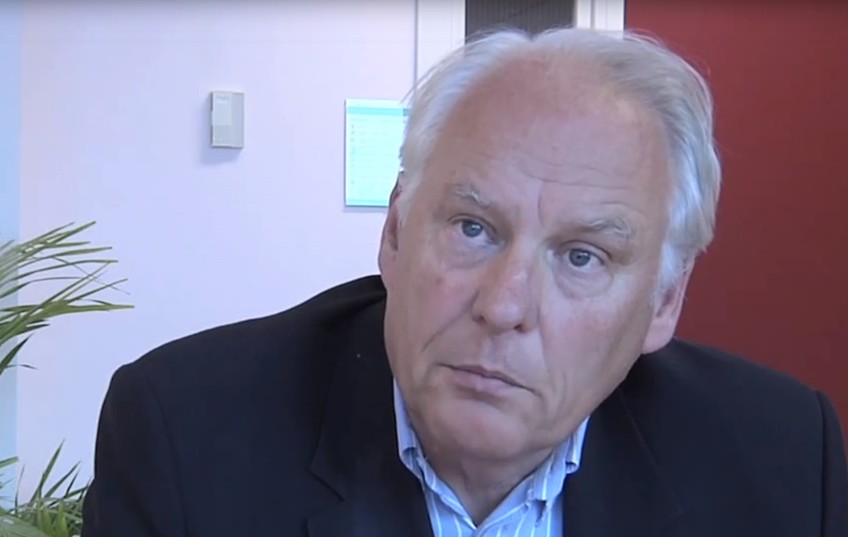
This interview was originally written in Dutch. This is an English translation.
The pension sector is facing one of the biggest systemic changes in its history. Financial Investigator asked Sweder van Wijnbergen, economist, top advisor, and long-time critic of both regulators and politicians, what the challenges of the new system are and what he thinks of the preference of many pension funds for sustainability and passive investing.
By Harry Geels
What do you think of the new pension system? What do you think are the most important points to consider when migrating from the old to the new system?
‘It was high time we got a new system. The old system was inadequate. It lacked transparency: no one could really calculate exactly what someone's share in the pension pot was. The old system effectively contained ‘undefined property rights’, which led to conflicts. If a participant felt they were entitled to something, there were no proper ways to settle the dispute. The system was set up to guarantee nominal benefits, but people also expected inflation adjustments that the funds could not deliver: the contributions were not adjusted for this. There was constant debate about the actuarial interest rate, which was also adjusted over time: first a fixed actuarial interest rate, then a market interest rate, and when that became too influenced by the ECB – read: kept too low – the UFR method was introduced.
At the time, Wouter Koolmees had had enough of the criticism of the system and rightly set in motion the process that led to the Wtp, which has now been adopted by the House of Representatives. Incidentally, overhauling a system is never easy, and the entire migration has been underestimated. The old system has now become a complicated accounting monster that is not understood by more than 90% of participants. The new system has the advantage that every participant will soon know exactly what they have: their contributions plus the returns achieved, per age cohort. This is undoubtedly the least controversial solution. Young people can take more risks and there will probably also be multiple forms of investment, so a certain freedom of choice per age category. Everyone will gain a better understanding of the development of their pension assets, which is also expected to increase participant engagement.’
And will this lead to a different way of investing at the overall level?
‘Yes, quite radically in some cases, I would say. Under the old system, pension funds had enormous nominal liabilities. This meant that they had to hedge their interest rate risk: after all, low interest rates imply a high value of those liabilities. That is why they had to hold a lot of long-term bonds and be active in interest rate derivatives, often in illiquid markets. The transition to the new system, in which those liabilities no longer need to be hedged, may mean that the market for Dutch government bonds will be temporarily disrupted.’
Pension funds are there to provide pensions, not to solve housing problems.
Pension funds and insurers have become increasingly larger, and the consolidation process seems to be continuing. Is this a good development?
‘This consolidation process is inevitable. Risk sharing becomes easier when you do it with more people. In addition, the administrative and management costs of smaller providers are relatively higher than those of larger ones. Of course, the ever-increasing scale ultimately reduces competition between providers. The question is, however, whether competition is necessary, especially in the pension sector. A good example is Chile, where they once introduced a DC system for individuals – not with cohorts as in the Wtp – with a lot of competition between the different funds. As a result, funds started advertising to attract customers. An American economist then calculated that the Chilean pension system had become three times as expensive as the American social security system. As far as the financial markets are concerned, it is probably a good thing that our pension funds are trading less in Dutch government bonds and interest rate derivatives. Pension funds are sometimes criticised for all investing in the same way, which is not conducive to fundamental price discovery. But this actually applies to all large asset managers. There is a kind of pull towards the middle, especially among the largest managers such as BlackRock and Vanguard. We have become increasingly benchmark-driven, because deviations from the average mean career risk. If you are on the average, the manager is doing well, or so the thinking goes.’
There is political debate about whether pension funds should invest more in their own country, for example in housing or in supporting Dutch companies, whereas in recent decades these investors have actually become more globally diversified.
‘The pressure from local politics is a bad development. Pension funds are there to provide pensions, not to solve housing problems, regardless of whether there is a financing problem in the Dutch property market at all, which I don't actually believe, as it is more of a regulatory problem. If the Dutch government believes that more housing is needed, it should make it attractive for investors to invest in the housing market. Why should pensioners be held accountable for a problem caused by poor government policy?’
Sustainable policies pursued by central banks and pension funds are contrary to Tinbergen's assignment rule.
Does the same not apply to sustainable investing?
‘Yes, that is also controversial. I refer to an old paper by Jan Tinbergen on the ‘assignment problem’. He argued that if we have ten different instruments for ten different objectives, it is very inefficient to focus all ten instruments on all ten objectives at the same time. With a nod to David Ricardo's theory of comparative cost advantages, we can be much more efficient by using each instrument to pursue the objective for which that instrument works best. This applies, for example, to central banks, which are primarily best at controlling inflation. Or to banks, which are best able to calculate the right interest rate for loans to businesses. And for pension funds, which, with their large assets and investment knowledge, are best equipped to achieve the best pension results. If central banks, banks and pension funds start to support the climate transition, the overall policy will become diffuse – in other words, less efficient and less effective. Secondary objectives are a distraction. Climate is, of course, extremely important, but that does not mean that everyone should immediately deploy all kinds of instruments to address it. It is much more effective for the climate if the government fulfils its role as market regulator, as we do with CO2 pricing and the Brussels ETS system with tradable emission rights. Then the business community will cooperate naturally instead of working against it. Sustainable policy by central banks and pension funds is contrary to Tinbergen's assignment rule.’
Why are these institutions participating in climate policy then?
‘Fortunately, not all of them are. Don't forget that they are under undue pressure from regulators, the government, supranational organisations and activist groups, and that many directors also have political affiliations. In any case, it is not in the interests of the participants to go along with this. And that's not even mentioning the question of whether participants actually want climate policy to be taken into account in their pensions. I doubt that the majority of pensioners really want that. Most just want a good pension.’
Even if all pension funds were to invest passively, there would be no problem.
Many pension funds have started to invest passively, partly to reduce costs. Is this a good development for the financial markets? Is sufficient fundamental price discovery still taking place?
‘Passive investing is a better option than active investing for most asset classes, especially for smaller funds. There is ample evidence that, on average, active investors do not outperform after costs. But if everyone were to invest passively, we would of course have a problem: no one would engage in fundamental price discovery anymore and there would be no efficient capital allocation in the economy. But we are not there yet. There will always be enough active managers left, such as hedge funds that respond to temporary price inefficiencies. Even if all pension funds were to invest passively, there would be no problem.
In the Netherlands, the pension sector is relatively large, but that is not the case in the rest of the world. So there will still be plenty of active investors. What I would be more concerned about is the influence on price formation of the large asset managers mentioned above. If they change their vision or their operations, this is likely to have a greater impact on prices.’
Our large and strong pension sector is an exception in Europe. Is our pension pot safe in the EU? And if not, what can or should the Netherlands do?
‘We sometimes read in the media that the EU wants to get its hands on our pension pots, but that is pure ignorance or propaganda. Neither the EU nor the European Commission can touch our pension money. Under the old system, we sometimes suffered from the ECB's low interest rate policy in accounting terms, but that will soon be a thing of the past under the new system. Incidentally, that monetary policy is not based on any ill will on the part of the ECB, although I don't think it has been very effective.’
You are now an emeritus professor and have had a long career. What are your lessons learned?
‘I have been fortunate to have seen the financial world from different angles: as an economist at the World Bank, as an advisor to various countries, companies and institutions, and as a professor. That has taught me some valuable lessons. We often hear politicians or other renowned policymakers say things that seem strange at first glance or advocate remarkable policies. The standard reaction is usually to call them stupid. But a better conclusion is often that they have to formulate policy with all kinds of restrictions that the public is usually unaware of, but which do exist. Once you know about them, the policy often becomes a lot more understandable. Over the course of my career, I have gained more respect for policymakers in emerging markets. Social criticism is often levelled with incomplete knowledge of the facts. That does not mean, however, that there are no stupid politicians and policymakers at all. Just look at what is going on in Dutch politics these days.’
What personal plans do you still have?
‘As Wim Kok once said about me: “You are the ideal advisor, but I would never make you a manager.” I am indeed too uninterested in executive tasks to be good at them. I also don't have the patience to listen to all kinds of detailed amendments in the House of Commons. I think I am most valuable as an external advisor, and I want to continue in that role for some time to come. As long as I enjoy it, of course.’
|
Sweder van Wijnbergen Sweder van Wijnbergen obtained his PhD from the Massachusetts Institute of Technology (MIT) in 1980 and then worked as an economist at the World Bank for 12 years. In 1992, he became a professor at the University of Amsterdam, a position he held until his retirement, interrupted by his appointment as Secretary-General at the Ministry of Economic Affairs between 1997 and 2000. |
Attachments
Share this post!
Related posts
-
 Read more about "AllianzGI: Kritischer blik op beloning in Nederland en aanscherping stembeleid"
AllianzGI: Kritischer blik op beloning in Nederland en aanscherping stembeleid
-
 Read more about "Sweder van Wijnbergen: Pension funds' climate policy conflicts with the Tinbergen rule"
Sweder van Wijnbergen: Pension funds' climate policy conflicts with the Tinbergen rule
-
 Read more about "Schroders: Sterk herstel eurozone, maar hogere rente ligt op de loer"
Schroders: Sterk herstel eurozone, maar hogere rente ligt op de loer
-
 Read more about "Guido Veul (AF Advisors): Fewer options for PAB investors"
Guido Veul (AF Advisors): Fewer options for PAB investors
-
 Read more about "AI and the future of sustainability data (roundtable ‘10 years of SDGs’ part 3)"
AI and the future of sustainability data (roundtable ‘10 years of SDGs’ part 3)
-
 Read more about "Choices, focus and real impact (roundtable discussion ‘10 years of SDGs’ part 2)"
Choices, focus and real impact (roundtable discussion ‘10 years of SDGs’ part 2)
-
 Read more about "Aneli Capital: Women founders face struggles"
Aneli Capital: Women founders face struggles
-
 Read more about "SDGs as a compass for investors (roundtable ‘10 years of SDGs’ part 1)"
SDGs as a compass for investors (roundtable ‘10 years of SDGs’ part 1)
-
 Read more about "Roundtable '10 years of SDGs': Balancing impact, risk and return"
Roundtable '10 years of SDGs': Balancing impact, risk and return
-
 Read more about "DNB: Pensioensector zet stappen richting verankering duurzaamheidsrisico's"
DNB: Pensioensector zet stappen richting verankering duurzaamheidsrisico's