Choices, focus and real impact (roundtable discussion ‘10 years of SDGs’ part 2)
This report was originally written in Dutch. This is an English translation.
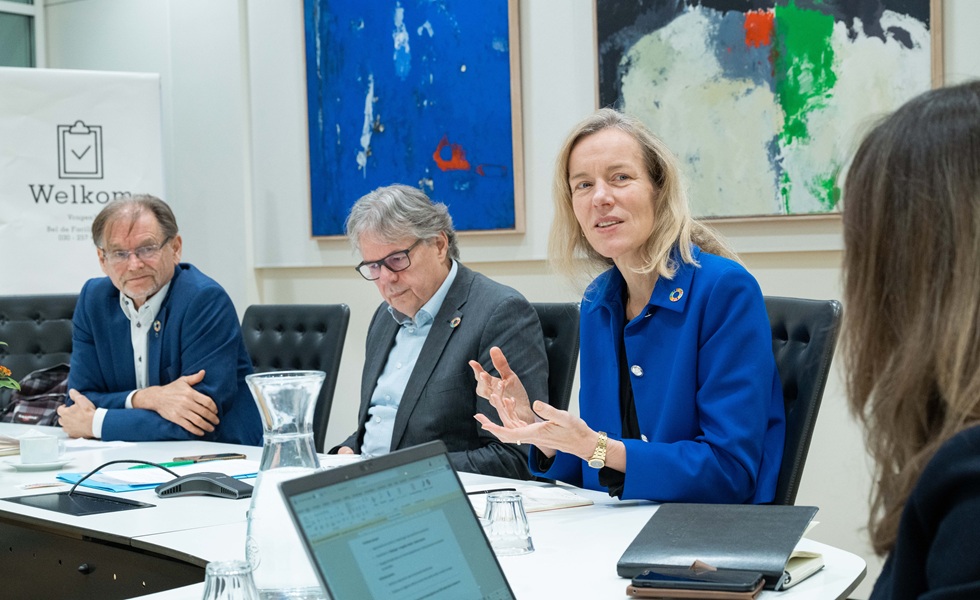
In the second part of the roundtable report '10 years of SDGs', the focus shifts from framework to practice. How do you make conscious choices between SDGs, where is the greatest impact – public or private – and what role does data from the real economy play in steering transition and additionality?
By Daphne Frik
This is part 2 of the report. You can read part 1 here and part 3 here.
|
CHAIR: Piet Klop, PGGM
PARTICIPANTS: Sven van den Beld, DNB Raquel Criado Larrea, a.s.r. vermogensbeheer Claudia Kruse, APG Asset Management Anna Pot, Rijksoverheid Paul Ruijs, Robeco Dirk Schoenmaker, Erasmus Universiteit, Sustainable Finance Lab, PFZW Rob van Tulder, Erasmus Universiteit Rotterdam |
Is it a problem that some SDGs are left out because they are difficult to invest in?
Kruse: ‘I think it’s good when conscious choices are made. Dutch pension funds have all chosen their own approach, often based on what their participants consider important. That connection with the constituency whose assets you invest is crucial. Whether you invest broadly or focus on a few specific SDGs, as long as it is consistent and transparent, I think that’s powerful.’
Van den Beld: ‘Making choices is part of the process. For us, it's mainly about the consistency and governance of the choices made. If certain SDGs are chosen or not, this must be well substantiated – for example, because it is not material or because investing in certain SDGs does not fit within the risk profile. We mainly look at the process: how choices are made and how policy contributes to the realisation of priorities.’
Criado Larrea: ‘Focus is not a weakness, but a way to channel energy. If you choose a number of SDGs, you can really make an impact. That does not alter the fact that you have to monitor consistency with the other goals: they are all interrelated. We must continue to recognise that each SDG is part of the bigger picture and that they influence each other.’
Schoenmaker: ‘In practice, you have to make choices, but we must ensure that we remain aligned with our participants, otherwise we will lose support. Polarisation arises when technocrats make decisions without connecting with the people on whose behalf they are investing. And yes, some goals are more difficult to measure or invest in, such as biodiversity, but that is no reason to ignore them. We need to develop them, even if the indicators are not yet perfect. Failure to act can ultimately be more expensive: the cost of doing nothing.’
Van Tulder: ‘There is actually no SDG that you cannot invest in. It only seems that way if you define investing very narrowly. But if you look more broadly – at blended finance, cooperatives, family businesses, public and social investments – you can find a form of financing for every goal. The challenge lies not in the goals themselves, but in how we organise the resources and partners.’
Until now, the focus of SDG investing has mainly been on the public stock markets. But isn't the greatest impact to be found in the private markets? And where is the real additionality of our investments?
Kruse: ‘We have applied a jointly developed SDI taxonomy to both listed and private markets, because the framework works for the entire portfolio. There are many opportunities in the private market in particular: there, you invest for the long term and you can really show that it adds value. Moreover, as an investor in real estate and infrastructure, for example, you often have more access to information to assess what is actually happening.’
Criado Larrea: ‘In the beginning, SDG investing for us was mainly focused on equities. There was more information available that we could measure consistently. But the framework is actually very applicable to private markets. When you think in terms of transitions, you can directly finance and accelerate the necessary transitions with more targeted investments.’
Schoenmaker: ‘To be critical here for a moment: we spend a lot of time proving additionality, but ultimately it's about making the right choices and supporting real transitions. Whether something is additional is less important to me than whether it contributes to the change that is needed. Think in terms of transition: do our investments help accelerate the transition to a sustainable economy?’
Van Tulder: ‘Exactly. There are all kinds of leverage and spillover effects that we are not yet sufficiently mapping out. The private market encompasses much more than just companies: cooperatives, family businesses, local initiatives. These are often at the forefront, but do not always know how to attract financing. The challenge is to connect these worlds and accelerate the transition there.’
Pot: ‘We also look at the real impact of government investments and development aid: what is actually changing? Pension participants and taxpayers want to understand why we are doing this and what the benefits are. You can explain this with concrete examples, not just with figures. It's about the visible difference that investments make in the real world.’
Van Tulder: ‘May I ask a question about this? For years, we have seen that public-private partnerships did free up money, but their effectiveness remained unclear. Has that improved in the meantime?’
Pot: ‘We must continue to improve in order to maintain a good understanding of the effectiveness of investments, without getting bogged down in bureaucracy. It's about learning from projects, working together and measuring more and more precisely what really works. Only then can we deploy public and private capital in a targeted manner to accelerate sustainable development.’
Do investors need hard data from the real economy to properly determine the balance between risk, return and social impact?
Schoenmaker: ‘Ultimately, it's about change in the real economy. We have become too reliant on ESG ratings and models that are mainly fill-in-the-blank exercises. But it's about what really changes: CO₂ reduction, biodiversity, social progress. That's exactly the idea behind our Futureproof Index: measuring what actually happens, with shadow prices and real economic effects. Only then can you see the real delta.’
Criado Larrea: ‘If we wait until everything is perfectly measurable, we will never act. Of course, we must continue to research and improve, but we must not let the urgent need for action depend on data. The impact is already visible in the transitions we support, not just in figures.’
Schoenmaker: ‘That's right, but we do need to make those transitions transparent. Take the protein transition, from animal to plant protein. That has enormous effects on land use and biodiversity. If we can measure those kinds of leverage points, we can steer policy and investments in a much more targeted way. Then you know where the real impact lies. And I think your ASR Dutch Farmland Fund is a good example, for which you and Rabobank have developed a framework with the open soil index, whereby landowners are rewarded with lower rents if they work sustainably. This improves soil quality and increases the value of the investment. It's a real win-win situation.'
Criado Larrea: ‘That’s right, I think the idea of transitions is very important: including our own transition as a sector. We must continue to innovate, develop new models and dare to experiment, even if everything is not yet perfect. That continuous learning and adaptation is precisely the catalyst for change. We talk about the transformation in terms such as “from brown to green”, but it's about the whole delta that we ourselves are bringing about, for all SDGs.’
Ruijs: ‘Within our organisation, we look at both the contribution of companies to the SDGs and their own transition. What goals have they set? How credible are they? And what do we see in the figures in terms of investments and progress? We try to quantify these changes as much as possible, but also to make them tangible, so that people understand what is happening in the real economy.’
Van Tulder: ‘I think it's very important to identify those leverage points where our investments can make a difference. At the same time, we must keep an eye on the barriers and stranded assets: where are we investing in declining sectors when we know that they are not sustainable in the long term? The real value lies in shifting capital to the emerging, future-proof economy.’
Criado Larrea: ‘The challenge is timing: being right is not enough, you also have to prove yourself right. The current market does not always move in line with long-term needs. That is why it is so important to continue to test our assumptions against what is happening in the real economy.’
Van den Beld: ‘We also need to realise that current ESG data often does not tell the whole story: time series are short, have limited representativeness or contain subjective elements. That is why we encourage better data standards and open access, so that we can increasingly extract ‘the right story’ from the data.’
|
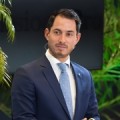
Sven van den Beld Sven van den Beld has 16 years of experience in financial supervision and is Head of Onsite Supervision at DNB. Since 2012, he has held various supervisory positions at DNB, including supervision of pension funds, insurers and banks, and the integration of ESG into the supervisory framework. He previously worked at De Volksbank and Pensioenfonds SNS Reaal, and was seconded to the ECB several times for the EU-wide stress test. |
|
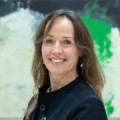
Raquel Criado Larrea Raquel Criado Larrea has been working at A.S.R. Asset Management as Head of Responsible Investing since 2009. In this role, she is responsible for drawing up and implementing the responsible investing policy. Prior to this, Criado Larrea held various positions within ING Group and General Electric. She obtained a Master of Laws (LL.M.) from the University of Salamanca, including International Law at Leiden University. |
|
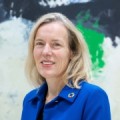
Claudia Kruse Claudia Kruse is Chief Sustainability & Strategy Officer at APG Asset Management. She has been active in responsible investment since 2000 and has worked at APG Asset Management since 2009. Between 2020 and 2025, she chaired the SDIA OP, a partnership to define a data-driven, global standard for SDG investments. Kruse is also a board member of The Institutional Investors Group on Climate Change. |
|
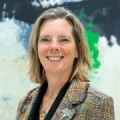
Anna Pot Anna Pot has been National Coordinator for Sustainable Development Goals since 2024. In this role, she promotes the implementation of the SDG agenda within and by the Netherlands. Prior to this, she worked at APG Asset Management for 16 years, including as Head of Responsible Investment Capital Markets & Communications and Head of Responsible Investments Americas. She previously worked at Amnesty International and ING Investment Management. |
|
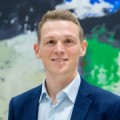
Paul Ruijs As Impact Specialist, Paul Ruijs is responsible for developing Robeco’s impact frameworks and facilitating the integration of an impact lens into various investment strategies. Before joining Robeco, he worked at a start-up impact fund at the United Nations. Ruijs obtained his Master’s degree in Global Business and Sustainability from the Rotterdam School of Management. |
|
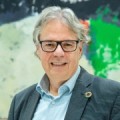
Dirk Schoenmaker Dirk Schoenmaker is Professor of Finance at Erasmus University and Academic Director of the Erasmus Platform for Sustainable Value Creation. He is also co-chair of the Sustainable Finance Lab and a board member at PFZW. Prior to that, he worked at the Ministry of Finance. He is co-author of two textbooks on sustainable finance. |
|
Rob van Tulder Rob van Tulder is professor emeritus of International Business & Society Management at RSM, Erasmus University Rotterdam, and academic director of the Partnerships Resource Centre. He is a fellow of AIB and EIBA and an elected member of Academia Europaea. He advises international organisations, governments, multinational companies and international NGOs on issues relating to sustainability and strategy. |