AI and the future of sustainability data (roundtable ‘10 years of SDGs’ part 3)
This report was originally written in Dutch. This is an English translation.
The third part of the roundtable report '10 years of SDGs' focuses on the question of how investors deal with imperfect data, measurability and bias. How do you combine figures with professional judgement, utilise AI and open data, and maintain the integrity of the holistic SDG model in a changing political context?
By Daphne Frik
This is part 3 of the report. You can read part 1 here and part 2 here.
|
CHAIR: Piet Klop, PGGM
PARTICIPANTS: Sven van den Beld, DNB Raquel Criado Larrea, a.s.r. vermogensbeheer Claudia Kruse, APG Asset Management Anna Pot, Rijksoverheid Paul Ruijs, Robeco Dirk Schoenmaker, Erasmus Universiteit, Sustainable Finance Lab, PFZW Rob van Tulder, Erasmus Universiteit Rotterdam |
The quality of sustainability data often leaves much to be desired. Is the available data now good enough to weigh up risk, return and social impact equally, or is the sector not yet ready for that?
Pot: ‘Data is never perfect, and it doesn't have to be. The main question is: is the data good enough to provide direction? In politics and diplomacy, we constantly work with incomplete information. Nevertheless, we make decisions, learn and adjust our course. The same should apply in the investment world: dare to act with uncertainty, as long as the course remains clear. We tend to wait until everything is measurable, but then you are lagging behind the facts. Data is a tool, not a prerequisite for action. The most important thing is that we ask the right questions: what do we want to know, why do we want to know it, and how does that knowledge help us to better steer towards sustainable impact? Once we have a clear answer to that, data quality will follow automatically. And there is also a human element: figures do not automatically convince people. What touches people are stories that show what the data means. It is the combination of qualitative insights and quantitative measurements that makes sustainability data powerful. This applies equally to policy and to investment.’
Schoenmaker: ‘I agree. We are getting more and more data, but not yet of the quality needed to really weigh impact against risk and return. Many figures remain superficial or incomparable. The challenge is to use data that says something about the real economy – about emissions, soil quality, social effects – rather than just about policy and processes.’
Van Tulder: ‘Perhaps we need to fundamentally change the way we look at what we call ‘markets’. We often talk about markets as if they were abstract, self-regulating systems, but in reality they consist of relationships between investors, banks, companies and communities. The dynamics of a market are determined by the players, their size and their mutual reliability. What I often miss is that investors and banks legitimise their role too much within those market dynamics, while it is actually about the quality of relationships and forms of enterprise. I have just returned from the Philippines, where banks are fined if they do not invest in small farmers. And what do they do? They prefer to pay the fine because they do not know how to invest in the local economy. At the same time, we are working with cooperatives there that are showing that things can be done differently, by rethinking entrepreneurship, risks and trust. The point is: we need to move away from the “performance illusions” of markets and get back to basics. It is not the market as a system that should be central, but the companies and partners that really create value. Some companies are simply more reliable, more sustainable and more effective in achieving social goals. That is what we should base our risk analyses on. Listed companies can actually pose more risk, because they are often further removed from those real relationships. So it's about re-evaluating the relational, not the purely financial perspective.’
Are we not unintentionally introducing biases into our investment decisions because we focus on what is measurable rather than what is truly fundamental?
Schoenmaker: ‘Yes, that's actually an almost philosophical question: is something only knowable if you can express it in a number? Or can you also have insight without everything being quantifiable? Look at how an analyst at JPMorgan prepares a valuation of a company; there are also choices involved in that. That's why you need experienced investors and analysts who understand business models and can judge whether a company really contributes to sustainability. It's not about the numbers, but about insight and experience.’
Kruse: ‘Exactly. It's about insight and expertise: about the ability and the courage to form an opinion. That remains a human task. And it's never black and white.’
Van Tulder: ‘I also hear a kind of fear in that question: that it's all becoming too complex, that we can't measure it. And then the reflex is to make it simple: to only look at what is measurable, at market figures. Whereas it is precisely the mixed, complex business models that are the most interesting. That's where the leaders with vision are, the companies that are really shaping transitions. Yes, it's complicated, but that's where it's happening. “Know what you invest in,” I would say. Understand the business model, the ambition, the context. Only then can you really feel the SDG agenda. Narratives and figures are part of that, but the stories are just as important as the data. Many family businesses and cooperatives already work this way: complex, but with a strong social motive. So you can invest in that too.’
Van den Beld: ‘As a regulator, we do indeed see that models and scores often favour SDGs for which data is available. This can lead to bias and even concentration risks. We therefore emphasise the importance of qualitative judgement alongside quantitative metrics. Supervision is not box-ticking: it is about understanding business models, transition plans and governance. Measurability should not be an excuse to ignore fundamental risks.’
Pot: ‘Yes, and that touches precisely on the bias you were referring to. If we focus too much on what is measurable, on data, on rankings, on lists, then we are missing a huge opportunity. Because innovation, the renewal that is necessary to achieve sustainable development, is by definition uncertain. You cannot fully measure or predict it. If we avoid that risk because it doesn't fit into a spreadsheet, we are stalling the engine of sustainability. And that would be a shame, especially for long-term investors.’
Ruijs: ‘A very valid point. There is indeed a clear bias in the metrics that are commonly used. Large companies with more extensive reporting receive better ESG scores than smaller companies, as do companies in developed countries compared to companies in emerging markets. This creates a distortion. We are trying to break through this with an SDG lens. Our own research shows that SDG scores provide a much more neutral playing field.’
How can AI and open access databases help to make fundamental sustainability analysis more accessible and efficient?
Schoenmaker: ‘AI can be a huge help in organising large amounts of data and making connections that we ourselves cannot see. But it remains a human task to determine what is relevant. Without context and a moral compass, things will go wrong.’
Criado Larrea: ‘I agree. AI can save us time, for example in reporting, and it can provide better insight into trends, but the interpretation must remain with people. We must guard against the illusion of objectivity: algorithms also have their biases. We cannot yet base investment decisions on them.’
Van Tulder: ‘We are working on a global open-access Living Wage database, sponsored by Unilever and other major parties. But what strikes me is that such initiatives are still too often approached as a market rather than as a shared public good. That is disappointing, because the idea was precisely to bring data together and make it available to everyone. It's a good example of how we should not end up with cooperation: everyone for themselves, instead of truly open and collective.’
Schoenmaker: ‘Open access is really crucial. We can only perform good sustainability analyses if everyone has access to the same basic information. As long as data is behind paywalls, sustainability analysis will remain a luxury product, only accessible to large parties with deep pockets. That hinders innovation and transparency. We need open data to test insights, to stimulate collaboration, and to create a level playing field between public institutions, investors and science.’
Ruijs: ‘I completely agree. Access to data should not be a competitive advantage, but a shared basis. Only when data is widely available can we correct, learn and improve each other. That is the only way to remain credible.’
Pot: ‘I completely agree. Open access is not only a technical issue, but also a moral one. Transparent and accessible data strengthen the trust of citizens, pension funds and policymakers. People want to know where their money is going and why it contributes to sustainable development. You can only explain that if the underlying information is open and verifiable. What's more, if we want to accelerate progress towards the SDGs, we cannot afford to lock up knowledge. Open access is cooperation in practice.’
How can we maintain the integrity of the holistic SDG model while pressure is mounting – particularly from the US – to reposition or repackage sustainable investment?
Van Tulder: ‘In the US, you see companies avoiding certain words under political pressure, but most are continuing with sustainability because it remains a strong business case. The SDG agenda is not disappearing; it is evolving. The challenge is to improve it, not to idealise it. It is still the best framework we have.’
Criado Larrea: ‘Circumstances have changed, but needs have not. Now we have to be smart about rhetoric and language. When you’re not allowed to talk about inclusion, other terms are used, such as belonging. That’s fine, as long as the values and actions remain the same. We mustn’t forget the ethical dimension, even if the vocabulary changes.’
Kruse: ‘At APG, we make it concrete and, together with our clients, translate it into themes such as climate, nature and working conditions. By making it tangible, you provide direction. Focus is not a weakening of the holistic model, but a way to keep it workable.’
Van den Beld: ‘For us, the starting point is clear: sustainability is not an ideology, but a prerequisite for financial stability. We position the SDG framework as a tool for managing long-term risks. The terminology may change, but the underlying necessity remains: without a viable economy, there can be no solid financial system. Supervision must focus on safeguarding that integrity, regardless of political dynamics.’
Schoenmaker: ‘Long-term value creation is a good alternative to ideological language. Without a liveable world, there is no return on investment. If we maintain the systems thinking that ecological and social transitions are inextricably linked to a liveable world, the SDG framework will implicitly remain intact.’
Ruijs: ‘The core of the SDGs will remain relevant after 2030: poverty, equality, climate, biodiversity. Perhaps we need to focus more sharply on those ultimate goals, but the holistic structure must remain. It offers a universal language and direction for the future.’
Any closing remarks?
Pot: ‘Sustainability is a joint task that goes beyond figures and reports. Data, policy and investments are means, not ends in themselves. What counts is cooperation between sectors, countries and people who believe that things can be done differently. We must continue to realise that the SDGs form a universal language in which everyone, from governments to pension funds and companies, can find their own responsibility. That shared framework is particularly important now, in a world that sometimes seems to be doing the opposite. As long as we continue to find common ground around that shared goal, we can make real progress.’
Ruijs: ‘The SDGs offer a clear framework for bringing together impact, risk and return. If we maintain our focus on that balance, and on real data from the economy, we can accelerate the transition without losing our compass. And yes, 2030, it is still uncertain what it will all look like, but the themes remain relevant. I think we should continue unabated.’
|
SUMMARY The SDGs have helped investors define sustainability and make it measurable. Now it is important to find the right balance between impact, risk and return in their implementation. The goals remain the most important global compass for sustainable investments, although the next phase requires greater depth, better data and more focus on the real economy. Open access to reliable sustainability data is crucial for transparency and cooperation. The integrity of the holistic SDG framework must be maintained, even under political pressure. The future lies in cooperation, long-term value creation and trust in shared goals. |
|
Sven van den Beld Sven van den Beld has 16 years of experience in financial supervision and is Head of Onsite Supervision at DNB. Since 2012, he has held various supervisory positions at DNB, including supervision of pension funds, insurers and banks, and the integration of ESG into the supervisory framework. He previously worked at De Volksbank and Pensioenfonds SNS Reaal, and was seconded to the ECB several times for the EU-wide stress test. |
|
Raquel Criado Larrea Raquel Criado Larrea has been working at A.S.R. Asset Management as Head of Responsible Investing since 2009. In this role, she is responsible for drawing up and implementing the responsible investing policy. Prior to this, Criado Larrea held various positions within ING Group and General Electric. She obtained a Master of Laws (LL.M.) from the University of Salamanca, including International Law at Leiden University. |
|
Claudia Kruse Claudia Kruse is Chief Sustainability & Strategy Officer at APG Asset Management. She has been active in responsible investment since 2000 and has worked at APG Asset Management since 2009. Between 2020 and 2025, she chaired the SDIA OP, a partnership to define a data-driven, global standard for SDG investments. Kruse is also a board member of The Institutional Investors Group on Climate Change. |
|
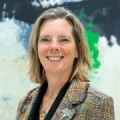
Anna Pot Anna Pot has been National Coordinator for Sustainable Development Goals since 2024. In this role, she promotes the implementation of the SDG agenda within and by the Netherlands. Prior to this, she worked at APG Asset Management for 16 years, including as Head of Responsible Investment Capital Markets & Communications and Head of Responsible Investments Americas. She previously worked at Amnesty International and ING Investment Management. |
|
Paul Ruijs As Impact Specialist, Paul Ruijs is responsible for developing Robeco’s impact frameworks and facilitating the integration of an impact lens into various investment strategies. Before joining Robeco, he worked at a start-up impact fund at the United Nations. Ruijs obtained his Master’s degree in Global Business and Sustainability from the Rotterdam School of Management. |

|
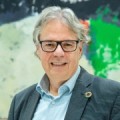
Dirk Schoenmaker Dirk Schoenmaker is Professor of Finance at Erasmus University and Academic Director of the Erasmus Platform for Sustainable Value Creation. He is also co-chair of the Sustainable Finance Lab and a board member at PFZW. Prior to that, he worked at the Ministry of Finance. He is co-author of two textbooks on sustainable finance. |
|
Rob van Tulder Rob van Tulder is professor emeritus of International Business & Society Management at RSM, Erasmus University Rotterdam, and academic director of the Partnerships Resource Centre. He is a fellow of AIB and EIBA and an elected member of Academia Europaea. He advises international organisations, governments, multinational companies and international NGOs on issues relating to sustainability and strategy. |