DNB: Building a stronger European economy
DNB: Building a stronger European economy
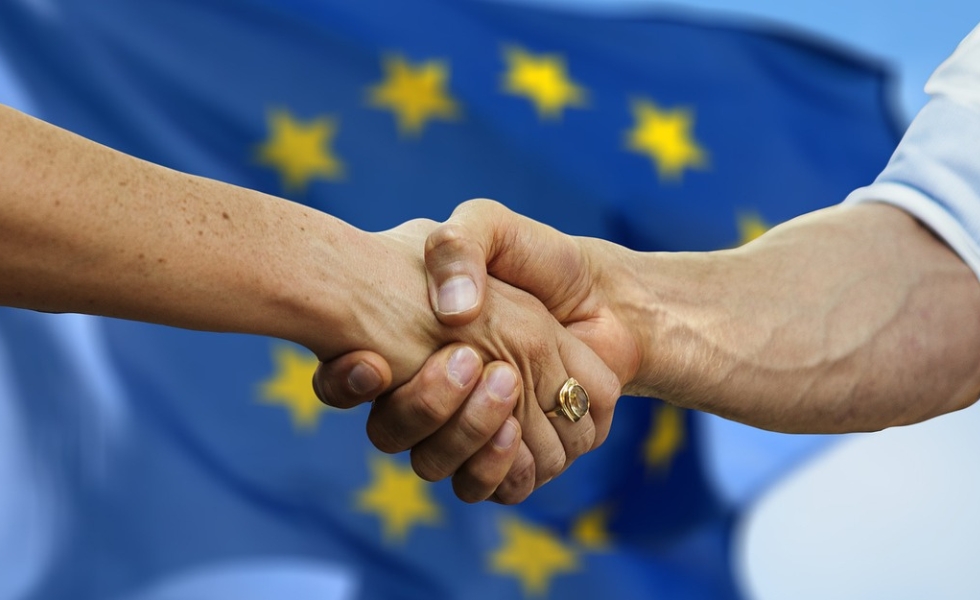
‘Europe is no longer a profit centre, it is our lifeline’, said Bas ter Weel in his opening keynote for the European Competitiveness Forum, in Maastricht today. He spoke about how to make the European economy more competitive and resilient.
'Thank you. Let me take you to a place a few kilometres from here. We arrive at the former village of Wolder, now part of Maastricht. To the St Peter and Paul Church to be precise. Earlier this year, the church became world news. During restoration works, human remains were found buried near the altar. Although there is still uncertainty, and even controversy, about the true nature of the findings, and research is still being done, experts think these might be the remains of Charles de Batz de Castelmore, also known as d’Artagnan.
Now, explaining to a French audience who d’Artagnan was, is a bit like telling a Dutch audience who William of Orange was. But for some of our Dutch listeners who may need a reminder: d’Artagnan was a French soldier who served Louis XIV as captain of the Musketeers of the Guard. He died at the siege of Maastricht in 1673, during the war between France and the Dutch Republic. Two centuries later, Alexandre Dumas turned him into one of literature’s great heroes in his famous novel The Three Musketeers.
D’Artagnan's Europe was a very different Europe. France and the Netherlands were enemies for much of the seventeenth and eighteenth centuries. Yet history did not stop there. We wrote new chapters together. And for over 70 years now, our two countries have been partners in that big European peace project, the European Union. And here, in the same city, just over 300 years after the siege of Maastricht, we signed the Treaty of Maastricht, adding a new chapter to European integration and paving the way for the euro, our common currency.
Today, questions of war and peace are once again close to the surface. Questions that are also relevant for our economy. Because it has become abundantly clear that in today’s world, Europe must increasingly stand on its own feet. The post-war world order, based on rules, law and free trade, is under severe strain. Trade tariffs are being imposed and access to critical infrastructure, services and raw materials is being threatened. This leads to fragmentation of the global economy, increased uncertainty and a higher risk of shocks.
So what does that mean for Europe? Well, I think in principle we can all agree on the answer: Europe must become more competitive and more resilient.
It is not that the European economy is doing badly. In fact, the real surprise since 2020 has been how well it has been doing given the shocks it has had to endure. Just think about it. We have had the pandemic, war on our continent, an energy crisis, trade tariffs, and deep uncertainty about the world order. Still, the European economy has grown by 1.2 percent annually on average between 2020 and 2025.
So, the actual problem is not that we are doing badly, the problem is that we need to do much better to meet the challenges that still lie ahead of us. Just to quote the famous Draghi report once more: the EU must unlock an estimated €800 billion in annual investments to meet its ambitions for the carbon transition, for digitalisation, defence and innovation.
So, where do we begin? I believe we have four priorities: a true single market for goods and services; deeper capital markets; less dependence on non-European providers for critical infrastructure; and healthier public finances. Let me take them one by one.
First, deepening the single market. In an uncertain world, a true European single market can be both an engine and an airbag. It can boost economic growth and provide a first line of defence against external shocks.
But the point is: we still do not have a true single market. There are still many unnecessary regulatory burdens and barriers that hamper the free movement of goods and services. In theory, with an open market of 450 million citizens, we have one of the largest consumer markets in the world. In practice, however, much of this potential remains untapped due to persistent differences in national regulations. Estimates of economic impact vary widely. For goods, it might be equivalent to a trade tariff ranging from roughly 8% up to 44%. Admittedly, that is a big range of uncertainty. Also, not all measured frictions can be removed by policy. But the direction is clear: further deepening the Single Market will strengthen Europe’s productivity and resilience.
So we need to deepen the European Single Market. By addressing cross-border barriers, by introducing more harmonised rules, and by curbing national state aid policies that obstruct innovation.
Addressing cross-border infrastructural barriers, both digital and physical, may require additional public investment, because this generally concerns public goods. Such investments may benefit from coordination at the EU level.
We should also limit ‘gold plating’: the habit of taking a European rule and adding an extra national layer on top. In legal terms, that means we rely more on directly applicable European rules, also known as regulations, while avoiding directives and unnecessary national top-ups.
On state aid rules, there has been a progressive relaxation in response to recent crises. While national state aid was understandable and sometimes effective under the circumstances, it has also distorted the level playing field. Therefore, the European Commission should strictly enforce regulation of state aid at the national level. Where public support is justified, European-level instruments are preferable to competing national subsidy schemes.
As Europeans, we may have limited influence over developments in the wider world, but we can collectively decide how to organise our internal market and under what conditions we allow others to access it. We are not powerless. We can be the masters of our own destiny. To me, that is an encouraging thought.
Of course, none of this is easy. The remaining barriers are not there because nobody noticed them. They are the result of decades of compromise, national sensitivities and vested interests. We should of course pick the low-hanging fruit where it still exists. But we should not pretend that this will be enough. I will come back to that later in my speech.
Besides a single market for goods and services, we also need a deeper single market for capital. Especially venture capital. This is my second point. Europe’s financial markets are still highly fragmented due to major differences in regulations between Member States. In Europe, we have 27 different bankruptcy regimes, just to give you an example. As a result, it is still very difficult for capital providers in one Member State to invest in a company in another Member State. And venture capital providers lack sufficient scale to help startups transform to scale-ups.
Two figures make this painfully clear. On the one hand, €10 trillion of European households’ money is parked in savings accounts at low interest rates. On the other hand, since 2008, almost 30% of all unicorns – young companies with a market value of more than €1 billion – have left Europe to re-establish abroad, overwhelmingly in the Unites States. This is partly due to a lack of available venture and scale-up capital in the EU.
Dutch businesses are no exception. As noted in the Interdepartmental Policy Study Kies voor baten (‘Opt for benefits’), there are many scale ups in the Netherlands that struggle to raise financing. These companies would benefit from integrated European capital markets.
At DNB, we support the European Commission's Savings and Investment Union strategy. The Commission has recently delivered key legislative proposals on market integration and supervision which should now be turned into practical legislation.
Again, I am not pretending this is easy. Some issues may appear straightforward at first glance but prove far more difficult if you look closer. For example, for a true single market for capital, it would be helpful to have a harmonised definition of the concept of ‘shareholder.’ I suspect everyone in this room would agree with that. And yet, more than a decade after the launch of the Capital Markets Union, such a definition still does not exist.
As an economist, I think this should be relatively easy to solve. Yet reality is more complicated. Addressing seemingly small obstacles often requires major underlying integration steps. In this case, it would involve partially harmonising the legal systems of the Member States. And given that these systems are deeply rooted in national traditions, reform is difficult.
I talked about deepening the single market for goods and services, and harmonising capital markets. But if we want to be more resilient in an increasingly hostile world, and this is my third point, we will also have to develop European alternatives for several critical dependencies on non-European providers. One example is IT, where the EU should work towards greater digital autonomy.
Central banks can also play their part. Through the introduction of a digital euro, for instance. This could reduce Europe’s dependence on non-European providers, help unify the fragmented payments landscape and support innovation and competition in the private sector. Within the Eurosystem we are also working on strengthening the European infrastructure for cross-border payments. Sending money abroad is still slow and costly, routed through long chains of correspondent banks. US dollar-denominated stablecoins are positioning themselves to move into that gap. They promise to be faster and often cheaper than the current system. By interlinking our instant payment system, called TIPS, with others, we allow European payments to reach across the world faster and more cost-effective. In the same vain, last week the ECB launched a pilot of it’s Pontes project, the short-term bridge solution between the traditional central bank money settlement world and emerging DLT platforms.
By reducing these dependencies, we are also working towards a stronger and more competitive European market.
I want to address a fourth and last area where we need to make progress to increase the European economy’s resilience to shocks, and that is government debt.
The resilience that Europe has recently displayed was in part driven by active fiscal policies designed to support the economy. However, in many cases, this support was often not withdrawn sufficiently once it was no longer needed. This has been an important factor in the steady rise of public debt that we have seen in several countries.
Allowing debt to rise during crises can be a sensible way to stabilise the economy. However, it is equally important to reduce debt levels when economic conditions become more favourable again. This creates a buffer for when economic conditions deteriorate and allows governments to act when the next crisis arrives.
The idea is dead simple, but in practice it is a stubborn problem. Despite the period of high inflation that followed COVID, in only one out of three countries of the euro area government debt as a percentage of GDP is back to its pre-pandemic level or lower.
Weak government finances pose all kinds of challenges. A limited ability to respond to future shocks is only one of them. Among other things, it complicates the mix of monetary and fiscal policy during a recession. As we saw after the global financial crisis, monetary stimulus loses much of its effectiveness when governments simultaneously must cut back their deficits.
But there are risks in the other direction too. Doubts about fiscal sustainability can ultimately put into question central banks’ capacity to fight inflation. In extreme cases, history has shown that unsustainable levels of government debt can force central banks to keep financing costs for governments low rather than focus fully on price stability. Economists call that process a shift from monetary dominance towards fiscal dominance.
Let me be clear: that is not where we are today. Rising debt levels did not prevent the ECB from raising policy rates by 4.5 percentage points within a short period to bring inflation back toward 2% after the Russian invasion. And it did not prevent it raising rates again at the last Governing Council meeting.
But if we want to preserve an appropriate mix of fiscal and monetary policy in the future, it is important that public debt levels in EU countries move onto a safer, more sustainable path. The medium-term fiscal-structural plans recently approved by the European Commission show that many countries face a significant challenge in restoring fiscal sustainability. Sound public finances are not an accounting obsession. They are what gives governments the capacity to protect citizens, invest in the future and respond when the unexpected happens.
Let me put the threads together. We need to make Europe’s economy more competitive and more resilient, that’s obvious. How? By deepening the single market, by harmonising Europe’s capital markets, by making our critical infrastructure less dependent on non-European parties, and, last but not least, by putting government finances on a more sustainable path.
Stronger productivity growth also helps to make debt easier to carry. This is where the different priorities reinforce one another: a deeper single market, better access to capital and greater innovation can rekindle Europe’s growth engine and boost productivity—and, in turn, strengthen public finances.
A formidable task, that’s for sure. Some would say: if it was easy, it would already have been done. But that also tastes a bit like a cheap excuse, doesn’t it?
It reminds me of the story about two economists walking down the street. One of them says ‘Look, there’s a twenty-dollar bill on the sidewalk!’ The other economist says ‘No there’s not. If there was, someone would have picked it up already.’
I would rather look at it this way: yes, it is a big task, but both the urgency and the upward potential may never have been higher.
At the current stage, the popular strategy is to go for the so-called low-hanging fruit. And I’m all for that, because it’s a sensible starting point.
But in the end, to make real progress, politicians will have to take tough decisions and find compromises. And maybe above all, have a deep rethink about what pursuing national interests means in today’s world. Especially in the Netherlands, we have long seen Europe as a technocracy serving free trade. Good for making money, but handing over sovereignty and financial contributions? Less enthusiasm.
But in today’s world, such a narrow view is untenable. Europe is no longer a profit centre, it is our lifeline. Without cooperation, we will lose relevance.
That brings me back to Maastricht, and to d’Artagnan. Europe’s strength does not lie in another siege of Maastricht, but in the spirit of the Treaty of Maastricht: choosing cooperation over confrontation, and common strength over individual national weakness. That may require us to share more sovereignty. But sovereignty shared is not sovereignty lost when it gives us back the power to act. What we gain is a Europe that is more competitive, more resilient and better able to protect the prosperity and security of its citizens. The Musketeers had a motto: ‘One for all, and all for one.’ It is a good line for a novel. It may be an even better principle for Europe today. Thank you.'
Deel dit bericht
Gerelateerde berichten
-
 Lees meer over "Schroders: Uiteenlopende begrotingsrisico’s eurolanden bieden kansen"
Schroders: Uiteenlopende begrotingsrisico’s eurolanden bieden kansen
-
 Lees meer over "Fidelity: European professional investors set to increase active ETF allocations"
Fidelity: European professional investors set to increase active ETF allocations
-
 Lees meer over "Carmignac: Europese autobouwers winnen tijd, de Chinese winnen terrein"
Carmignac: Europese autobouwers winnen tijd, de Chinese winnen terrein
-
 Lees meer over "Re:sustain: European real estate investors need faster payback certainty"
Re:sustain: European real estate investors need faster payback certainty
-
 Lees meer over "PGIM: Actieve vastgoedbeleggers profiteren van versnipperde Europese markt"
PGIM: Actieve vastgoedbeleggers profiteren van versnipperde Europese markt
-
 Lees meer over "AllianzTrade: Bescherming Europese auto-industrie heeft prijskaartje"
AllianzTrade: Bescherming Europese auto-industrie heeft prijskaartje
-
 Lees meer over "Capital Group: Europa investeert minder in AI, maar deelt in de winst"
Capital Group: Europa investeert minder in AI, maar deelt in de winst
-
 Lees meer over "DNB: The Maastricht Question revisited"
DNB: The Maastricht Question revisited
-
 Lees meer over "MFS: Vervroegde verkiezingen van weinig invloed op Spaanse staatsobligaties"
MFS: Vervroegde verkiezingen van weinig invloed op Spaanse staatsobligaties
-
 Lees meer over "Allianz Trade: Europees herstel onder druk door dure energie en hoge rente"
Allianz Trade: Europees herstel onder druk door dure energie en hoge rente