Swissquote: Brent nears $100 - who wins and who loses?
Swissquote: Brent nears $100 - who wins and who loses?
By Ipek Ozkardeskaya, Senior Analyst, Swissquote
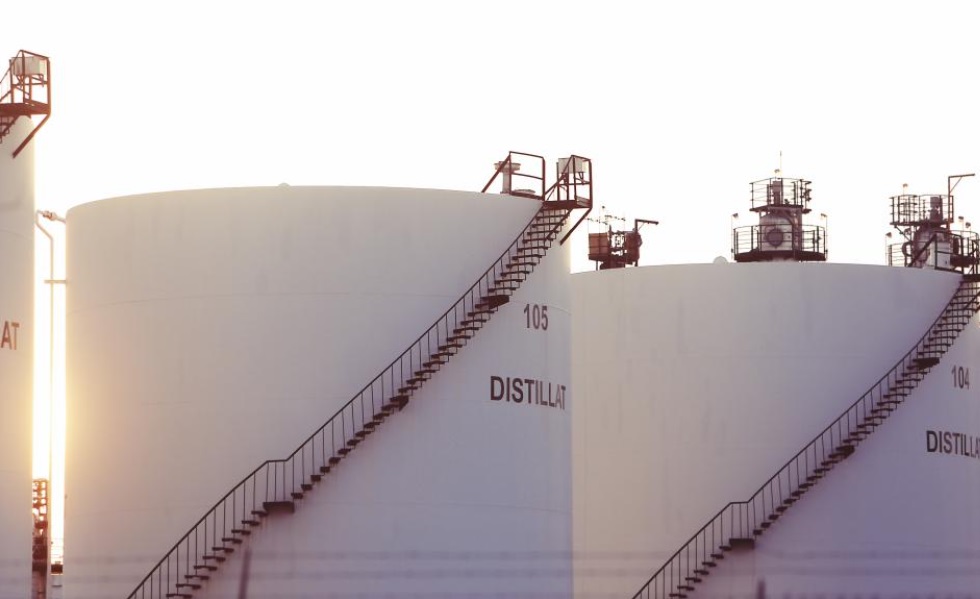
Risk appetite remains weak as rising oil prices occupy the headlines – and investors’ minds. US crude is consolidating above the $95pb mark this morning, while Brent crude is a few cents below the psychological $100pb mark, on news that the US hit targets near Iran’s Kharg Island, as several Saudi energy facilities halted operations due to Houthi attacks.
The latest news fuels short-term supply worries, and we can see that across oil futures: spot prices are again rising faster than futures prices as buyers want their oil today, rather than risk waiting until tomorrow. We continue to be in a classic supply-shortage pricing environment. Short-term risks remain tilted to the upside across energy markets.
Summer was full of hope that a peace agreement could be achieved. This optimism is fading as we enter September. From a diplomatic perspective, it’s very hard to keep that optimism alive.
There are worries regarding global oil reserves, which have been falling since the Iran war started. Lower reserves mean a smaller cushion in the event of a prolonged war, making a future supply shock more difficult to smooth out.
This is probably the most important factor: China’s oil imports rose in August, although they remained well below pre-war levels. Part of the increase may reflect stronger refined-product exports, but China may also need to replenish inventories after drawing on its reserves over the past six months. That matters because weak Chinese oil purchases have been one of the factors limiting upside pressure in global energy markets.
If Chinese demand now picks up more meaningfully, it could add another layer of pressure to an already tight oil market, and we could see the price of crude return to, and potentially surpass, the early-Iran-war peaks.
Elsewhere, European TTF futures rallied another 4% yesterday before closing flat. Gas prices have surged up to 180% so far this year, but are still notably lower than the levels reached during the early weeks/months of the Ukrainian war. Here as well, the risks remain tilted to the upside.
Of course, any progress toward peace – or any hint of peace – could rapidly reverse the situation, making long oil/gas positions extremely vulnerable to price swings. What’s certain, however, is that refined-product prices don’t come down immediately when crude/gas spot or futures prices do, because refining margins, inventories and supply constraints can keep gasoline and diesel prices elevated.
And that, per se, points to renewed upward pressure on global inflation in the coming months. US gasoline prices rose yesterday to their highest levels since July, and diesel prices hit a record high last week.
As such, the US 2-year yield, which best captures Federal Reserve (Fed) rate expectations, spent the first trading day of the holiday-shortened week pushing higher on heated inflation bets. European yields also pushed higher, with the German 10-year yield hitting a fresh high since 2011 before retreating. Of course, political worries didn’t help contain stress there. The Stoxx 600 traded and closed the session below the 50-DMA. European indices are more vulnerable to changes in energy prices and the global economic outlook, as they are more cyclical than their international peers. Therefore – and as mentioned before – they will likely underperform their tech-heavy US and energy/miner-rich UK peers. At least until the dust settles and pressure on energy prices eases.
Some will continue to do better than the others!
Now, it’s important to remember that Q2 earnings were very strong for Stoxx 600 companies, mostly thanks to robust earnings growth at energy companies, miners, banks and technology companies. There is no reason for the positive trend to reverse for the cited sectors, given that the underlying fundamentals that led to juicy earnings remain in play.
The UK’s FTSE 100 index – rich in financials, energy and mining companies – also looks interesting, with 7.7–8% earnings growth, and could offer diversification for investors looking to navigate a new wave of rising energy prices.
At the other end of the spectrum, tech companies move on their own AI-led vibes, but they are also increasingly vulnerable to the macroeconomic setup, as massive AI spending is putting growing pressure on Big Tech free cash flow and pushing companies to increasingly tap debt and equity markets to continue spending. So when energy prices shift higher, pushing yields – hence borrowing costs – higher, Big Tech earnings and valuations become increasingly exposed. This was much less of an issue during the last rate-tightening period.
Still, there is this magic with the tech complex: they manage to divert attention from worldly matters – energy prices, borrowing costs, etc. – in the blink of an eye, coming up with new deals, new technologies and new capabilities that reverse market sentiment. And that makes betting against them very difficult, despite the now well-known worries over increased leverage, rising financing costs, circular deals and delayed ROIs.
Look, despite rising stress across global markets due to higher energy prices, the technology complex globally outperformed so far this week on the news that OpenAI’s new GPT-6 may be opening the gates to the AGI era. The Philadelphia Semiconductor Index gained yesterday, helped by a rally in Qualcomm following the announcement of a multi-generation collaboration with Amazon to enable customised silicon at scale for large-scale AI data centres. Intel jumped nearly 9% on reports that it would raise the price of its PC processors by 10% from October.
Unfortunately, though, fresh technological advances and new partnerships don’t relieve broader concerns for good regarding massive capital spending, increasingly leveraged balance sheets and circular deals.
So in a few hours, tech investors’ attention will turn to the other side of this shiny coin, with Oracle due to report its earnings on Thursday. Oracle has become a bellwether for AI leverage; therefore, any misstep there could bring the dirty side of the AI story back into focus.
Obviously, investors want to see that Oracle’s cloud infrastructure growth and its massive AI backlog are translating into revenue. But above all, they want to know how much Oracle is spending to deliver that growth, as soaring AI-related capex and pressure on free cash flow remain major concerns.
Deel dit bericht
Gerelateerde berichten
-
 Lees meer over "Columbia Threadneedle: Herstel olieaanvoer brengt dieselprijs niet omlaag"
Columbia Threadneedle: Herstel olieaanvoer brengt dieselprijs niet omlaag
-
 Lees meer over "BLI: Wereldeconomie houdt stand ondanks druk op energie- en rentemarkt"
BLI: Wereldeconomie houdt stand ondanks druk op energie- en rentemarkt
-
 Lees meer over "Allianz Trade: Europees herstel onder druk door dure energie en hoge rente"
Allianz Trade: Europees herstel onder druk door dure energie en hoge rente
-
 Lees meer over "Invesco: Aanpassing van toeleveringsketens leidt vooral tot omvaren"
Invesco: Aanpassing van toeleveringsketens leidt vooral tot omvaren
-
 Lees meer over "Schroders: Europa’s zoektocht naar eigen energie biedt kansen voor biomethaan"
Schroders: Europa’s zoektocht naar eigen energie biedt kansen voor biomethaan
-
 Lees meer over "JSS: Krap aanbod en stijgende vraag maken vooruitzichten koper positief"
JSS: Krap aanbod en stijgende vraag maken vooruitzichten koper positief
-
 Lees meer over "Schroders: Hogere energieprijzen zetten obligatiemarkten onder druk"
Schroders: Hogere energieprijzen zetten obligatiemarkten onder druk
-
 Lees meer over "Allianz Trade: Gasprijs loopt op, economie houdt voorlopig stand"
Allianz Trade: Gasprijs loopt op, economie houdt voorlopig stand
-
 Lees meer over "Invesco: Energienet dreigt rem te zetten op AI-investeringsgolf"
Invesco: Energienet dreigt rem te zetten op AI-investeringsgolf
-
 Lees meer over "DWS: Europese gasmarkt flexibeler, maar ook kwetsbaar door LNG-concurrentie"
DWS: Europese gasmarkt flexibeler, maar ook kwetsbaar door LNG-concurrentie