
SSIM: Supreme court tariff decision spill over into the economy and markets
SSIM: Supreme court tariff decision spill over into the economy and markets
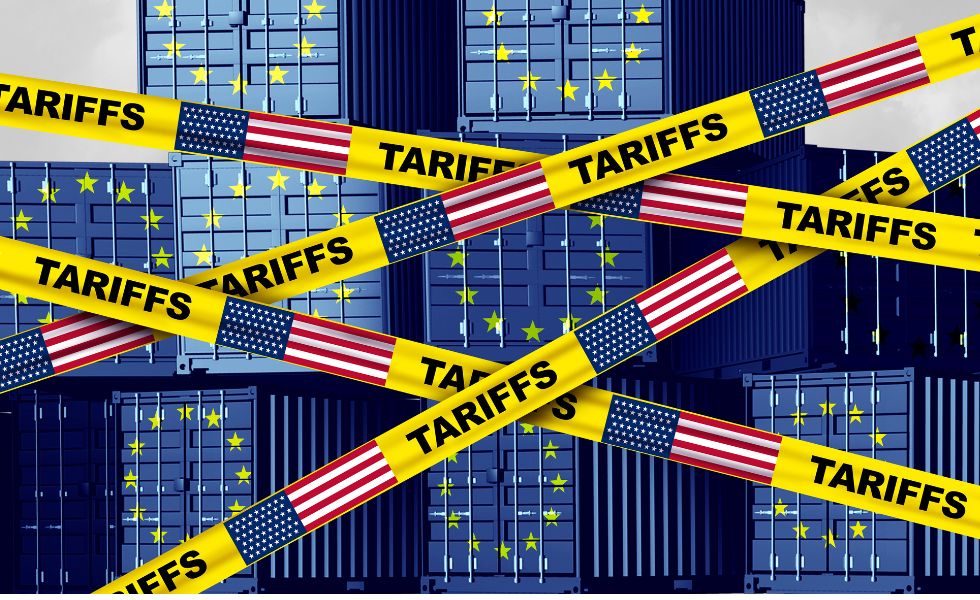
The US Supreme Court’s reversal of President Trump’s tariff orders doesn’t reduce policy risk but shifts it. State Street Investment Management expects the administration to rely more on non-tariff measures, with risk concentrating at the company, industry, and sector levels, rather than manifesting through broader FX or macro volatility.
With tariffs sitting at the heart of the administration’s economic policy, a return to the low-tariff world of 2024 appears unlikely. To focus narrowly on tariffs would be to miss the broader point: tariffs are only one of the options in the policy toolkit. Sanctions, licenses, export controls, and procurement restrictions are all non-tariff instruments that operate quickly under emergency authorities. And worse, while tariff rates were explicitly flexible, sanctions have a track record of being stickier once imposed.
'The result is a regime where broad, economy-wide tariff shocks become less likely, but sector-specific regulatory risk increases - particularly in strategic sectors such as technology, critical minerals, and defense‑adjacent supply chains,' according to Elliot Hentov, Chief Macro Policy Strategist. Such an environment rewards companies with strong regulatory engagement and sophisticated compliance programs. For macro assets, the ruling reduces the probability of sudden tariff-driven, risk-off episodes, but increases the slow-burn policy risk associated with administrative actions.
'Large players in the electronics, automotive, industrials, and chemicals sectors, which were all large IEEPA tariff payers, could see an earnings boost. Tax reclaim companies would benefit, a private market opportunity,' Vladimir Gorshkov, Macro Policiy Strategist, adds.
Deel dit bericht
Gerelateerde berichten
-
 Lees meer over "Ossiam: VS en China keren terug naar mercantilistische strategie"
Ossiam: VS en China keren terug naar mercantilistische strategie
-
Lees meer over "Allianz Trade: Vooral China profiteert van uitspraak Amerikaans Hooggerechtshof"
Allianz Trade: Vooral China profiteert van uitspraak Amerikaans Hooggerechtshof
-
 Lees meer over "Invesco: Uitspraak Hooggerechtshof zet geen rem op Amerikaanse importheffingen"
Invesco: Uitspraak Hooggerechtshof zet geen rem op Amerikaanse importheffingen
-
 Lees meer over "Payden & Rygel: US annual trade balance compared to change in import composition"
Payden & Rygel: US annual trade balance compared to change in import composition
-
Lees meer over "InvestorsObserver: How Europe’s economic leverage forced Trump’s Greenland tariff retreat"
InvestorsObserver: How Europe’s economic leverage forced Trump’s Greenland tariff retreat
-
 Lees meer over "LFDE: Een uppercut van de opperrechters?"
LFDE: Een uppercut van de opperrechters?
-
 Lees meer over "Harry Geels: Trump, de ‘kapitalist’ die het kapitalisme afschaft"
Harry Geels: Trump, de ‘kapitalist’ die het kapitalisme afschaft
-
 Lees meer over "DWS: Beleggers in Amerikaans staatspapier moeten geduldig zijn en selectief"
DWS: Beleggers in Amerikaans staatspapier moeten geduldig zijn en selectief
-
 Lees meer over "Schroders: Amerikaanse energietransitie groeit door ondanks weerstand overheid"
Schroders: Amerikaanse energietransitie groeit door ondanks weerstand overheid
-
 Lees meer over "Federated Hermes: Weekly Markets Wrap Up 1 October 2026"
Federated Hermes: Weekly Markets Wrap Up 1 October 2026