
Nuveen: Inclusion as the foundation for better investing
Nuveen: Inclusion as the foundation for better investing
This interview was originally written in Dutch. This is an English translation.
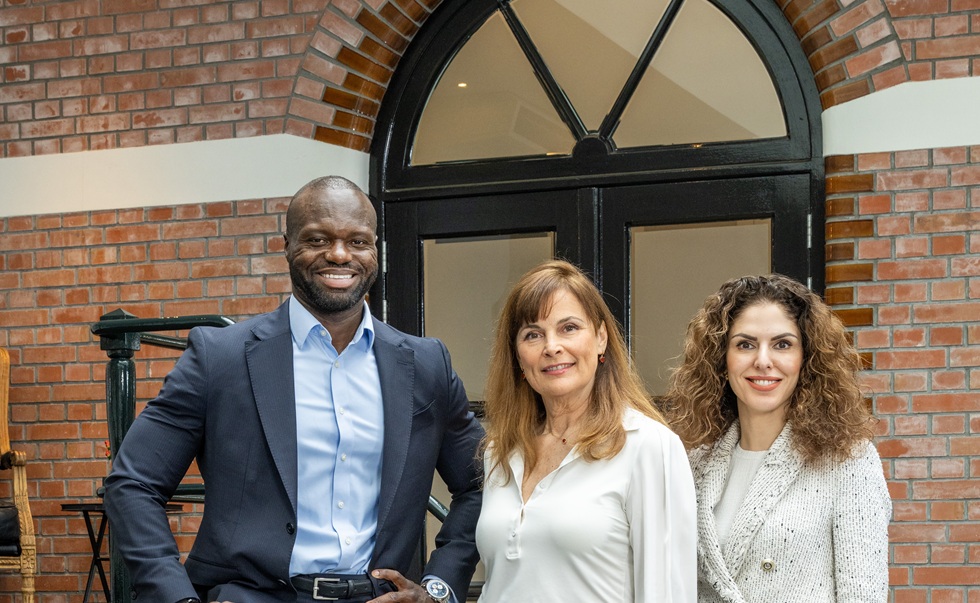
Inclusion is central to asset management at Nuveen. According to Harriet Steel, Gül Poslu and Tony Appiah of Nuveen, a diversity of perspectives contributes to better decision-making, stronger governance, more effective risk management and more sustainable value creation.
By Jolanda de Groot
How do you define inclusion, and how does this approach influence your investment process, as well as collaboration, decision-making and client engagement within your teams?
Harriet Steel: ‘At Nuveen, inclusion goes far beyond visible characteristics or individual aspects of identity. For us, it encompasses the diversity of people’s perspectives, backgrounds, education, cultures and professional experiences. Inclusion means creating an environment in which employees feel respected, valued and connected, and in which diverse insights are harnessed to achieve better results.
However, a clear definition is merely the starting point. The real impact comes from the behaviour of leaders at all levels of the organisation. It is precisely this day-to-day commitment and the example they set that ensure intentions are translated into lasting change.
We adopt a principles-based approach, focused on equal opportunities, consistent treatment, inclusive recruitment and career progression, within a respectful working environment. These principles are enshrined in our Code of Conduct and our HR policy. Our aim is to build an organisation that attracts, develops and retains exceptional talent.
We are convinced that inclusion contributes to better performance, innovative strength and the ability to serve clients successfully in the long term.’
How does inclusion contribute in the long term to better investment decisions and stronger judgement?
Tony Appiah: ‘Diversity of perspectives and experiences is not a mere prerequisite within asset management, but an essential component of high-quality decision-making. Teams that bring together different backgrounds, insights and ways of thinking are better able to identify opportunities, critically assess assumptions and evaluate risks from multiple angles.
The risks of a lack of diversity are well known: groupthink, incomplete analyses and missed opportunities. Inclusive teams mitigate these risks by actively incorporating alternative viewpoints into the decision-making process. This results in more robust analyses and a better understanding of the factors that influence investments.’
Gül Poslu: ‘Research by the European Commission shows that 83% of European organisations that actively invest in diversity and inclusion policies reap business benefits from doing so. These include a better influx of talent, higher staff satisfaction and a stronger competitive position.
In the Netherlands, too, studies point to a direct link between inclusion and corporate performance. These insights are closely aligned with the context in which Dutch institutional investors shape their strategic capital allocation.
Furthermore, expectations regarding inclusive governance are on the rise. De Nederlandsche Bank has integrated diversity and inclusion more explicitly into its supervisory framework. Under the Future Pensions Act, a balanced weighing of interests and broad representation of knowledge and experience form part of good governance.
For Dutch institutional investors, this is not a future development but a current reality. It influences the way they view governance and the requirements they set for their external asset managers. The inclusive decision-making processes we apply internally are in line with these expectations. We are convinced that this shared vision strengthens the quality of our collaboration.’
At what stages of the investment process do inclusive perspectives add the most value?
Appiah: ‘Inclusive perspectives add value throughout the entire investment cycle. The earlier different perspectives are incorporated, the greater the added value. It broadens the analysis before decisions are taken.
It also influences our investment approach and our dialogue with companies. During research, an inclusive approach helps to identify a broader spectrum of risks and opportunities. Furthermore, it encourages more in-depth discussions about corporate culture, talent management and governance – factors that are often decisive for the long-term success of companies.
Different perspectives help to prevent blind spots and provide a clearer view of relevant value and risk factors, such as customer segmentation, changing regulations, labour market dynamics and vulnerabilities within the supply chain.
We do not regard diversity of perspectives as a separate area of focus alongside investment quality, but as an integral part of it. It enhances the quality of our analyses and influences the standards we apply in our stewardship activities towards portfolio companies.’
How do you ensure that inclusivity is embedded in all stages of talent development, and what does this mean for your business strategy and long-term ambitions?
Steel: ‘Developing a strong, inclusive talent pipeline requires a structural and long-term approach that encompasses all levels of the organisation. We invest in talent development from the moment people join the company right through to leadership positions.
At the front end of the talent pipeline, we work with the Sutton Trust to broaden access to career opportunities within the financial sector. By supporting students from diverse backgrounds as they prepare for a professional career, we increase the diversity of the talent that joins our organisation. Our ambition is to have a intake that is a representative reflection of the talent available in the labour market.
In 2025, we launched the first edition of the Invest in the Future Scholarship. This initiative supports first-generation students over a four-year period with financial support, mentoring and access to professional development opportunities within Nuveen.
These initiatives form an integrated approach aimed at attracting, developing and retaining talent. We regard these investments as an essential prerequisite for sustainable growth, innovation and long-term value creation.’
Inclusive teams are better able to identify opportunities, critically assess assumptions and evaluate risks from multiple perspectives
Poslu: ‘From the very start of building our distribution team in the Netherlands, inclusion has been central to the recruitment process. Not as an additional objective, but as a fundamental principle in attracting talent. This meant looking beyond the obvious talent pools and critically reflecting on assumptions that might unintentionally limit the diversity of a candidate pool.
In doing so, we specifically examined how roles were positioned, the target groups we were reaching, and whether we were open to candidates with diverse backgrounds and experiences.
It is precisely these different perspectives that strengthen the quality of a team and contribute to better decision-making. I am convinced that inclusion does not begin solely at organisational level, but with choices made locally in the day-to-day practice of leadership and talent management.’
In what ways can an inclusive workforce help to reduce investment and governance risks?
Appiah: ‘We regard human capital, organisational culture and employee engagement as material to the long-term performance of companies. Where relevant, these topics therefore form an integral part of our investment analysis.
The same applies to governance. Effective oversight requires a board with a broad mix of skills, experiences and perspectives. Furthermore, a board culture in which differing views are encouraged and valued is essential. This helps to counter groupthink and contributes to better decision-making.
Our stewardship practice reflects this conviction. In 2025, Nuveen voted at more than 12,000 shareholders’ meetings worldwide. In approximately 500 cases, we voted against directors at 380 companies where we identified material risks, including shortcomings in transparency, accountability and human resources policy.
In times of change, the quality of decision-making is becoming increasingly dependent on the diversity of perspectives within an organisation
In addition, we voted against more than 1,000 companies due to governance-related concerns, including the quality, composition and renewal of governing bodies. Our support for material shareholder resolutions stands at around 80 per cent, which is in line with the approach taken by European institutional investors.
One example concerns our dialogue with a company that had emerged from a major cross-border merger. During that discussion, we set out our expectations regarding governance, including board structure, remuneration policy, shareholder rights and integrated sustainability reporting. Such engagements illustrate how a consistent and principles-based stewardship approach takes shape in practice.’
What role does inclusion play in your dialogue with companies?
Steel: ‘Companies’ ability to attract, develop and retain talent, as well as to create a culture in which diverse perspectives are valued, is essential for value creation. That is why this forms an important part of our engagement activities.
We engage with companies to encourage improvements in transparency, accountability and human resources policy. In addition, we monitor whether these discussions actually lead to concrete changes in policy, reporting and governance practices.
Where companies fail to make sufficient progress, we are prepared to take action, for example by supporting relevant shareholder proposals or voting against the board.
Within our impact-oriented investment solutions, we can invest specifically in initiatives that deliver demonstrable social impact. This creates a direct link between capital allocation and measurable social outcomes in the areas of inclusion and inequality of opportunity.’
How do you see the role of inclusion in asset management evolving over the next five to ten years, particularly in light of technology and AI?
Poslu: ‘The discussion on inclusion within asset management is constantly evolving. This is a positive development, although it also raises new issues. We see that some investors and professionals in the Benelux and beyond are experiencing fatigue regarding the subject, particularly when inclusion is approached from the perspective of demographic characteristics or is viewed as a compliance issue.
That is precisely why we believe it is important to get back to basics. Inclusion is about harnessing a broad diversity of perspectives, experiences, educational backgrounds, skills, ages and cultural backgrounds. Numerous studies show that organisations that succeed in this are more innovative, more resilient and better prepared for complex challenges.
This importance grows during periods of change. Organisations facing market volatility, technological disruption or regulatory processes may be tempted to push inclusion into the background. In the Netherlands, for example, we are seeing this during the transition to the new pension system.
We take the opposite approach. In times of change, the quality of decision-making becomes increasingly dependent on the diversity of perspectives within an organisation. Incorporating diverse voices is not a distraction, but a key to success.
We regard human capital, organisational culture and employee engagement as material to the long-term performance of companies
Artificial intelligence will further reinforce this development. AI has the potential to amplify both the strengths and weaknesses of organisations. That is why diversity of perspectives amongst the professionals who develop, implement and monitor this technology is becoming increasingly important.
This presents an important responsibility for directors and investors. How organisations integrate AI and ensure that different perspectives are taken into account in that process will determine how successfully they navigate this transition.
We also focus on this in our discussions with portfolio companies. In doing so, we examine how AI influences the labour market, organisational culture, governance and staff dynamics. We expect that inclusion and the resulting diversity of perspectives will remain an essential part of responsible asset management and sustainable value creation.’
|
Harriet Steel Harriet Steel is Global Head of Institutional Distribution at Nuveen and a member of the Extended Leadership Team. Based in London, she leads all institutional distribution and property specialists. Prior to this, she was a Partner and Head of Global Clients at Pemberton Asset Management, and Head of International Business Development at Federated Hermes. She also founded Portico Advisors. Steel holds a BA in Architecture from Princeton University. |
|
Gül Poslu Gül Poslu is Managing Director and Head of Benelux at Nuveen, where she is responsible for institutional and asset management relationships, partnerships and growth in the region. She has over 18 years’ experience in asset management and joins from Goldman Sachs, where she was Executive Director, Institutional Clients & Head of Consultant Relations. Previously, she worked at Achmea IM, PGGM and ING Bank. Poslu holds a Master’s degree in Financial Economics from Erasmus University, is a board member of the CFA Society Netherlands and a supervisory board member at the Foodservice pension fund. |
|
Tony Appiah Tony Appiah is Managing Director and Client Portfolio Manager at Nuveen Equities & Fixed Income. He acts as an extension of the portfolio management team and communicates NEFI’s investment views to European clients. Prior to joining Nuveen, he spent seven years at UBS, where he served as Lead Fund Analyst for Fixed Income and Head of UK Fixed Income Specialists. Before that, he held positions at Brown Brothers Harriman Private Bank and Clearbrook Global Advisors. Appiah holds a BA in Mathematical Economics from Colgate University and is a CFA Charterholder. |
Read the interview in the digital magazine
Share this post!
Related posts
-
 Read more about "WIFS maakt Top 50 Women in Sustainable Finance 2026 bekend"
WIFS maakt Top 50 Women in Sustainable Finance 2026 bekend
-
 Read more about "DNB: Why inclusion drives performance"
DNB: Why inclusion drives performance
-
Read more about "Allianz Trade: Inhaalrace vrouwen op inkomensladder valt stil"
Allianz Trade: Inhaalrace vrouwen op inkomensladder valt stil
-
 Read more about "Aneli Capital: Women founders face struggles"
Aneli Capital: Women founders face struggles
-
 Read more about "Stephan Langen: Thinking beyond pigeonholes"
Stephan Langen: Thinking beyond pigeonholes