Joeri de Wilde: A flexible global economy, but for whom?
Joeri de Wilde: A flexible global economy, but for whom?
This column was originally written in Dutch. This is an English translation.
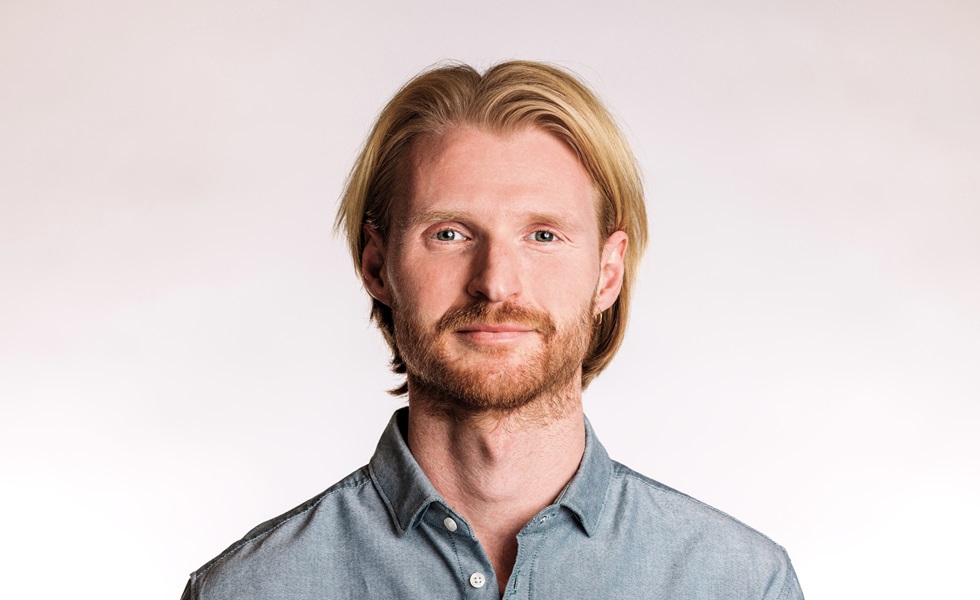
By Joeri de Wilde, Senior Economist at Triodos Investment Management
In the most likely scenarios, the war against Iran will amount to little more than a bump in the road for the global economy. But whilst growth appears to remain steady, this new crisis is causing further erosion beneath the surface.
The title of the International Monetary Fund’s recent World Economic Outlook is ominous: the global economy is operating in the shadow of war. This raises expectations of a standstill or, at the very least, a sharp slowdown in growth. Nevertheless, the IMF’s forecasts remain relatively reassuring, just like those of many other economic institutions. In the baseline scenario, global economic growth remains just above 3%, comparable to previous years.
Economists more cautious about predicting recession
Economists have become more cautious about predicting recessions. The economic consequences of previous shocks, such as the energy crisis following Russia’s invasion of Ukraine and US trade tensions, ultimately proved manageable. Financial markets recovered quickly and even reached new record highs.
The prevailing conclusion is that the global economy has become more resilient. Companies can relocate their supply chains more easily, dependence on oil has decreased, and governments and central banks stand ready to intervene as soon as risks escalate. The massive investments in AI also contribute to a sense of progress and stability.
Who benefits from a state of perpetual crisis?
But beneath the surface, this perpetual state of crisis is causing gradual erosion. The focus is on survival rather than progress, meaning structural problems remain unresolved or even worsen. For instance, the recent years of crisis have resulted in a further concentration of wealth and, above all, power. Those with financial assets benefit from volatility and the rapid recovery of markets. Those dependent on income, however, experience mainly rising costs.
For during times of crisis, the call for flexibility rings loud and clear, and in practice this often translates into the swifter passing on of costs and the relaxation of regulation and labour markets, in order to support economic activity. These adjustments are not neutral: they create winners and losers, and it is often the same groups that bear the brunt time and again. Thus, an economy can recover, whilst large sections of the population are left structurally behind.
Democratic depression
Meanwhile, we are moving further beyond planetary boundaries. Crisis management is supplanting long-term policy, causing climate change, biodiversity loss and the depletion of natural resources to be repeatedly pushed into the background.
This is exacerbated by rising geopolitical tensions. Rivalry between major powers and growing mistrust are undermining international cooperation. This makes it harder to tackle cross-border issues such as climate change, as well as debt crises and trade disruptions. Where greater coordination is needed, fragmentation arises.
Moreover, when economic shocks accumulate in this way, they are not confined to the economic sphere. They seep into confidence, institutions and political stability. What began two decades ago as a democratic recession is increasingly developing into a global democratic depression, characterised by rising populism and sharper social divisions.
A flexible pass-the-buck economy
When economists speak of a flexible global economy, a fundamental question therefore arises: flexible for whom, and at what cost?
The most important lesson of recent years is less reassuring than the latest growth forecasts suggest. We have not become better at preventing crises, but rather at absorbing them, without addressing the underlying vulnerabilities. This is beginning to resemble a system in which inequality, institutional weakening and ecological pressure are being passed on further and further. With this kind of flexibility, no one can really count themselves lucky.
Share this post!
Related posts
-
 Read more about "Allianz Trade: Hormuz als breekpunt voor de wereldeconomie"
Allianz Trade: Hormuz als breekpunt voor de wereldeconomie
-
 Read more about "Allianz Trade: Conflict Iran leidt niet tot wereldwijde recessie"
Allianz Trade: Conflict Iran leidt niet tot wereldwijde recessie
-
 Read more about "Capital Group: Amerikaanse midterms hebben weinig impact op lange termijn"
Capital Group: Amerikaanse midterms hebben weinig impact op lange termijn
-
 Read more about "LFDE: Een uppercut van de opperrechters?"
LFDE: Een uppercut van de opperrechters?
-
 Read more about "Harry Geels: The ‘we’re doing so well’ fallacy"
Harry Geels: The ‘we’re doing so well’ fallacy
-
 Read more about "Carmignac: Extra begrotingsuitgaven VS lijken eraan te komen"
Carmignac: Extra begrotingsuitgaven VS lijken eraan te komen
-
 Read more about "DeVere Group: Bank tax raid would hit every borrower, saver and pension in UK"
DeVere Group: Bank tax raid would hit every borrower, saver and pension in UK
-
 Read more about "Han Dieperink: It won’t be long before we're all French"
Han Dieperink: It won’t be long before we're all French
-
 Read more about "Harry Geels: Tackling ageism with a negative income tax"
Harry Geels: Tackling ageism with a negative income tax
-
 Read more about "Columbia Threadneedle: Herstel olieaanvoer brengt dieselprijs niet omlaag"
Columbia Threadneedle: Herstel olieaanvoer brengt dieselprijs niet omlaag