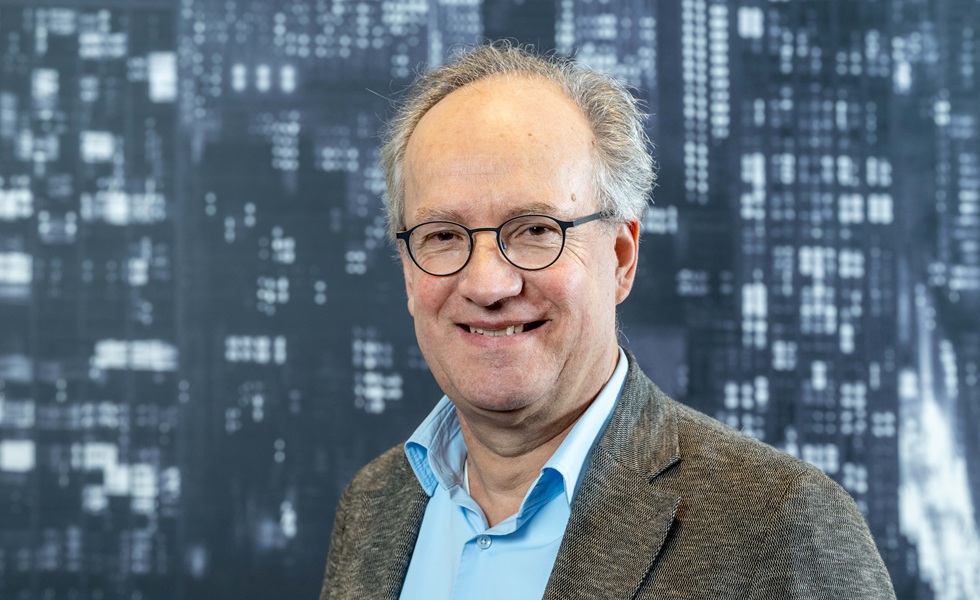
Jeroen van der Put: Fiduciary in 2030, from one-stop-shop to specialist
Jeroen van der Put: Fiduciary in 2030, from one-stop-shop to specialist
This interview was originally written in Dutch. This is an English translation.
Financial Investigator recently organised a roundtable discussion on fiduciary management. Afterwards, we asked chairman Jeroen van der Put, director and advisor to various pension funds, for his views on the future role of the fiduciary. According to him, consolidation, technological developments and stricter requirements are forcing fiduciaries to specialise, increase transparency and redefine their role.
By Esther Waal
Will the current Dutch fiduciary model still exist in 2030?
‘Definitely! Although it may look slightly different. Both pension funds and fiduciaries are consolidating and therefore becoming larger. Smaller pension funds sometimes do not have a fiduciary and join larger funds that do. Complexity is increasing due to regulations, sustainability developments and greater use of private categories, whether or not with an impact focus. Supervisory requirements are also increasing. The Wtp is making operational processes more complex. Geopolitics seems to be entering new territory, with different risks. Pension funds will continue to strengthen, work more professionally and take more control themselves.
Fiduciaries will face higher requirements. Will they still be able to remain a one-stop shop? That is becoming increasingly unlikely. Their oversight role remains important in order to properly reflect the pension fund and carefully shape implementation. They can deliver more quality, continuity and scale than the pension fund itself can. In addition, they will specialise more and collaborate smartly with other parties. A good example is Achmea, which is committed to impact investing and, in collaboration with Neuberger Berman, is developing a private equity fund that closely matches the wishes of its clients.’
How can a fiduciary advisor remain relevant and distinctive until 2030?
‘A good fiduciary knows how to build a good relationship of trust with clients. Trust comes on foot and leaves on horseback. Avoid unpleasant surprises. Be comfortable ‘in control’. Providing a good overview and insight is important. More professional clients demand transparency and want to see inside your organisation. Fiduciaries are also becoming increasingly transparent. Can advisers deal with this, show vulnerability and provide good advice to clients who are at least as knowledgeable as they are? Can they empathise with clients and stay ahead of the game with a proactive attitude? Being service-oriented and serving good coffee is all well and good, but what really matters is being client-oriented. Address the right topics in the right way in a mature and equal dialogue with the pension fund. From that starting point, they organise the relevant knowledge and competencies to offer solutions.’
How will emerging technologies such as AI and big data transform the way we organise and execute pension investments over the next ten years?
‘AI will make analyses faster and better, especially in the areas of ESG, manager selection and monitoring. It will become easier to mine unstructured data. Winners will emerge in the portfolio who know how to apply AI effectively and suddenly offer much cheaper and better propositions. Those who lag behind will be relegated to stranded assets. The impact and speed with which this can happen may lead to shocks. It may be a good idea to develop an AI risk framework in addition to an ESG risk framework.’
How should pension funds deal with the growing gap between participants' increasing focus on investment results and more complex investment portfolios?
‘That doesn't have to be a problem. In Pension 1-2-3 terms, all investments at level 3 are quite complex, but at level 1 they are easy to explain. Good communication can inspire confidence among participants. The fiduciary can play an important role in this and take the pressure off pension funds.’
What is the biggest challenge for pension funds' investment policy after the transition?
‘Pension funds are increasingly being compared with each other in terms of costs, returns and impact on society. Well-diversified portfolios with private assets are sensible, but more expensive than a less diversified portfolio. In rising markets, the latter can also yield better returns. The risk is that we will shift towards a simple passive equity and bond portfolio. However, this is unlikely to be the case. DC also offers scope for greater diversification and more ESG. Another point is that participants, researchers and journalists can look under the bonnet and will not understand everything. They will also be quicker to spot any mistakes. An error in the NAV is more difficult to correct, because you also have to do so at participant level. That is quite a challenge and requires stronger control and good communication.
Finally, there are significant geopolitical developments underway. Will the pound sterling remain a safe haven? Will commodities, precious metals and hedge funds become more important? Non-financial risks are also becoming increasingly significant. Will new legal risks arise? What is the risk of capital restrictions? Will we soon have to write down assets, as we did with Russian shares? In the CRO Forum's Emerging Risk Initiative, military conflicts and critical infrastructure failures are at the centre of the risk radar. Can we prepare for this and mitigate such risks?’
How will ESG/sustainable investing develop in the coming years?
‘Opinions on sustainable investing are increasingly diverging. This places higher demands on choices. Impact investments must yield good returns and steer clear of charity. They respond to the megatrend of sustainability and mitigate long-term risks. The shore will continue to steer the ship in the direction of sustainability. This offers opportunities for companies that distinguish themselves positively in this area. Sustainability is simply an investment theme. The ESG risk framework has incorporated short- and long-term risks and double materiality and provides a good basis for this. I also notice that there are Dutch venture capital funds that focus on sustainable projects but have to turn to the US and Dubai for funding. Should we, as pension funds, do more with this? There is real impact to be gained there.
Finally, impact investments can generate enthusiasm among participants, especially among young people who are more sensitive to this issue. Good marketing with meaningful storylines can create a lot of warmth and engagement among participants. This allows a pension fund to show itself from a different angle. Eating less meat, flying less or installing solar panels on your roof? According to British research, greening your pension is 21 times more effective in reducing your CO2 emissions. This may be an effective key to greater pension awareness.’
|
SUMMARY The fiduciary model will continue to exist, but no longer as a one-stop shop. Pension funds are becoming larger, more professional and increasingly taking control themselves. Fiduciaries are shifting their focus to oversight, specialisation and collaboration. AI is accelerating analysis, ESG monitoring and manager selection. Transparency and trust are becoming decisive factors in customer relations. ESG and impact remain core investment themes with returns and engagement. |
Read the original interview in Financial Investigator magazine
Share this post!
Related posts
-
 Read more about "The Wtp forces decisions regarding continuity, complexity, and communication"
The Wtp forces decisions regarding continuity, complexity, and communication
-
 Read more about "Strategic allocation, ESG and geopolitical risks (roundtable ‘Fiduciary Management in 2030’ – part 3)"
Strategic allocation, ESG and geopolitical risks (roundtable ‘Fiduciary Management in 2030’ – part 3)
-
 Read more about "Consolidation, complexity and choices towards 2030 (roundtable ‘Fiduciary Management in 2030’ – part 2)"
Consolidation, complexity and choices towards 2030 (roundtable ‘Fiduciary Management in 2030’ – part 2)
-
 Read more about "The many faces of fiduciary management (roundtable ‘Fiduciary Management in 2030’ – part 1)"
The many faces of fiduciary management (roundtable ‘Fiduciary Management in 2030’ – part 1)
-
Read more about "Roundtable 'Fiduciary Management in 2030': Importance of fiduciary management is growing rapidly"
Roundtable 'Fiduciary Management in 2030': Importance of fiduciary management is growing rapidly
-
 Read more about "Aegon AM en Van Lanschot Kempen kondigen overdracht fiduciair management aan"
Aegon AM en Van Lanschot Kempen kondigen overdracht fiduciair management aan
-
 Read more about "Dick Kamp: Towards an agile, relevant pensions sector"
Dick Kamp: Towards an agile, relevant pensions sector
-
 Read more about "DNB: Eindfase pensioentransitie"
DNB: Eindfase pensioentransitie
-
 Read more about "Anton Kramer: Explaining is not the same as assessing"
Anton Kramer: Explaining is not the same as assessing
-
 Read more about "PFZW: 5,7% rendement tweede kwartaal"
PFZW: 5,7% rendement tweede kwartaal