Consolidation, complexity and choices towards 2030 (roundtable ‘Fiduciary Management in 2030’ – part 2)
Consolidation, complexity and choices towards 2030 (roundtable ‘Fiduciary Management in 2030’ – part 2)
This report was originally written in Dutch. This is an English translation.
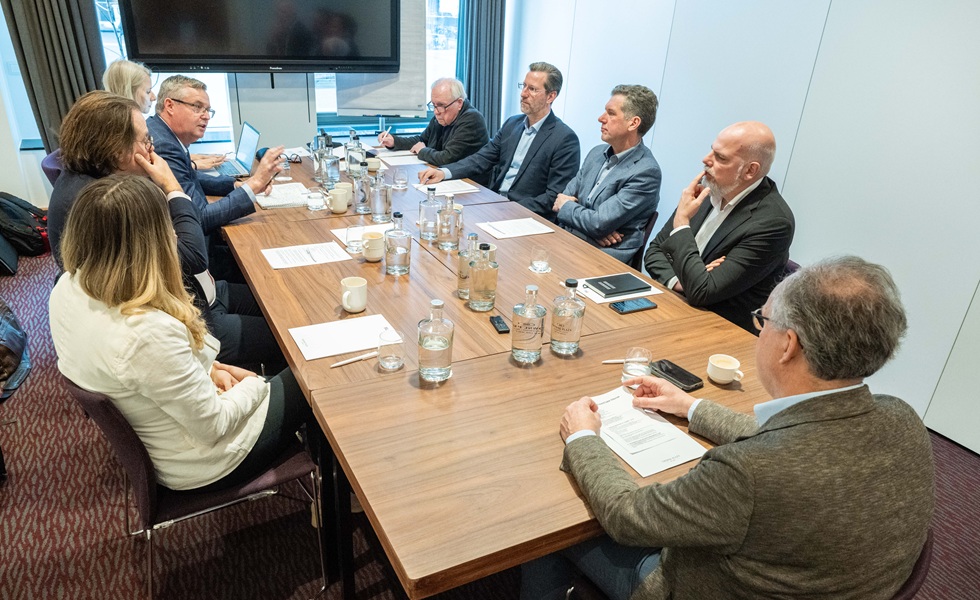
In part 2 of the roundtable report on Fiduciary Management in 2030, participants discuss how the Wtp, economies of scale and increasing complexity are changing the demand for fiduciary management. Innovation, communication with participants, alternative investments and costs are also discussed as determining factors for the future of the sector.
By Hans Amesz
This is part 2 of the report. You can read part 1 here and part 2 here.
|
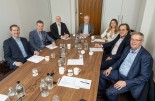
CHAIR: Jeroen van der Put, various pension funds PARTICIPANTS: Janwillem Engel, Montae & Partners Jasper Haak, AF Advisors Carl Kool, BlackRock Marit Kosmeijer, Sprenkels Daniël Rijs, DPS Marcel Roberts, SPMS Alfred Slager, Vrije Universiteit Amsterdam |
Is the trend towards using more and more fiduciaries?
Engel: ‘Yes, that has to do with the operating model under the Wtp, where you have to organise your processes much more tightly in order to remain on time and in control. This can cause problems, particularly for smaller funds if they do not have a fiduciary manager and carry out part of the asset management process themselves. For example, they suddenly have to be able to receive, read, process and return specific data files within tight deadlines. This is challenging for a small administrative office and leads to risks in controlled business operations.’
Kool: ‘The global trend is undeniably one of enormous growth in outsourcing and fiduciary management. This is mainly due to increasing complexity. We are facing all kinds of new regulations, highly volatile financial markets, considerable geopolitical uncertainty, and so on. A fiduciary or outsourcing partner can play a useful role in providing support and helping to interpret these developments.’
Kosmeijer: ‘Over the past twenty years, many relatively small pension funds have been absorbed into larger entities or insurers, where fiduciary management was already strongly present. Seen in this light, there is a kind of natural flow of these funds towards fiduciary management.’
What does the future hold for fiduciary management?
Haak: ‘I think that different models will coexist. At its core, there will still be a fiduciary model, but for far fewer pension funds.’
Roberts: ‘We are, of course, seeing PPIs discontinuing their activities. The occupational pension funds, which currently have different fiduciaries, are considering whether they should merge. There will be fewer clients for the same number of fiduciaries.’
Kool: ‘Consolidation has taken place on both the client side and the fiduciary provider side. These have been uniform developments. But to remain successful as a fiduciary manager, you have to keep innovating and investing. There are all kinds of new developments relating to the new pension contract, the increasing demand for ESG integration, and so on. In order to make the necessary investments, you need sufficient scale. That is a major challenge for fiduciary managers.’
Kosmeijer: 'Two years ago, I had a less rosy outlook for smaller fiduciary managers in the Netherlands than I do now. I think certain trends will continue. For example, ESG will become an integral part of your fiduciary advice.’
Roberts: ‘The most important thing is the relationship between the client and the fiduciary manager: whether they click or not. I think the proverbial human side is hugely underestimated. Fiduciary management means trust, and that is something you find in people, not in organisations.’
Kool: 'An important distinguishing feature of fiduciary managers is that they offer access to the capital markets. That can make a big difference, for example in the fees you can negotiate and the specific terms you can agree with parties.’
Engel: ‘That is indeed a factor that we try to gain some insight into during selection processes. We ask the various fiduciary managers what their estimate is of the cost savings they think they can achieve if they were to take over the management of the existing portfolio. Then you often see real differences in the purchasing power of the various fiduciary managers.’
Slager: ‘I think fiduciary management is becoming an increasingly difficult market because pension funds are taking over the tasks. The number of funds is decreasing, they are increasing in scale, and as a result, the administrative offices are growing. These are taking on more and more policy-preparing tasks and are also becoming more active in the selection and management of the portfolio. At some point, there is one layer too many in the governance.’
What can be said about future communication?
Haak: ‘I notice that a number of pension funds are starting to think about how far they should go in serving their members, also in view of the new system. There will not suddenly be an explosion of people who are suddenly interested in pensions, however unfortunate that may be. A lot still needs to change in the area of member communication, and that is also possible.’
Slager: ‘I see room for innovation here. Most funds focus on communication and participants, which is difficult to fit into the investment process or the role of the fiduciary manager. Funds that focus on participants and communication are bound to come up with a different structure for investment choices and processes, making them recognisable and appealing. But there is a lot of adherence to the familiar investment process. Surely an innovative fiduciary should be able to do something with this?’
Will alternative investments such as private equity, infrastructure and real estate play a greater role in pension investments?
Engel: ‘In the new system, where supervisory rules regarding the required capital are being relaxed, there will be more room for more complex and illiquid products, which in the current system often have high solvency requirements. At the same time, there are also funds that are moving away from complex products because they cannot explain them to their participants. This is a dilemma. When things go wrong, you have to explain why you are involved in investments that are difficult to understand and often have a fairly high cost structure.’
Roberts: ‘We once had an advisor who said: you should make investments as simple as possible and as complex as necessary. That was aimed at board members who might not be aware of all the ins and outs.’
Kool: ‘The quality and professionalism of pension fund boards has increased enormously over the past ten years. As for the complexity of investment products, you also have to balance that against the potential advantages. The reason why increasingly complex products are being added to the portfolio is that they offer major advantages in terms of returns and the diversification they allow, as well as in achieving your ESG objectives. Impact investments are an important trend, and impact is particularly evident on the private side. It is also about being able to respond more actively and dynamically to volatile market developments. But everything must, of course, be in line with the investment principles.’
Kosmeijer: ‘I think you should never hold a portfolio that you cannot explain yourself. But that does not mean that you cannot put together a complex portfolio that fits the investment principles and the participants. After all, the purpose of many complex products is not that difficult to explain at its core.’
Haak: ‘All investment categories are complex and difficult to explain in a certain sense. That is why a good fiduciary manager and good pension fund directors are important in order to be able to explain things.’
Rijs: ‘I do think there is a difference under the Wtp. Participants have little scope for action under the new scheme. They cannot act on it, other than with private assets. Of course, it is true that results will be reflected much more directly in their pensions. I can imagine that there will be more questions than before about where their pension money is actually invested. Transparency and understanding of what is being invested in is and remains of great importance. Ultimately, the pension fund board must know the main risks and return drivers of the products in which investments are made and be able to explain this to the participants.’
Slager: ‘In my opinion, alternative investments are where fiduciary managers can offer value by setting up specialised platforms to combine both expertise and choice. If it is worthwhile for participants to achieve their goals and it appeals to them, then a board should challenge itself to look beyond the label ‘complex’. A fiduciary can help with that.’
Do costs play an important role?
Haak: ‘You have to think carefully about what costs you are talking about. If costs are not a separate dimension – such as bonuses, which sometimes cause controversy – but part of the return, then they are not really a problem.’
Kool: ‘I agree, because ultimately it's about net returns. You can invest in private equity or hedge funds for diversification or other reasons. These are relatively expensive investment categories, but they are expected to generate higher returns. Many pension funds that have been investing in private equity or hedge funds for years are satisfied with this. Of course, everything must be in line with the investment principles.’
Kosmeijer: ‘Investment professionals understand this, but people who know little about the investment world will feel uncomfortable when confronted with the high costs of certain investment categories. That needs to be said.’
|
Jeroen van der Put Jeroen van der Put is a director at various pension funds, including Centraal Beheer APF. He is also chairman of the board of the VBDO, advisor to investment committees and advisor to the Pension Funds Code Monitoring Committee. Previously, he held various management and supervisory roles at pension funds, healthcare institutions and investment organisations, and was chairman of the risk management committee of the Pension Federation. |
|
Janwillem Engel Janwillem Engel has been Lead Investment Consultant at Montae & Partners since 2016, where his responsibilities include assisting pension funds in the selection and evaluation of fiduciary managers, keeping track of developments in the fiduciary market, and maintaining contacts with providers of these services. Engel is a qualified industrial engineer and previously worked for 15 years as a Strategic Advisor at Cardano. |
|
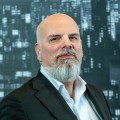
Jasper Haak Jasper Haak is Managing Partner at AF Advisors. After holding management positions at Robeco, he has been advising senior management in the financial sector since 2008. He combines strategic insight with in-depth knowledge of financial markets. Haak holds an MBA from London Business School, is a CAIA charterholder and a certified Financial Risk Manager. |
|
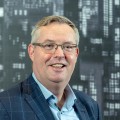
Carl Kool Carl Kool is Head of Fiduciary Management Netherlands at BlackRock, where he has been working since 2011. Prior to that, he was Head of Strategy & Research at Doctors Pension Funds Services (DPFS). He previously worked at ING and Robeco/IRIS, among others. Kool graduated in Economics from Erasmus University Rotterdam and is a CFA charterholder. |
|
Marit Kosmeijer Marit Kosmeijer is Director of Investments and Actuarial Services at Sprenkels. She first joined Sprenkels in 2018 and, after spending several years in the private equity sector, returned in 2023. Kosmeijer is an advisory actuary, investment advisor and pension transition advisor. She is an Actuary AG (AAG) and studied Financial Econometrics at VU University Amsterdam. |

|
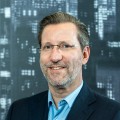
Daniël Rijs Daniël Rijs is Senior Investment Manager at pension administrator DPS. Since 2012, he has been jointly responsible for strategic policy advice on investment policy. He has nearly 30 years of experience in institutional portfolio management and fiduciary management. Rijs studied Econometrics in Tilburg and joined DPS in 1997 as Fixed Income Portfolio Manager and ALM Advisor. |
|
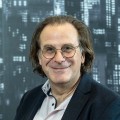
Marcel Roberts Marcel Roberts is an experienced Chief Investment Officer with more than 25 years of experience in institutional asset management. He has held and continues to hold various roles as CIO, chairman and member of investment and review committees at pension funds. His expertise lies in strategic investment policy, asset allocation, risk management and governance within complex pension organisations. |
|
Alfred Slager Alfred Slager is Professor of Institutional Investments at VU University Amsterdam and a non-executive director at pension fund ABP. He is also a member of various investment (advisory) committees. In previous roles, he was a director, investment strategist and asset manager. His publications cover topics such as investment governance, long-term investing and sustainability. |
Read the original report in Financial Investigator magazine
Attachments
Share this post!
Related posts
-
 Read more about "The Wtp forces decisions regarding continuity, complexity, and communication"
The Wtp forces decisions regarding continuity, complexity, and communication
-
 Read more about "Jeroen van der Put: Fiduciary in 2030, from one-stop-shop to specialist"
Jeroen van der Put: Fiduciary in 2030, from one-stop-shop to specialist
-
 Read more about "Strategic allocation, ESG and geopolitical risks (roundtable ‘Fiduciary Management in 2030’ – part 3)"
Strategic allocation, ESG and geopolitical risks (roundtable ‘Fiduciary Management in 2030’ – part 3)
-
 Read more about "The many faces of fiduciary management (roundtable ‘Fiduciary Management in 2030’ – part 1)"
The many faces of fiduciary management (roundtable ‘Fiduciary Management in 2030’ – part 1)
-
Read more about "Roundtable 'Fiduciary Management in 2030': Importance of fiduciary management is growing rapidly"
Roundtable 'Fiduciary Management in 2030': Importance of fiduciary management is growing rapidly
-
 Read more about "Aegon AM en Van Lanschot Kempen kondigen overdracht fiduciair management aan"
Aegon AM en Van Lanschot Kempen kondigen overdracht fiduciair management aan
-
 Read more about "Dick Kamp: Towards an agile, relevant pensions sector"
Dick Kamp: Towards an agile, relevant pensions sector
-
 Read more about "DNB: Eindfase pensioentransitie"
DNB: Eindfase pensioentransitie
-
 Read more about "Anton Kramer: Explaining is not the same as assessing"
Anton Kramer: Explaining is not the same as assessing
-
 Read more about "PFZW: 5,7% rendement tweede kwartaal"
PFZW: 5,7% rendement tweede kwartaal