
Theta Capital: Blockchain and AI, the infrastructure of a new economy
Theta Capital: Blockchain and AI, the infrastructure of a new economy
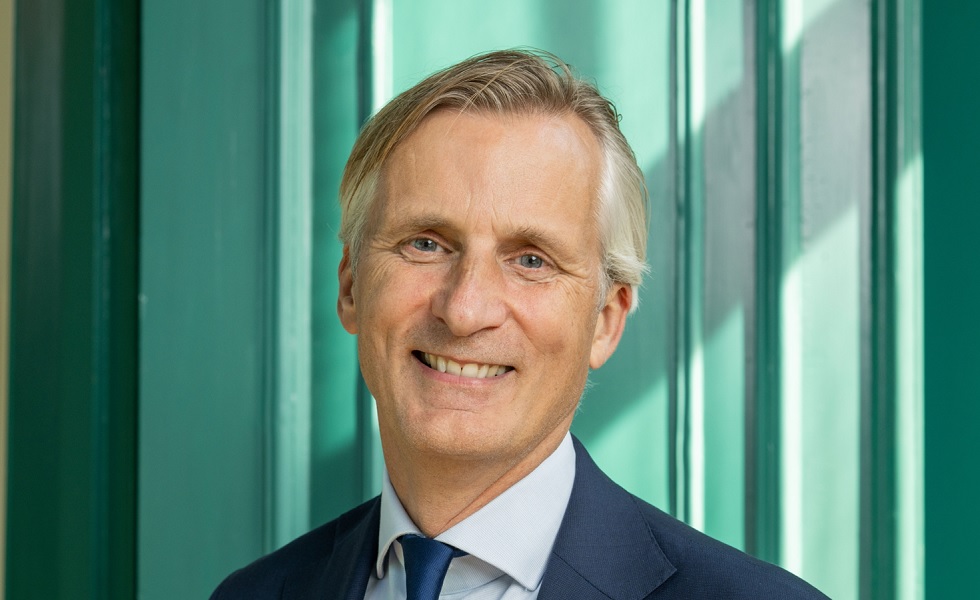
This interview was originally written in Dutch. This is an English translation.
Blockchain and AI are growing together to form a new economic infrastructure. In conversation with Financial Investigator, Jeroen Tielman, Head of Institutional Relations at Theta Capital, outlines how the technologies reinforce each other and enable new economic models.
By Daan Nijssen
What is blockchain? And are blockchain and AI related?
‘Blockchain is a decentralised, digital ledger that enables us to transfer value directly over the internet, without a central intermediary. Strangers can do business with each other directly on a global scale because the reliability of blockchain transactions is woven into the infrastructure itself.
A good example is stablecoins, where dollars can be transferred as quickly and easily as sending an email for a fraction of a penny, and anyone anywhere in the world can participate in economic transactions on an equal footing.
This new blockchain infrastructure layer forms the natural backbone of an AI-driven economy: it makes identity and authenticity verifiable, enables AI agents to trade economically and enter into contracts, and programmatically defines powers and limitations.’
Where do you already see concrete cross-pollination between AI and blockchain? And where is the potential?
‘We see four areas:
1) Authenticity and origin of information
For example, by cryptographically signing news reports and recording them on a blockchain, it becomes possible to make a distinction between authentic and manipulated reporting that can be verified by everyone.
2) Economically active AI agents
As AI agents become independently economically active, blockchain acts as the underlying infrastructure through which they can access financial resources and enter into contractual relationships, and through which explicit restrictions and preconditions can be established and enforced.
3) Intellectual property as input for AI
AI systems are increasingly fuelled by intellectual property. Blockchain provides the infrastructure on which intellectual property (IP) can be registered, allocated and compensated.
4) Decentralised alternatives for AI raw materials
Blockchain networks are increasingly competing with centrally controlled companies that supply the crucial raw materials for AI: data, energy and computing power. Protocols such as Grass (data), Daylight (energy) and Gensyn (computing power) are introducing new models for unlocking these resources. An important side effect is that they actively counteract the further centralisation that AI entails.’
Blockchain would replace the trust traditionally provided by intermediaries with “trust-as-code”. What exactly does this mean and what does it mean for sectors in which trust is still strongly embedded?
‘In the current situation, an intermediary, such as a bank, is necessary for payments. This requires complex processes such as custody, verification, authorisation, identification and, in the case of international transactions, also forex and routing. These links cause costs and delays.
The sectors where blockchain will have the first impact are those where the “cost of trust” in our current system is highest, such as cross-border payments, which can cost several per cent of the value and take days to complete. With blockchain, these payments using stablecoins cost only a fraction of this and take place immediately, day and night.
This is forcing banks, for example, to reinvent themselves. Many services on which they had a monopoly will move to the new blockchain infrastructure layer in the coming years.’
You argue that about a third of the economy is essentially “trust-based”. Why is this part of the economy so sensitive to disruption by blockchain technology?
‘In the current economy, the trust-based role is fulfilled by an intermediary that combines functions such as registration, custody, management and/or transfer of all kinds of securities such as money, shares, property rights and other registered assets.
As with payments, these functions are relatively labour-intensive, with the associated margins of error. An important tool for overcoming these disadvantages is “smart contracts”. These can not only monitor contractual agreements, but also execute them automatically. Economic processes that are carried out on the basis of contractual agreements can thus be fully automated. Wherever a middleman or a controlling function is used, blockchain-based technology can and will make its entrance.’
As with the internet and mobile phones in the 1990s, it is difficult to predict the ultimate scale. Which parallels do you find most relevant for investors?
‘The most important parallels are the construction of an entirely new economically important infrastructure and the strong synergy with other innovative technologies. Technologies that were initially considered separate, such as the internet protocol, mobile telephony, text messaging and broadband, became increasingly intertwined. The eventual introduction of the “handheld computer” (such as the iPhone in 2007) reinforced this synergy, leading to entirely new revenue models, such as social media and the e-commerce revolution.
In the mid-1990s, parties paid billions for radio frequencies for telephony and rudimentary data traffic. The assumption at the time was that only 20% to 25% of fixed call minutes would migrate to mobile. No one foresaw that the mobile phone would transform into a handheld device that we sometimes spend hours a day using and that would form the basis for a global advertising market via social media. The potential of blockchain is much more significant in that respect: the possibility that a third of the global economy will eventually function via “blockchain rails” far exceeds the impact of the early migration from fixed telephone minutes to mobile minutes.
For investors with a long-term vision, the synergy between blockchain and other technologies, such as AI, justifies serious attention to both the underlying infrastructure and the new economic models that arise from it. These are the developments for which long-term investors were created, with a stoic view of the horizon, averse to the issues of the day.’
You argue that the most attractive opportunities lie in the early venture phase. Why? Isn't that phase also the most uncertain?
‘Recognising the potential scalability of applications of, in this case, a new technology at an early stage is at the heart of venture capital. Think of Amazon, which in the 1990s saw the internet not just as an information medium, but as the basis for a global shop for everything and everyone.
The big difference with VC for traditional companies lies in the capital requirements over the lifecycle of a blockchain protocol. In the case of Amazon, the proceeds from the IPO were mainly used to build physical infrastructure, for inventory financing and distribution capacity. With blockchain infrastructure and applications, financing is primarily about software development and reaching a critical mass of users.
Whereas a traditional company repeatedly needs capital to finance growth in necessary physical goods and personnel, the capex life cycle for blockchain is clearly different. Infinitely scalable software largely takes over the function of physical resources and human labour. This cycle is therefore shorter and less capital-intensive.’
|
SUMMARY Blockchain replaces the middleman in economic processes. Blockchain is essential for AI: it verifies the identity and authenticity of data and AI agents, for example, and monitors permissions and restrictions. AI and blockchain will form the basis of new economic processes. Blockchain will first be used where the costs of the middleman are highest, such as in international payments. The synergy between blockchain and other technologies such as AI deserves serious attention from professional investors. |
Read the original interview in Financial Investigator magazine
Attachments
Share this post!
Related posts
-
 Read more about "CFA Society Netherlands: Risk managers are too slow to embrace AI"
CFA Society Netherlands: Risk managers are too slow to embrace AI
-
 Read more about "Clearwater Analytics: Heavy AI users are hitting a data problem"
Clearwater Analytics: Heavy AI users are hitting a data problem
-
 Read more about "etoro: SpaceX verrast met miljardenwinst, maar Musk legt de lat nog veel hoger"
etoro: SpaceX verrast met miljardenwinst, maar Musk legt de lat nog veel hoger
-
 Read more about "LFDE: Hoe de Amerikaanse staatsschuld verstrengeld raakt met AI"
LFDE: Hoe de Amerikaanse staatsschuld verstrengeld raakt met AI
-
 Read more about "RBC BlueBay AM: Afzwakkende groei AI-uitgaven vergroot risico op correctie techaandelen"
RBC BlueBay AM: Afzwakkende groei AI-uitgaven vergroot risico op correctie techaandelen
-
 Read more about "Carmignac: Geen vertraging in groei AI-hardware"
Carmignac: Geen vertraging in groei AI-hardware
-
 Read more about "DWS: AI geeft Duitse industrie glans"
DWS: AI geeft Duitse industrie glans
-
 Read more about "Capital Group: Europa investeert minder in AI, maar deelt in de winst"
Capital Group: Europa investeert minder in AI, maar deelt in de winst
-
 Read more about "Nuveen: AI-besparingen ontketenen nieuwe investeringsrace in farma"
Nuveen: AI-besparingen ontketenen nieuwe investeringsrace in farma
-
 Read more about "Nickel: AI is central to increasing digital asset allocations"
Nickel: AI is central to increasing digital asset allocations