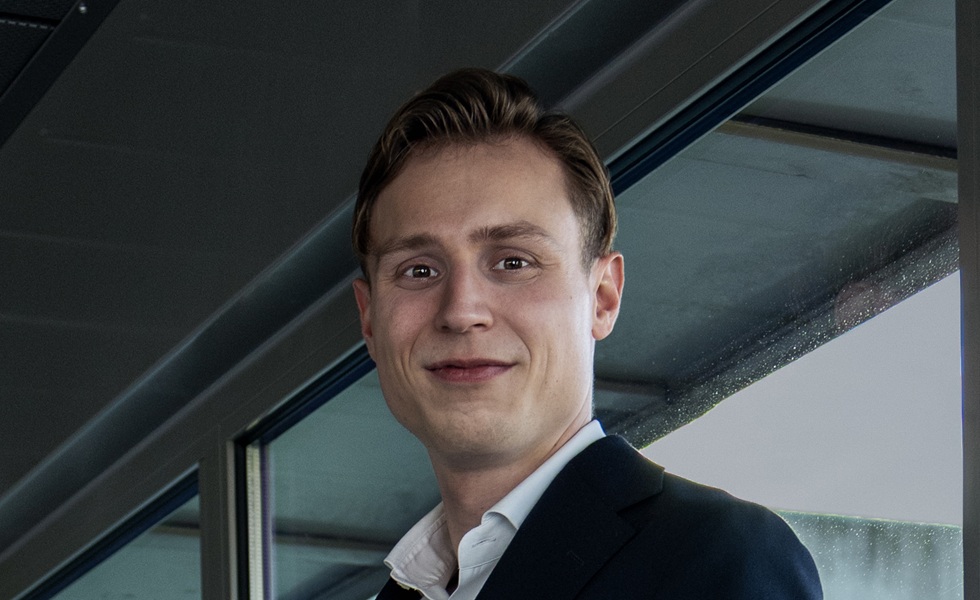
Mark van Schagen: In search of the right balance between efficiency and humanity
Mark van Schagen: In search of the right balance between efficiency and humanity
This interview was originally written in Dutch. This is an English translation.
With one foot in the insurance sector and the other in the pension sector, he strongly believes in the power of consolidation and economies of scale, provided that the cooperative DNA is preserved. Financial Investigator spoke with Mark van Schagen, Senior Portfolio Manager at CZ and board member at SBZ Pensioen.
By Lies van Rijssen
‘At the age of thirteen, fascinated by financial markets and after much persuasion of my parents, I opened my first investment account with the money I had earned delivering leaflets. My first purchase, Imtech shares, immediately taught me my first big lesson: enthusiasm alone is not enough. Despite the lessons I learned the hard way at a young age, my passion for investing did not disappear. And one thing was clear: I would work in the financial sector and have a future at a large commercial bank in London or New York.
But then a good friend insisted that I come and have a coffee with his employer, health insurer CZ. “They invest there too,” he said. I accepted the invitation because I realised that I would probably be able to work more strategically in such a working environment than at a commercial bank. The people I would be investing for would be close to me and would feel the results of my actions directly in their wallets.
I couldn't get the idea out of my head: the idea that I would have the opportunity to invest in sustainable projects, but above all to make a difference for people by optimising the return on their premiums within certain risk frameworks. In my current work at CZ and SBZ Pensioen, I contribute to a worthy social cause and feel a great sense of responsibility for this. The bottom line is that if I invest wisely and also perform my management duties at SBZ Pensioen (the non-mandatory industry pension fund for health insurers) well, I contribute to lower healthcare premiums and higher pensions.
Without a doubt, the Wtp transition is the most important development in the pension sector in recent years for me. I joined this sector in the middle of that process and have been enthusiastically working on the transition for three years now. I sincerely hope that we, as the pension sector, will remain relevant by continuing the movement we have started and by implementing further efficiency and execution power after the transition. Further consolidation and economies of scale (where logical) would be an important step in this regard, with the aim of reducing costs for participants and minimising the risk of vulnerabilities in the execution.
Please understand me correctly: I firmly believe in the strength and cooperative DNA of our pension system. Let us ensure that we retain that cooperative element and continue to put the participant first, even in the event of consolidation and economies of scale. With one foot in the health insurance sector and the other in the pension sector, I see the parallel between the two. The Netherlands once had six hundred health insurance funds. Now there are only nine health insurers left, and almost all of them are still cooperative in nature, despite the consolidation. I think this is a good example for pension funds.
Young people's long investment horizon is essential for a good pension later in life. The financial choices they make now will have an impact far into their future.
The most important theme in my work is investing. Getting the best return on money, within pre-agreed risk frameworks.
Exploring which asset allocation and diversification are appropriate for our objectives. That is why I am here. I also foresee that the explainability of the pension system will become an increasingly important theme due to the transition. People will receive their own pension pot and see the amount of capital in it fluctuate. It is important that they understand why this is the case, what pension funds do for them and why. At SBZ Pensioen, we know better than anyone how important this communication is, because we have been successfully offering a collective flexible contribution scheme for many years.
Sustainability is also an important issue. Not only as an investment opportunity and risk, but also as a theme that allows us to align our investments with the perceptions of our participants. Pension funds will have to continue to ask their participants to what extent they want their pension fund to invest sustainably on their behalf. It is my belief that, however difficult it may be, we must continue to make every effort to find out by regularly conducting risk preference surveys.
We must bring together the professionals who implement the investment policy on a daily basis and the participants who are asked to give their opinion. SBZ Pension is very committed to this. We see that participants also value this. They do not want their pension funds to be invested in activities in which they themselves do not want to be involved. Such insights provide us with starting points for our investment policy, because we invest for our participants and not for ourselves.
As the youngest director at SBZ Pensioen, I partly embody the diversity that we strive for as a pension fund board. But diversity means so much more than differences in age. Our board recognises that choices are better when they can be made against the backdrop of a variety of experiences and opinions. Discussions become more focused and the risk of blind spots is reduced. And our membership base is diverse. So isn't it only logical that the board should be too?
Health insurers still have a cooperative character, despite consolidation. I think this is a good goal for pension funds.
I constantly tell myself that I can and want to learn a lot more. One important insight I have already gained is that the semi-public sector has enormous power. At university, the curriculum focused heavily on issues such as privatisation and methods for organising the strongest outcomes, efficiency and long-term growth. I think that should be the primary focus in most areas. But not everywhere.
In the working environment of CZ and later also SBZ Pensioen, I came to realise the great importance to society of values such as trust, solidarity and mutual dependence in a cooperative model for joint arrangements. Shareholder value can also be important here, but the value for participants, insured persons, comes first. What strikes me positively is that you don't have to worry about whether people are committed to participants. That is the top priority for almost everyone.
I also see a downside: it makes the sector vulnerable that we sometimes lack the incentives that a completely free market has to be efficient.
Without those incentives, you cannot keep it going. I see it as a task to find the right balance in the pension sector between a people-oriented approach and efficiency, in order to keep costs low. That balance contributes to good pensions for our participants. I enjoy contributing to this, based on my drive to be efficient. By working smartly with certain market parties in the semi-public sector, we can bring together the best of both worlds in the interests of the insured, the participants.
Helping people is in my nature. But if I hadn't ended up at CZ and had followed the London-New York route instead, my world view would undoubtedly have been very different. Discovering the power and importance of the semi-public sector is therefore one of the most important realisations in my career so far. At the same time, this is also one of my biggest challenges to date, due to the urge I feel to make the semi-public sector function better. By advocating further consolidation in the interests of our participants and insured persons. But of course without throwing the baby out with the bathwater and without losing people along the way, because we have a wonderfully good pension system. The process of further consolidation may also take time. Rome wasn't built in a day.
I see it as my mission to find the right balance between a people-oriented approach and efficiency in the pension sector, in order to keep costs low.
My girlfriend is very important to me. So are my friends and family. We do lots of fun things together, like skiing. Edinburgh, where I did part of my studies, also continues to inspire me. Yes, I have fallen a little bit in love with that beautiful city. But investing is and remains the passion of my life. My hobby is my work, and for me that is the best job there is. This, coupled with the social impact that investing can have, motivates and inspires me even more to do my job well. I happily jump out of bed every day to do it.
I devour books about the financial markets. All that theory fascinates me. Especially the behavioural finance side, which shows how human emotions drive the financial markets and determine reactions to events. That gives me insight into the why of our pension system, why it works and why it is necessary. In general, people do not take care of their own pensions. Those who do often allow themselves to be overly influenced by emotions in the choices they make. That was also my own lesson at the time. As a sector, we offer participants significant added value here, but we also bear a considerable responsibility.
We haven't yet discussed a topic that is also very close to my heart: young people and pensions. For far too many of my peers and other young people, pensions remain a distant concern. Yet it is precisely the long investment horizon that young people still have that is essential for a good pension later in life. The financial choices that young people make now will have an impact far into their future.
I do what I can to raise awareness among young people and invest a lot of time in this. For example, at “Jong CZ” and youth meetings that we organise through SBZ Pensioen, but basically anywhere where young people want to come and listen. I also tell the story to my friends, whether they ask me to or not. Pensions are a long-term product in which a good explanation and good investment can together yield great results. It is my personal mission to reach young people by making pensions less rigid and boring and by conveying some of my enthusiasm.
Pensions are not just something for later in life. If we can convince young people of this, it can also contribute to support for our pension system. It is really super important.’
|
Mark van Schagen Economist Mark van Schagen has been working at health insurer CZ since 2020, initially as an Investment Analyst and, since 2022, as a Senior Portfolio Manager. In addition, since the end of 2024, he has been a non-executive board member at SBZ Pensioen, where he was previously a member of the accountability body. |
Read the original interview in Financial Investigator magazine
Share this post!
Related posts
-
 Read more about "OFP BP transfers EUR 1.3 bn of pension liabilities to Zwitserleven"
OFP BP transfers EUR 1.3 bn of pension liabilities to Zwitserleven
-
 Read more about "Anton Kramer: Explaining is not the same as assessing"
Anton Kramer: Explaining is not the same as assessing
-
 Read more about "PFZW: 5,7% rendement tweede kwartaal"
PFZW: 5,7% rendement tweede kwartaal
-
 Read more about "Sweder van Wijnbergen: Pension funds' climate policy conflicts with the Tinbergen rule"
Sweder van Wijnbergen: Pension funds' climate policy conflicts with the Tinbergen rule
-
 Read more about "Evli: Solution needed for spread target under the Wtp"
Evli: Solution needed for spread target under the Wtp
-
Read more about "Aon: Stijging dekkingsgraden pensioenfondsen houdt aan"
Aon: Stijging dekkingsgraden pensioenfondsen houdt aan
-
 Read more about "Dick Kamp & Raymond van Es: Applications of AI in the pension sector"
Dick Kamp & Raymond van Es: Applications of AI in the pension sector
-
 Read more about "Fidelity International: Nederlanders blijven vertrouwen houden in pensioenregelingen"
Fidelity International: Nederlanders blijven vertrouwen houden in pensioenregelingen
-
Read more about "Anton Kramer: Fund is benchmark"
Anton Kramer: Fund is benchmark
-
 Read more about "DNB: Een stevig fundament voor een bewegend pensioen"
DNB: Een stevig fundament voor een bewegend pensioen