
Carmignac: AI, bubbles and creative destruction
Carmignac: AI, bubbles and creative destruction
This article was originally written in Dutch. This is an English translation.
Artificial intelligence (AI) is stirring up emotions everywhere. European savers are hesitant to invest in the stock markets because they fear that the “AI bubble” is about to burst. This stands in stark contrast to American investors, who are fully embracing the boom in this sector on the stock market. Who is right?
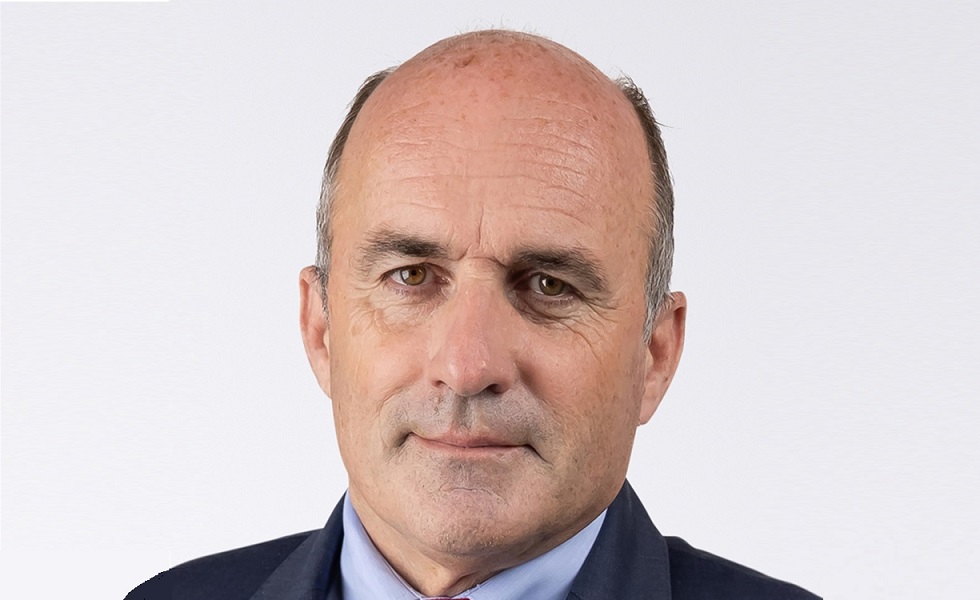
By Frédéric Leroux, Head of Cross Asset, Fund Manager, Carmignac
European savers could miss out on a lot of opportunities, while many American investors could suffer losses by exiting too late. As usual. But investors cannot limit themselves to the stock market value of AI and ignore its potentially unprecedented social impact.
Historically, economic and stock market history has been peppered with bubbles accompanying the emergence of new technologies.
Almost all of us remember the most recent one: the TMT (technology, media, telecoms) or internet bubble. History buffs among us will also recall the British railway bubble in the mid-19th century.
Both technology bubbles led to folly: the first involved almost unstoppable stock market prices, even compared to expected turnover, and the second saw no fewer than four different railway projects set up simultaneously to connect just two cities.
In both cases, the bubbles fulfilled their mission: to rapidly spread the new technology throughout the economy, without giving potential participants time to question it. The one thing a player in the relevant sector cannot afford is to miss the boat. At the end of the 1990s, none of the major telecom operators could afford to forego the purchase of a 3G licence, despite the excessive cost, just as today no hyperscaler1 can afford to neglect investing in data centres2, despite the equally excessive price tag. Each operator preferred possible ruin due to financial problems to certain ruin by being immediately overtaken: bubbles fit into the framework of a deterministic process.
In both cases, new technologies ultimately made jobs redundant and buried old processes to make way for new professions and ways of working. In other words, according to Schumpeter, creative destruction, made possible by entrepreneurs and financiers, is conducive to employment and economic efficiency in the long term. As fund managers, it is our job to position our portfolio on the right side of creative destruction: avoiding securities that will suffer from the widespread adoption of AI and focusing on those that will benefit from it.
The hype surrounding AI is not yet entirely identical to the bubbles of the past
On the stock market, most of the major players in the AI sector are valued at understandable ratios, based on huge profits that have so far required little CapEx3. These are made possible by the long-standing and successful social presence of Microsoft, Amazon, Google, Meta and so on in the sectors in which they operate. Their valuation ratios are 26 to 33 times the estimated 12-month profit, still a long way from the madness we saw at the time of the internet. However, according to J.P. Morgan, by 2030 these companies will invest the 5,000 to 7,000 billion dollars needed to implement AI, partly financed by debt that until then had only been used to buy back their shares. How long will it take for these investments to become profitable? And how should the transition from a capital-poor3 to a capital-intensive3 business model be valued?
NVIDIA, the first company in the world to break through the $5 trillion market capitalisation threshold and symbolising the triumph of AI, is the lucky one that can call itself the supplier to those deep-pocketed hyperscalers. NVIDIA, which supplies shovels and sieves to the masses of AI gold diggers, is valued at 32.5 times next year's estimated earnings, which is defensible in light of its impressive earnings growth.
An important feature of that AI ecosystem, which could lead to a great deal of uncertainty, is that it is built around OpenAI, a company that is not currently listed on the stock market and operates on a non-profit basis, and is therefore capable of a great deal of accounting creativity. In addition, it has already committed to various more or less circular activities with the other major AI players for a total amount of 1.4 trillion dollars. Time will tell.
Another peculiarity, this time with more favourable consequences, is that this AI revolution is also a technological war between China and the United States: “DeepSeek-AI” versus “AI with NVIDIA components”. Can an AI emerge as the loser in this titanic battle, without the two superpowers having thrown everything into the fray to ensure the success of “their” AI? This factor could mean that any disappointment will be delayed. When it comes down to it, will the winner and loser be determined on the basis of the share price of the companies that have spread the technology or on the basis of the economic and social impact of the two AIs?
What is truly remarkable about AI technology is its potentially rapid and profound impact on society via the labour market.
AI is making so many office jobs redundant that supporters of Schumpeter's concept of “creative destruction” sometimes find it difficult to imagine that AI will eventually create more jobs than it has destroyed, a phenomenon that is currently affecting young people in particular. According to the consulting firm Oxford Economics, 85% of the increase in unemployment in the United States since the low point in 2023 can be attributed to young people4. American figures show that the unemployment rate among 20- to 24-year-olds has risen from 6% to almost 9.5% over the past three years, although it has hardly changed for the rest of the population. In October, an unprecedented number of jobs were cut, mainly due to AI. In many sectors, what is the added value of a newly trained but completely inexperienced young person compared to a well-trained form of AI? And what will be the added value tomorrow of an even younger person who believes that all they need to learn is the best way to ask AI a question?
It is possible that young people themselves will find their place in an AI economy and that, in the end, destruction will once again lead to creativity. However, this hope should not stand in the way of helping recent graduates to enter the labour market, which currently seems inaccessible to them. After all, our rapidly ageing world would make little progress without the active contribution of the younger generations to the production of wealth. Without this solidarity towards newcomers, we risk reaching the social limits of the rapid implementation of AI in our lives even faster than the limits of the stock market.
1 Amazon, Google, Meta, Microsoft.
2 Data centres
3 Capital expenditure.
4 Oxford Economics, Research Briefing US, Educated but unemployed, a rising reality for college grads, 27 May 2025.
|
SUMMARY AI evokes both euphoria (in the US) and fear of a bubble (in Europe), but previous technology bubbles show that such phases are often essential for rapid adoption. AI companies are currently highly valued, but still defensible. The real uncertainty lies in future large investments and their returns. The AI revolution is also a technological power struggle between the US and China. The biggest risk is rapid social disruption, especially for young people in the labour market. Solidarity is crucial to making the transition sustainable. |
|
Disclaimer This is an advertising message. This article may not be reproduced in whole or in part without the prior consent of the management company. It does not constitute an offer to subscribe or investment advice. The information contained in this article may be incomplete and is subject to change without notice. Past performance is no guarantee of future results. The reference to certain securities or financial instruments is provided solely for illustrative purposes to highlight some of the securities that are or have been present in the portfolios of the Carmignac funds. It is not intended to promote direct investment in these instruments and does not constitute investment advice. The management company is not subject to any prohibition on carrying out transactions in these instruments prior to the distribution of this communication. The portfolios of Carmignac funds may be changed at any time. CARMIGNAC GESTION – 24, place Vendôme – F - 75001 Paris – Tel: (+33) 01 42 86 53 35 - Portfolio management company approved by the AMF Public limited company with capital of €13,500,000 - Paris Trade Register B 349 501 676 CARMIGNAC GESTION Luxembourg – City Link - 7, rue de la Chapelle - L-1325 Luxembourg – Tel: (+352) 46 70 60 1 - Subsidiary of Carmignac Gestion. Investment fund management company approved by the CSSF - Public limited company with capital of €23,000,000 - Luxembourg Trade Register B 67 549 |
Attachments
Share this post!
Related posts
-
 Read more about "CFA Society Netherlands: Risk managers are too slow to embrace AI"
CFA Society Netherlands: Risk managers are too slow to embrace AI
-
 Read more about "Clearwater Analytics: Heavy AI users are hitting a data problem"
Clearwater Analytics: Heavy AI users are hitting a data problem
-
 Read more about "etoro: SpaceX verrast met miljardenwinst, maar Musk legt de lat nog veel hoger"
etoro: SpaceX verrast met miljardenwinst, maar Musk legt de lat nog veel hoger
-
 Read more about "LFDE: Hoe de Amerikaanse staatsschuld verstrengeld raakt met AI"
LFDE: Hoe de Amerikaanse staatsschuld verstrengeld raakt met AI
-
 Read more about "RBC BlueBay AM: Afzwakkende groei AI-uitgaven vergroot risico op correctie techaandelen"
RBC BlueBay AM: Afzwakkende groei AI-uitgaven vergroot risico op correctie techaandelen
-
 Read more about "Carmignac: Geen vertraging in groei AI-hardware"
Carmignac: Geen vertraging in groei AI-hardware
-
 Read more about "DWS: AI geeft Duitse industrie glans"
DWS: AI geeft Duitse industrie glans
-
 Read more about "Capital Group: Europa investeert minder in AI, maar deelt in de winst"
Capital Group: Europa investeert minder in AI, maar deelt in de winst
-
 Read more about "Nuveen: AI-besparingen ontketenen nieuwe investeringsrace in farma"
Nuveen: AI-besparingen ontketenen nieuwe investeringsrace in farma
-
 Read more about "Nickel: AI is central to increasing digital asset allocations"
Nickel: AI is central to increasing digital asset allocations