Dick Kamp: Risk management and the end-of-history illusion
Dick Kamp: Risk management and the end-of-history illusion
This column was originally written in Dutch. This is an English translation.
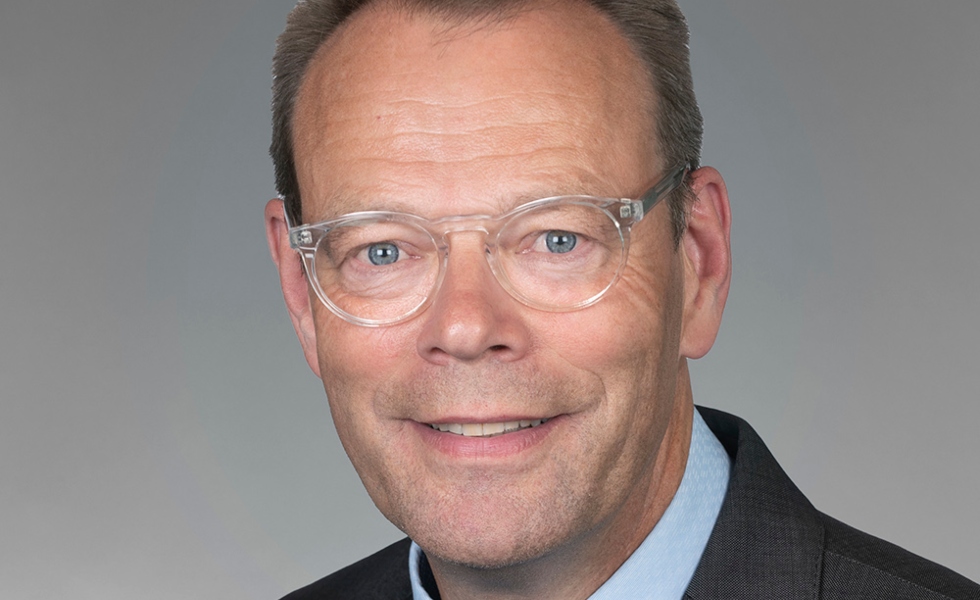
By Dick Kamp, Director of Pensions, Investment and Risk, Milliman Pensions
We usually associate personal development with our younger years: studying, first jobs, discovering who you are and what you want. Yet growth does not stop after the age of thirty. How do people of other ages view their own development?
I recently noticed something interesting: when you ask people in their thirties, forties, fifties and sixties whether they have developed significantly over the past ten years, the majority answer “yes” without hesitation. But if you ask the same group whether they expect to develop just as much over the next ten years, the answer is noticeably less positive. In other words, people often think that their greatest growth is behind them: they have more or less “finished learning”.
This phenomenon has been investigated in various psychological studies. People systematically underestimate how much they will change in the future, while perceiving their past development as very significant. This is called the “end-of-history illusion”[1]: the illusion that who you are now is your definitive self, when in reality this is rarely the case. Even people in their sixties continue to develop, learn new things, change their opinions and adapt to new circumstances.
The analogy with pension fund managers
I also see this human tendency to underestimate future development in pension fund managers. There is often a perception that participants – employees and pensioners – are more or less “finished”. They are not interested in pensions and are unlikely to become so. The reasoning is that the pension fund's value proposition therefore does not need to change fundamentally. There is no need for more choices or other forms of communication: after all, participants are not going to develop.
But is that assumption correct? And is it wise to make policy based on the idea that people do not change?
Participants do develop
The answer is clear: participants do develop, just like everyone else. Their life situations change, their knowledge grows, and their attitudes towards pensions can evolve, sometimes due to personal events, sometimes due to social developments. Consider the impact of the Future Pensions Act (Wtp): this new legislation encourages participants to make more choices and to take an active interest in their pensions. Transparency about the development of their individual pension pot and comparability with that of participants in other pension funds and other age cohorts will probably reinforce this further. In my opinion, this means that pension fund managers cannot continue to think in terms of static assumptions about their participants.
In fact, administrators can and must play an active role in the development of their participants. By encouraging, informing and facilitating participants, they can help them make better choices for their own future. This is not only a matter of social responsibility, but also of remaining relevant as a pension fund. Society is changing, expectations are changing, and participants are changing with them.
The role of the administrator: actor in development
What does this mean in concrete terms for the pension fund director? It starts with the realisation that the development of the participant is not static. This requires a reassessment of the pension fund's vision and mission. A modern pension fund director looks ahead and asks: how can we help participants develop so that they make better choices and feel more involved in their pension?
Let me be specific. Instead of settling for an annual PDF overview, you could invest in interactive scenario tools that allow participants to “play” with their pension choices themselves. Instead of only offering pre-retirement workshops, you could organise life-stage-oriented meetings, including for people in their thirties and forties who think retirement is still a long way off. And why not experiment with personal pension coaches who guide participants through important decision-making moments?
This requires a different attitude: daring to experiment, learning from feedback, and continuously adapting the value proposition to the changing needs of participants. Treat your pension fund as a learning organisation. Regularly ask participants what they need, what they are struggling with, and adapt accordingly. Not based on assumptions in the boardroom, but on a genuine dialogue with the people you are doing it for.
Because if you assume that participants will not change, you run the risk of falling into the “end-of-history illusion” yourself, but then with regard to your own supporters.
Conclusion
The biggest pitfall for pension fund managers is to think that participants have “finished learning”. Just as with ourselves, there is always room for growth and development. By assuming change rather than stagnation, pension funds can not only better fulfil their social role, but also contribute to a future in which participants really are the focus.
Dear pension fund director, take the time to critically examine your assumptions about participants. Start a dialogue with different age groups within your participant base and investigate how their needs and expectations are evolving. Make the “continuous development of participants” an explicit part of your multi-year fund strategy.
And for the sector as a whole, I would like to say: let's invest jointly in research into the development of pension knowledge and engagement throughout the life course. Share best practices on effective development interventions and create sector-wide standards for “development-oriented pension communication”. Only by recognising as a sector that participants continue to develop can we make the transition to the new pension world (Wtp) successful and increase confidence in the pension system.
And who knows: perhaps we will all discover that, just like the participants, we never stop learning.
This is the forty-eighth column in a series on risk management. The series aims to encourage readers to view risk management as an integral part of business.
[1] Quoidbach, J., Gilbert, D.T., & Wilson, T.D. (2013). The End of History Illusion. Science, 339(6115), 96-98. PDF from Harvard University.
Share this post!
Related posts
-
 Read more about "Dick Kamp & Bjorn Blom: Data quality as a foundation of reputation"
Dick Kamp & Bjorn Blom: Data quality as a foundation of reputation
-
 Read more about "Aon: Stijging dekkingsgraden pensioenfondsen houdt aan"
Aon: Stijging dekkingsgraden pensioenfondsen houdt aan
-
 Read more about "Dick Kamp: Towards an agile, relevant pensions sector"
Dick Kamp: Towards an agile, relevant pensions sector
-
 Read more about "Anton Kramer: Explaining is not the same as assessing"
Anton Kramer: Explaining is not the same as assessing
-
Read more about "PFZW: 5,7% rendement tweede kwartaal"
PFZW: 5,7% rendement tweede kwartaal
-
Read more about "PME: Sterke financiële positie richting overgang naar nieuwe pensioenstelsel"
PME: Sterke financiële positie richting overgang naar nieuwe pensioenstelsel
-
 Read more about "Invesco: ETFs are gaining popularity in Wtp portfolios"
Invesco: ETFs are gaining popularity in Wtp portfolios
-
Read more about "Dick Kamp: The Wtp makes the board accountable for the system"
Dick Kamp: The Wtp makes the board accountable for the system
-
 Read more about "Aon: Ook in mei sterke stijging dekkingsgraden pensioenfondsen"
Aon: Ook in mei sterke stijging dekkingsgraden pensioenfondsen
-
 Read more about "PFZW: Succesvolle overstap van ruim 3 miljoen deelnemers"
PFZW: Succesvolle overstap van ruim 3 miljoen deelnemers