Outlook 2026: Roelof Salomons (BlackRock)
Outlook 2026: Roelof Salomons (BlackRock)
This text was originally written in Dutch. This is an English translation.
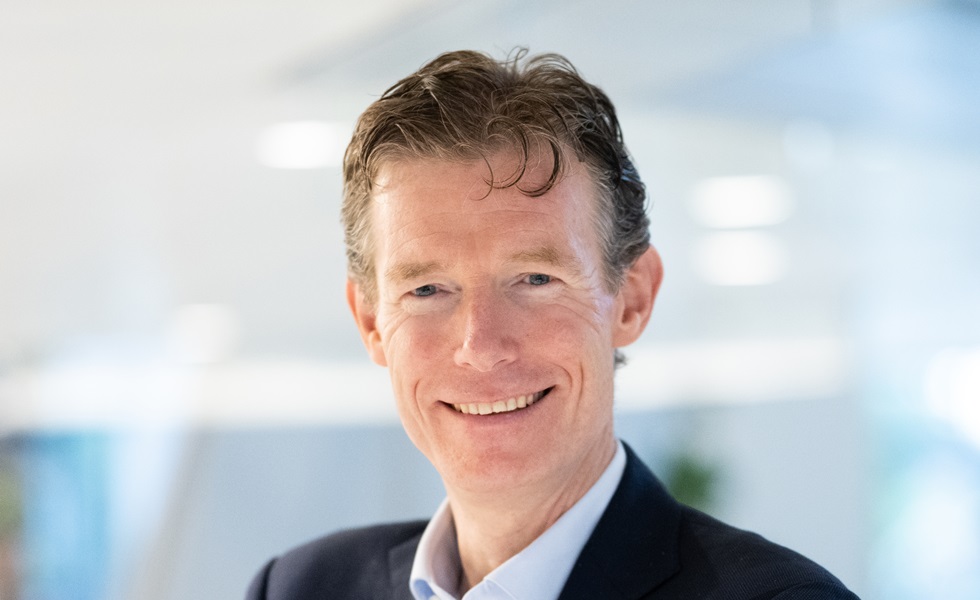
By Roelof Salomons, Chief Investment Strategist, BlackRock Investment Institute
What are the economic prospects for 2026?
'After years of adjusting to higher interest rates and geopolitical shifts, the global economy will be in a phase of moderate but resilient growth in 2026. Inflation will move towards target levels, although price pressure will remain due to shortages of energy, labour and raw materials. We are entering a new economic regime in which supply is more often the limiting factor.
At the same time, growth dynamics are shifting structurally: technology, energy and policy together form the new framework. Artificial intelligence and automation are increasing productivity, but require adjustments in infrastructure and regulation. Central banks are cautiously normalising, but their policy space remains limited by high debt and persistent inflation risks.
For investors, this means an environment in which long-term trends are more important than short-term cyclical fluctuations. We expect stable growth and falling inflation, with regional differences. The US remains robust thanks to lower interest rates and fiscal support, while Europe benefits from investments in defence, infrastructure and energy transition. Asia and emerging markets are gaining weight through regional production and technological integration.
Equities remain attractive, especially in markets with strong earnings growth and solid balance sheets. Europe offers selective opportunities in financial institutions, industry and utilities. Bonds are regaining their role as stabilisers, with a preference for corporate bonds and shorter maturities. Private markets remain interesting through investments in energy security, digital infrastructure and industrial automation.
Europe is at the heart of three structural trends – digitalisation, energy transition and security – which together form the basis for sustainable growth in the coming years.'
We are in a new economic regime in which supply is more often the limiting factor.
Attachments
Share this post!
Related posts
-
 Read more about "Federated Hermes: Weekly Markets Wrap Up 22 October 2026"
Federated Hermes: Weekly Markets Wrap Up 22 October 2026
-
 Read more about "Federated Hermes: Weekly Markets Wrap Up 15 October 2026"
Federated Hermes: Weekly Markets Wrap Up 15 October 2026
-
 Read more about "Federated Hermes: Weekly Markets Wrap Up 8 October 2026"
Federated Hermes: Weekly Markets Wrap Up 8 October 2026
-
 Read more about "PIMCO: Growth holds, risks widen"
PIMCO: Growth holds, risks widen
-
 Read more about "Federated Hermes: Weekly Markets Wrap Up 1 October 2026"
Federated Hermes: Weekly Markets Wrap Up 1 October 2026
-
 Read more about "AllianzGI: Nieuw elan ondersteunt risicovolle beleggingen"
AllianzGI: Nieuw elan ondersteunt risicovolle beleggingen
-
 Read more about "Crédit Mutuel AM: Is September 2026 another difficult month for markets?"
Crédit Mutuel AM: Is September 2026 another difficult month for markets?
-
Read more about "Federated Hermes: Weekly Markets Wrap Up 3 September 2026"
Federated Hermes: Weekly Markets Wrap Up 3 September 2026
-
 Read more about "MFS: Vooruitzichten EMD zijn goed, ondanks lastig jaar"
MFS: Vooruitzichten EMD zijn goed, ondanks lastig jaar
-
 Read more about "Federated Hermes: Weekly markets wrap up 13 August 2026"
Federated Hermes: Weekly markets wrap up 13 August 2026