Wouter Sturkenboom: Puzzling with economics and geopolitics
Wouter Sturkenboom: Puzzling with economics and geopolitics
This interview was originally written in Dutch. This is an English translation.
If your raison d'être is solely based on selling products, you lose sight of your customer. Financial Investigator spoke with Wouter Sturkenboom, CIO at Providence Capital.
By Lies van Rijssen
'My decision to become an investment strategist was the answer to a question I had encountered at the end of my studies. I had studied Economics in Maastricht and International Studies, a form of political science, in Washington DC. I was looking for a working environment where I could combine the two and initially thought of a large organisation such as the World Bank or the IMF, both of which are based in Washington. But to work there, I would have to go through an extensive political process and end up with a very different job profile than I was looking for.
A headhunter suggested that the profession of investment strategist might suit me well. In that position, I would be able to think in terms of investment solutions from the perspective of what I saw happening in the world and its reflection on the financial markets. I ended up at Kempen. Under the mentorship of Lars Dijkstra, who has been very influential in shaping my career, I was able to master the profession of investment strategist at that organisation and found the puzzles I love to solve. Then and now.
One of the most important developments in the segment where I found my work is the rise of passive investing, in conjunction with the rise of ETFs. This development has made investing more accessible and cost-efficient for many people.
Another very important development, in my opinion, is the digitisation and globalisation of investing. On the one hand, I am referring to the widespread distribution and availability of investment information. This development has also increased the accessibility of the markets for people and has led them to invest very differently than before. On the other hand, I am referring to how investors now manage their investments from home and monitor the performance of their investments almost in real time. The world has become their playing field.
A third major development that is taking place is the increase in and accessibility of new investment categories, particularly in private markets. This area used to be reserved for a select group of institutional investors who were able to oversee the field. Now, a kind of democratisation process is taking place that is opening up more and more asset classes to everyone. And new investment categories are still being added. The process of diversification and innovation continues. I see this as positive, but it also entails risks: it requires investors to read up thoroughly and think carefully about their investment choices. But not everyone does that.
I am convinced that we must prepare for bad times during good times. You shouldn't wait until they arrive.
Looking ahead, given the enormous amount of data in our industry, I believe we can expect AI and tokenisation to have major implications. These are two separate movements, but both can be transformative. AI already plays a significant role as a research and analysis tool, and this is set to accelerate. Tokenisation is the process of placing asset classes on a blockchain via a token. This development is still in its infancy, but I expect the trend to continue given the advantages it offers: it makes trading easier and allows for instant settlement.
This makes it immediately clear who owns the securities being traded. There is no longer any waiting time and, as a trader, you are no longer bound by the opening hours of the stock exchange because the blockchain is permanently available.
Providing service, customisation and adding value in terms of investment content at costs that are attractive to the customer. These are currently the major themes in my work. When I moved from Northern Trust to Providence, I switched from the institutional investment sector to the private wealth/family office world and asked myself where our raison d'être lies. In other words, where I can add value for our clients in the search for solutions to their problems. My answer is that this can be achieved by providing excellent service tailored to the client's situation.
Our clients need their own contact person and investment solutions that respond to their specific situation. Not with model portfolios, but with tailor-made solutions. Where appropriate, we must also offer clients access to excellent portfolio managers. Our clients cannot make that selection themselves. They do not have sufficient overview for that. The number of providers is enormous, different tax regimes apply, and costs vary widely. The devil is truly in the detail. Incidentally, due to our relative scale compared to the major banks, we can add investment categories for our clients that are too small for the major banks to get involved in. This is another area where we offer added value.
Our clients need their own contact person and investment solutions that respond to their specific situation.
Of course, I would welcome it if we succeeded in getting more women interested in the investment profession. I would like to see the people in our small company, and in the financial industry in general, reflect society. That is not yet the case. That is why I am always looking for “diversity of opinion”. Before we make decisions here, we first gather as wide a range of opinions as possible. We collect these opinions both internally and externally. We do this to challenge ourselves, to gather ideas and to have sufficient information on which to base our decisions.
More than on the institutional side at the time, I feel that we are on the right track if we, as an organisation and as individuals, continue to identify what our customers really need and how we can help to meet those needs. I think that is an important insight and a completely different approach to starting with a product and then looking at how you can sell it. Institutional customers such as pension funds usually know exactly what they want. We often have to engage in in-depth discussions with the customer first to clarify their needs, where the challenges and opportunities lie for them, and what their risk appetite is. I find it very exciting to explore this together with the customer.
My fortunate start at Kempen, where I dealt with a wide range of clients, and my experience abroad in London and New York, where I learned a lot about cultural differences, have probably shaped me the most. In any case, they were crucial to the course of my career as an investment strategist and to my development as a person. They were also the biggest challenges I have faced. They taught me about myself as a person, how I practise my profession, how I naturally communicate, and what impact that has on others. This led to a process of awareness in which I came to realise that my directness and tendency to immediately seek out content and analysis are not always the most effective way to get my message across in every context.
Before we make decisions here, we first gather as wide a range of opinions as possible. We collect these opinions both internally and externally.
Taking on challenges and seeing them as a learning process has helped me to increase my effectiveness. I have also come to realise that the great attention we pay in the Netherlands – certainly at Kempen – to the development of personal effectiveness and cooperation within teams is exceptional. In New York or London, there is hardly any room for this. In the Netherlands, we are given and take the space to go through a social process together. A substantial part of our offices is set aside for us to get together for a joint lunch. In London and New York, you would get your lunch outside and eat it at your desk. Such cultural differences are significant in terms of how we interact with each other.
Puzzles inspire and intrigue me. Separate elements that move around and that I can try to bring back to a coherent picture. In my profession, I am constantly working on puzzles. The markets are moving, but the question is what is moving them at any given moment. What is new, how does the economy work, how does monetary policy work? How does it all interact, how do things come together and how can I bring what I see together into a coherent, well-constructed investment vision that is appropriate for a client? That requires a tailor-made approach. On a personal level – I have two young children – I am of course also constantly puzzling. What education is right for our children, what talents do they have, how can they best be put to use? That too requires a tailor-made approach.
I would like to conclude with a piece of stock market wisdom. We are currently seeing a lot of enthusiasm for specific investment categories, particularly private markets. This is logical, as there are many positive developments in this area and at Providence, private equity, private credit and private infrastructure have been a cornerstone of our investment proposition for many years. But there are also question marks. No one knows exactly what AI will bring, and perhaps even less what Trump will come up with next. I am convinced, and I also convey this to clients, that we must prepare for bad times during good times. You should not wait until they arrive. I certainly do not want to be negative, but I do think it is important that we consider how we can continue to navigate well even in difficult times.
Diversification remains very important in any case. Within investment categories, but also between them. When things are going well, people tend to opt for one-sided investments and chase returns. That remains dangerous and risky. Monetary policy, economic growth, geopolitical developments, corporate profits, a trade war: there are so many sources of uncertainty that could suddenly cause a turnaround. It is better to stay ahead of the panic that can arise by choosing to sail very cautiously against the wind.'
|
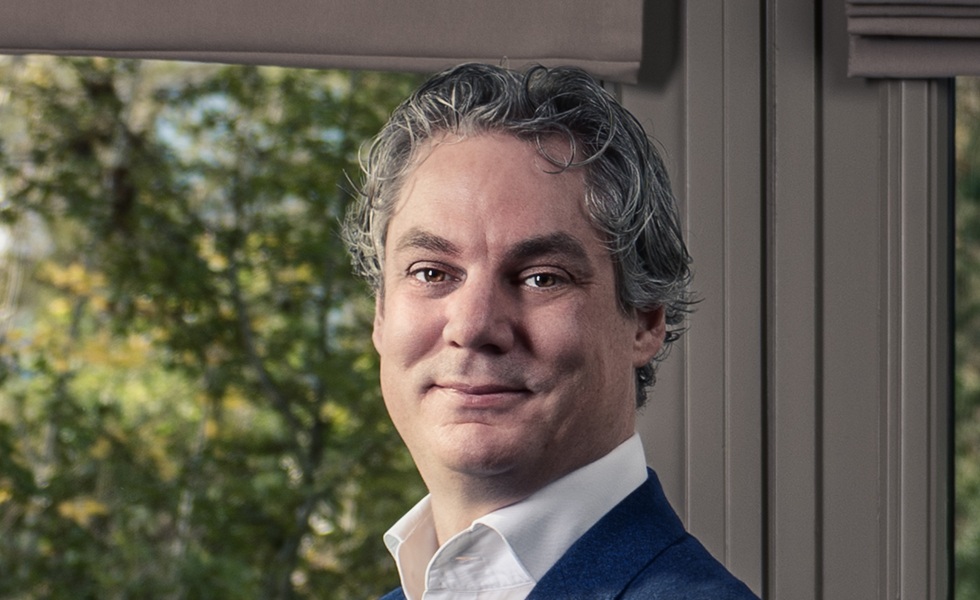
Wouter Sturkenboom Wouter Sturkenboom is an economist and has been CIO of multi-family office Providence Capital NV since early 2025. Sturkenboom started his career in 2006 at Kempen & Co. At the end of 2012, he moved to Russel Investments, where he worked as an investment strategist in London and New York until mid-2018. From 2018 to the end of 2024, Sturkenboom was Chief Investment Strategist EMEA & APAC at Northern Trust. |
Attachments
Share this post!
Related posts
-
 Read more about "Columbia Threadneedle: Herstel olieaanvoer brengt dieselprijs niet omlaag"
Columbia Threadneedle: Herstel olieaanvoer brengt dieselprijs niet omlaag
-
 Read more about "BLI: Wereldeconomie houdt stand ondanks druk op energie- en rentemarkt"
BLI: Wereldeconomie houdt stand ondanks druk op energie- en rentemarkt
-
 Read more about "RBC BlueBay AM: Opkomende markten tonen opvallende veerkracht"
RBC BlueBay AM: Opkomende markten tonen opvallende veerkracht
-
 Read more about "Clearwater Analytics: AI will generate higher alpha"
Clearwater Analytics: AI will generate higher alpha
-
 Read more about "DNB: Wat betekenen geopolitieke spanningen voor inflatie?"
DNB: Wat betekenen geopolitieke spanningen voor inflatie?
-
 Read more about "AllianzGI: China blijft veerkrachtig en biedt kansen voor beleggers"
AllianzGI: China blijft veerkrachtig en biedt kansen voor beleggers
-
 Read more about "Clearwater Analytics: Asset managers are concerned about AI risks"
Clearwater Analytics: Asset managers are concerned about AI risks
-
 Read more about "PIMCO: Little room for error in energy markets"
PIMCO: Little room for error in energy markets
-
 Read more about "DNB: Waarom laat de ECB de rente gelijk?"
DNB: Waarom laat de ECB de rente gelijk?
-
 Read more about "Gerd-Jan van Wiggen & Laurent Claassen: Building resilience to geopolitical risks"
Gerd-Jan van Wiggen & Laurent Claassen: Building resilience to geopolitical risks