
Invesco: Gaining exposure to Europe’s strongest borrowers
Invesco: Gaining exposure to Europe’s strongest borrowers

‘The upper middle market is an area where fundamentals may be stronger than market perception implies.’ Raman Rajagopal, Senior Client Portfolio Manager at Invesco Private Credit, explains why he believes Europe’s upper middle market stands out for attractive yields and downside protection.
By our editorial team
What are the most important trends currently shaping the European private credit market?
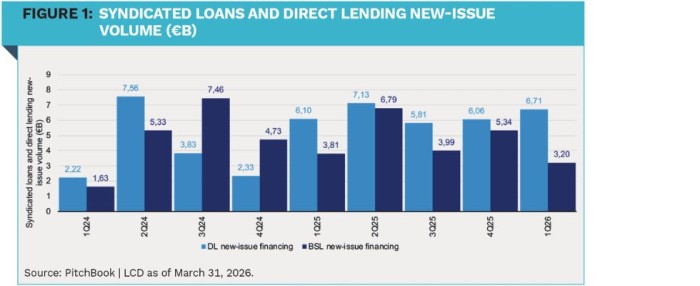
‘European private credit has become increasingly attractive to investors seeking enhanced yield, diversification, lower correlation to public markets, and floating-rate exposure that can help hedge inflation. Since the Global Financial Crisis, tighter banking regulation and higher capital requirements have reduced traditional bank lending capacity, creating a larger role for non-bank private credit providers. Additionally, banks are looking to partner direct lenders to increase their exposure to that market. Direct lending funds have raised significant dry powder and increasingly compete for larger borrowers, expanding the addressable market for private credit managers. Upper middle market companies are increasingly moving between direct lending and syndicated loan markets depending on pricing, speed, flexibility, and market conditions.’
Given that dynamic between direct lending and syndicated loans, where do you see the strongest relative value in the market today?
‘The European upper middle market is one of the most attractive areas within private credit because larger companies can often provide compelling riskadjusted returns. Larger borrowers typically possess stronger balance sheets, greater scale, and more stable operating profiles, yet spreads may remain comparable to those available from smaller companies. Direct lending opportunities within the upper middle market may provide an additional illiquidity premium of roughly 100-300 basis points over syndicated loans, creating an attractive return enhancement for investors willing to hold less-liquid assets. Moving down-market does not provide sufficient additional spread to justify the higher risk profile, making larger borrowers relatively attractive from a value perspective.’
Where do you see the greatest mismatch between market perception and underlying fundamentals?
‘The proliferation of private credit vehicles, particularly targeting the wealth and retail markets in the US, is not the same in Europe. Thus, issues around large exposures to technology/software and redemption queues are not plaguing European private credit funds. The European private credit markets exhibit different dynamics than the US market and shouldn’t be viewed in the same brushstroke. Larger upper middle market companies often provide spreads that are close to those available in smaller company lending while offering stronger balance sheets and potentially greater downside protection. As a result, investors may overestimate the benefits of moving into lower middle market lending and underestimate the attractive risk-adjusted characteristics available from larger, more established companies. The upper middle market is an area where fundamentals may be stronger than market perception implies.’
To what extent are geopolitical uncertainties influencing investment opportunities and relative value across the European private credit market?
‘Geopolitical uncertainties can create shifting dynamics as borrowers assess value across the broadly syndicated and directly originated markets. While uncertainty can lead to slower deal flow and/or higher spreads, we focus on companies that are less cyclically affected and exhibit durable cash flows across varying economic conditions. Relative value is influenced largely by issuance conditions in the syndicated loan market and the pricing differential between syndicated and direct lending solutions. For example, periods of weaker syndicated loan issuance can lead to wider spreads and increased direct lending activity, while stronger syndicated markets can encourage borrowers to shift toward syndicated financing.’
Why do you believe the European upper middle market currently offers the most compelling opportunities within private credit?
‘European upper middle market companies combine attractive yields with stronger business fundamentals, making them a compelling segment of the market. These borrowers are generally larger, more established, and better capitalized than smaller companies, which can result in more resilient cash flow profiles and stronger balance sheets. Investors may be able to achieve spreads that are comparable to lower middle market lending without taking proportionately greater credit risk. In addition, upper middle market companies regularly access both direct lending and syndicated markets, creating a broader opportunity set for investors and increasing flexibility in portfolio construction.’
The European upper middle market is one of the most attractive areas within private credit because larger companies can often provide compelling riskadjusted returns.
How do you approach allocating between direct lending and syndicated loans?
‘We take a combined approach that incorporates both direct lending and syndicated loans rather than treating the two markets as separate allocations. Direct lending can provide an illiquidity premium, execution certainty, and customised financing structures that many borrowers value. Syndicated loans offer liquidity, broader market access, active secondary trading, and flexible deployment opportunities. Because borrowers frequently move between these channels based on prevailing pricing and market conditions, limiting a strategy to only one market may reduce deployment opportunities and yield capture. A blended strategy aligns investors with actual borrower behaviour while allowing access to opportunities across both markets.’
Could you share a recent investment that illustrates your investment approach in the European upper middle market?
‘In May, we closed a deal for a global leader in engineered construction components. We sourced this deal through one of our many private equity relationships. The company has ~€75 million of EBITDA, with an attractive spread of 6.25% over Euribor. The deal is conservatively structured with under 4x leverage and approximately 50% loan-to-value.’
|
SUMMARY European upper middle market borrowers, generally those with robust cash flows, are increasingly financing themselves through the broadly syndicated loan (BSL) and direct lending (DL) markets. Lenders who offer both access points are well positioned to gain exposure to the strongest borrowers. A strategy that combines BSL and DL exposure can offer investors an efficient, flexible allocation within European private credit for enhanced yield and capital preservation. |
Read the full article in Financial Investigator magazine