
Bouwinvest: Care homes offer impact and stable returns
This article was originally written in Dutch. This is an English translation.
One of the greatest social challenges goes hand in hand with strong investment fundamentals: in care homes, social impact and stable returns come together naturally.
By Maya Savelkoul, Fund Manager, Bouwinvest
The Dutch housing market is under pressure. But the biggest challenge lies not just in the numbers. Underlying demand is changing and varies by category.
Housing for the elderly: more vibrant than ever
Growth is particularly evident in households comprising older people, especially those aged 75 and over. By 2040, more than a third of all households will consist of people aged 65 and over, with particularly strong growth in the 75+ age group. At the same time, the number of older people living alone is rising rapidly, with this growth concentrated mainly in urban areas.
Limited progress
This demographic trend calls for a different type of housing: single-storey, accessible, close to amenities and suitable for future care needs. However, the housing stock is not yet sufficiently adapted to this. More supply is needed.
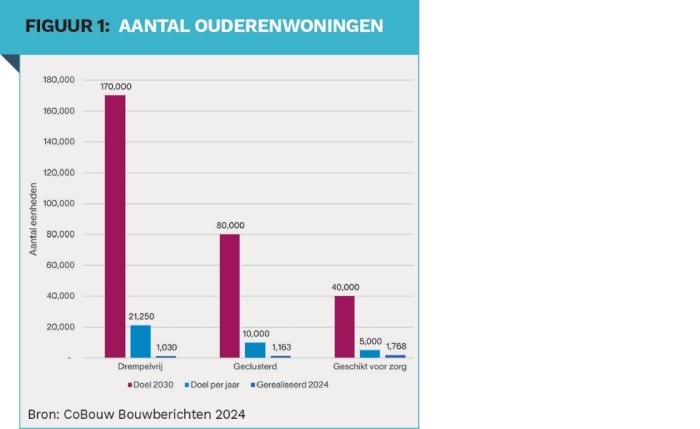
The construction of housing for the elderly is lagging far behind the targets. Whilst hundreds of thousands of additional lifetime homes will be needed by 2030, the annual increase remains limited. In 2024, only around 4,000 such homes were built.
From shortage to making an impact
It is precisely in this structural imbalance between supply and demand that Dutch institutional investors can make an impact. New care homes enable older people – often the supporters of institutional investors – to move to a home that better suits their stage of life and future care needs.
That effect extends beyond the individual resident. When a senior moves out, a standard home becomes available for a family or a first-time buyer. A single investment can thus set off a chain of moves and improve mobility in the housing market.
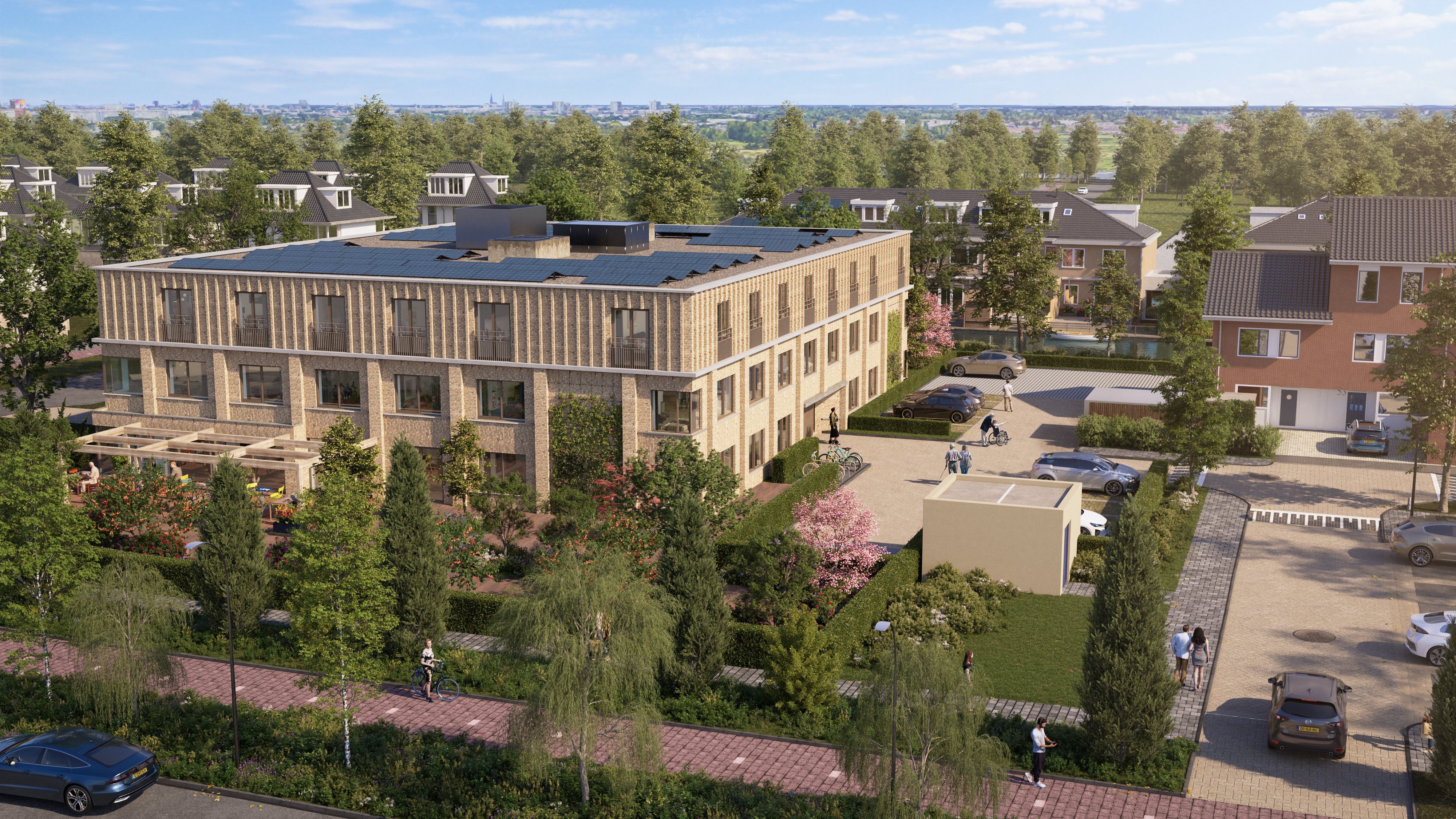
We see this, for example, in the first acquisition we made for our senior living impact fund, which targets institutional investors. This is the new-build project De Grote Lijster, a residential care complex with 42 apartments for seniors with intensive care needs, including dementia. The complex is being built to a high sustainability standard and has been let on a long-term basis to care operator Kloek Wonen met Zorg. This type of development adds targeted provision for a target group for whom suitable housing is scarce. At the same time, it enables people to move out of standard (care) homes.
Stable during a period of rising interest rates
Recent years have been characterised by rapidly rising interest rates and a broad repricing of property. In many segments, this led to clear yield shifts and pressure on values. Within the residential sector, the picture is more nuanced.
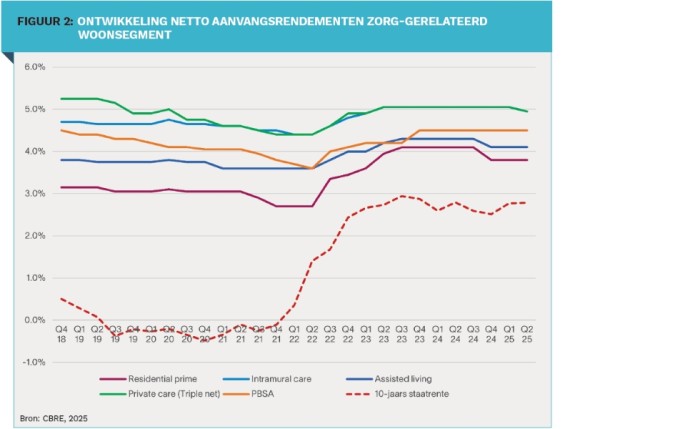
Care-related segments show a different pattern. Figure 2 shows that initial yields in private and residential care remained relatively stable, despite the rise in 10-year interest rates. This points to limited sensitivity to interest rate movements and strong underlying demand.
This stability is no coincidence. Demand for care homes is driven primarily by demographics and less by economic cycles. For example, residents do not postpone their housing needs when interest rates rise, and operators work on the basis of long-term contracts and predictable cash flows.
For institutional investors, this has fundamental implications. In an environment of geopolitical tensions and macroeconomic uncertainty, care property offers a relatively stable component within the portfolio. At the same time,
it is a sector where financial performance and social impact converge, precisely because the underlying demand is clear and structural.
|
Case study: scaling up senior housing in Soesterberg A recent example is the development of 104 assisted-living homes in Soesterberg. The project consists of self-contained apartments with communal facilities, aimed at older people who wish to live independently with care and support nearby. The concept combines autonomy, social interaction and light care, precisely the type of provision for which demand is growing most strongly. This type of development demonstrates how the targeted addition of senior housing contributes to both housing mobility and future-proof care. By offering older people a suitable alternative, standard housing becomes available whilst simultaneously reducing the pressure on more intensive care facilities. This project thus illustrates how investing in assisted living directly aligns with the structural trends we have defined1: an ageing population, a shortage of suitable housing, and the growing need for independent living with care nearby. 1 Bouwinvest Living Outlook |
|
SUMMARY An ageing population (particularly the increase in the 75+ age group) is driving demand for senior housing. Supply is lagging far behind and construction output is insufficient. Lifetime-proof homes are crucial for housing mobility. Investments create social impact and housing chains. Care property shows stable returns despite rising interest rates. Demand for senior housing is mainly driven by demographics and is less sensitive to economic cycles. Long-term contracts ensure predictable cash flows. Assisted living combines independence, care and social interaction. |
Read the full article in Financial Investigator magazine