US leads the way in ETF innovation (roundtable ‘New Developments in ETFs’ part 1)
US leads the way in ETF innovation (roundtable ‘New Developments in ETFs’ part 1)
This report was originally written in Dutch. This is an English translation.
In part 1 of the roundtable ‘New Developments in ETFs’, seven experts compare the European and American ETF markets. They discuss differences in regulation, investor profiles, product innovation and ESG, and explore why the US is ahead and where Europe can gain ground.
By Hans Amesz
This is part 1 of the report. You can read part 2 here, part 3 here, and part 4 here.
|
CHAIR: Philippe Roset, Independent Advisor
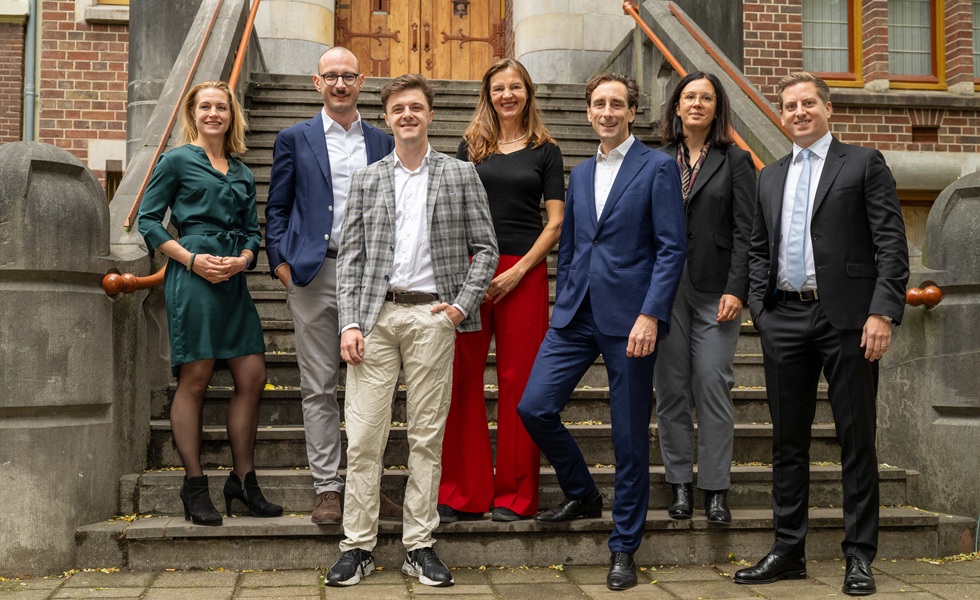
PARTICIPANTS: Effi Bialkowski, Van Lanschot Kempen Jolien Brouwer, Invesco Guido Hout, Index People Simon Hutcheson, Goldman Sachs Asset Management Sanela Kevric, Fidelity International Paul Linssen, InsingerGilissen Federico Sguazzini, JP Morgan Asset Management |
How does the European market differ from the American market?
Sanela Kevric: ‘In Europe, there are multiple markets, regulators and stock exchanges. In the United States, there is only one regulator and one stock exchange, which makes trading considerably easier. Regulation is also an important difference between the two markets. Demand for ETFs in the United States is so enormous because of the tax advantages associated with the ETF instrument.’
Jolien Brouwer: ‘In the United States, ETFs are not bound by UCITS rules. As a result, there is much more creativity in American ETFs. For example, there are long and short ETFs, or ETFs with a single share. It is a great market to get inspiration and see what works and what doesn't.’
Simon Hutcheson: ‘Thanks to a US ETF market rule introduced in 2019, traditional active managers can enter the ETF market in a much more streamlined way. Due to the favourable regulatory climate, the number of ETFs being launched in the United States is simply phenomenal.’
Effi Bialkowski: ‘There are many commission-free platforms in the US, which contributes to the fact that ETF investing by private individuals is much more widespread there than in Europe, where the development of commission-free platforms is still in its infancy.’
Guido Hout: ‘In the US, ESG policy is not being promoted under the current legislative agenda, but rather reversed. Investing in ESG ETFs is declining there, while in Europe there are two trends in the market: investors who demand a strict sustainability policy within ETFs and a group of investors who have invested in these stricter ESG ETFs but are now moving away from them because the tracking error relative to the benchmark is too large for them to accept.’
Why don't we see more managers using the dual share class model to issue both listed (ETF) and unlisted classes of the same fund? Isn't that the fastest route to market for newcomers?
Hutcheson: ‘It's either a question of how we can create more ETF share classes to enter the market with our existing successful investment fund strategies, or how we can convert investment funds into ETFs. At first glance, it seems like an absolute no-brainer, but behind the scenes there are three major challenges. One is taxation: Irish ETFs, for example, can have a significant tax advantage. Another problem is operational complexity. If you look at the differences between investment funds and ETFs in particular, ETFs are very efficient. From an operational point of view, it is quite a challenge to put them into the same investment instrument. Thirdly, there is the product strategy and how you think about positioning an ETF share class within an investment fund. If you have a successful track record in investment funds and you introduce an ETF share class, you generally want to do so at a lower price. In essence, you are then offering the same strategy at two potentially very different prices. The challenge is to ensure that you treat investors in the ETF share class and the investment fund fairly, so that the costs are borne equally by both investors.’
The United States is often at the forefront of trends in ETFs. What are the most important points to look out for?
Federico Sguazzini: ‘The American and European ETF markets differ significantly in terms of size and acceptance, but Europe is catching up. The majority of the European market consists of equity ETFs, but as in the United States, we are seeing a strong rise in fixed-income ETFs, alongside performance-oriented products such as income-generating ETFs. Another important point we can learn from America is that there is a great need for education, so that clients can properly understand what an active ETF is and how they can use it within their portfolio.’
Hout: ‘There is a difference in voting behaviour between American and European fund providers. This is because European fund houses are more ESG-focused, as their client base demands it. When we select sustainable funds, for example, we look at the voting behaviour of American and European funds and see differences in the extent to which they implement their ESG policy through voting behaviour and engagement.’
Kevric: ‘In the US, they are already much further ahead in terms of the acceptance of ETFs. This is mainly because in the US you have to manage your own money when it comes to your pension. The ETF instrument is very accessible and democratic there.’
Hutcheson: ‘In general, there is less friction and fragmentation in almost every area of the market in the US. There are significantly more private investors in ETFs (60% to 70%) than institutional investors, whereas in Europe it is exactly the opposite. Europe can change this by reducing some of the friction and fragmentation.’
|
Philippe Roset Philippe Roset is an expert in the field of ETFs. Since 2016, he has been responsible for SPDR ETFs' activities in Northern Europe. Prior to that, he worked for ETF Securities and iShares (BlackRock) in various positions, including in the areas of Capital Markets and Business Development. Roset started his career at the AFM and is a CFA Charterholder. He studied Law at Maastricht University. |

|
Effi Bialkowski Effi Bialkowski is an asset manager and investment fund specialist at Van Lanschot Kempen. She moved from Germany to the Netherlands at the age of 25 and started as a trainee at ABN AMRO. In 2000, she joined Staalbankiers as a private banker and later as an asset manager. Bialkowski has been working at Van Lanschot Kempen since the end of December 2016. |

|
Jolien Brouwer Jolien Brouwer is Sales Manager ETFs and Funds at Invesco and responsible for customer relations with banks, asset managers and financial advisers in the Benelux. She has over ten years of experience in the financial sector, including at VanEck. With her experience and enthusiasm, she makes investment solutions accessible to a wide audience. |

|
Guido Hout Guido Hout is an institutional asset manager at Index People Asset Management. In this role, he is responsible for optimising portfolios for both corporate and private clients. Hout graduated from Erasmus University Rotterdam with a degree in Finance & Investments and is currently a CFA candidate. |

|
Simon Hutcheson Simon Hutcheson joined Goldman Sachs Asset Management in 2024 as Head of International ETF Strategy & Development. Prior to that, he was Head of Product for SPDR ETF activities at State Street Investment Management for EMEA and APAC. He previously worked at Citi and Deutsche Bank. He graduated with a degree in Economics from the University of Southampton in 2006. He is also a CFA Charterholder. |

|
Sanela Kevric Sanela Kevric is Head of Sales Benelux at Fidelity International and Authorised Manager of FIL Luxembourg S.A. She joined Fidelity in November 2015. Prior to this, Kevric worked at Petercam Institutional Asset Management as Country Head Luxembourg and at Candriam/BIL as Portfolio Manager. Kevric holds two master's degrees in Business Administration and Finance and Accounting. |

|
Paul Linssen Paul Linssen is an experienced investment professional at InsingerGilissen (part of Quintet Group). As Head of Fund Selection at Quintet, he selects passive and active funds for the management and advisory portfolios, both for Insinger Gilissen and the other Quintet branches. He plays an important role in designing and implementing various propositions for the bank and provides support to private bankers and clients. |

|
Federico Sguazzini Federico Sguazzini is Executive Director and Strategist in the Product Strategy EMEA team at J.P. Morgan Asset Management, specialising in active ETFs and sustainable investing. He supports the strategic agenda with market analysis and shapes the global product platform. He joined J.P. Morgan in 2013 and has been a member of the Global Product Strategy and Development team since 2016. Sguazzini holds a Master's degree in Finance from Bocconi University. |

Attachments
Share this post!
Related posts
-
 Read more about "Fidelity: European professional investors set to increase active ETF allocations"
Fidelity: European professional investors set to increase active ETF allocations
-
Read more about "Invesco: Forse instroom in ETF’s, sterk herstel van goud"
Invesco: Forse instroom in ETF’s, sterk herstel van goud
-
 Read more about "Nickel: Crypto ETFs are normalising digital assets as flows increase"
Nickel: Crypto ETFs are normalising digital assets as flows increase
-
Read more about "Fidelity: ETF-instroom blijft hoog, Europese aandelen zetten herstel voort"
Fidelity: ETF-instroom blijft hoog, Europese aandelen zetten herstel voort
-
Read more about "Fidelity: Equities lead the way as ETF flows hit a new high in July"
Fidelity: Equities lead the way as ETF flows hit a new high in July
-
 Read more about "BlackRock: ETP’s kenden in juli een recordinstroom"
BlackRock: ETP’s kenden in juli een recordinstroom
-
 Read more about "Schroders: Actieve ETF’s zijn niet langer alleen een goedkoop alternatief"
Schroders: Actieve ETF’s zijn niet langer alleen een goedkoop alternatief
-
Read more about "Fidelity: ETF-adoptie groeit in Europa, maar verschillen tussen landen blijven groot"
Fidelity: ETF-adoptie groeit in Europa, maar verschillen tussen landen blijven groot
-
 Read more about "LFDE: Het gevaar van hefboom-ETF’s"
LFDE: Het gevaar van hefboom-ETF’s
-
 Read more about "Fidelity: Beleggers keren terug naar Amerikaanse aandelen, actieve ETF's winnen verder terrein"
Fidelity: Beleggers keren terug naar Amerikaanse aandelen, actieve ETF's winnen verder terrein