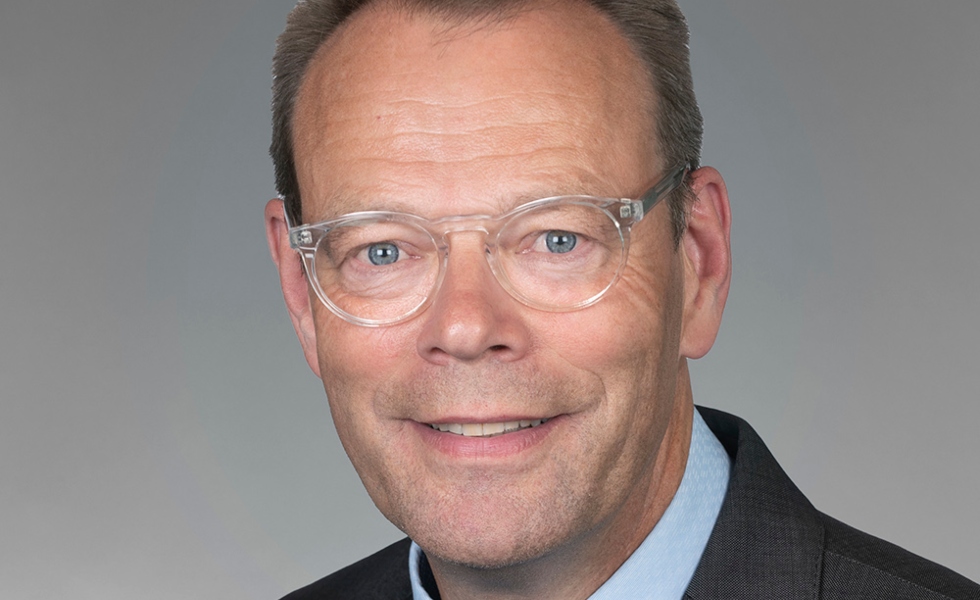
Dick Kamp: A new risk advisory model for the pension sector is not a luxury, but a necessity
Dick Kamp: A new risk advisory model for the pension sector is not a luxury, but a necessity
This column was originally written in Dutch. This is an English translation.
By Dick Kamp, Director Pension, Investment and Risk, Milliman Pensioenen
The pension sector stands at a critical crossroads. Demographic shifts, climate change, technological revolutions, and evolving member expectations are creating a perfect storm that is putting traditional advisory models under pressure. The current fragmented approach to risk management is no longer adequate for the complex challenges ahead. Pension funds that cling to outdated advisory structures risk falling behind in a rapidly changing world, while frontrunners that invest now in integrated expertise can build a significant competitive advantage.
The transformation towards a new advisory model is not a luxury but a necessity — not only for the continued viability of the pension sector, but above all for safeguarding the financial security of millions of members in an uncertain future. This column outlines how the pension ecosystem and the role of advisers are likely to evolve towards 2040, and which steps boards and advisers must take now to navigate this transition successfully.
From specialist to integrated risk adviser
At present, advisers largely operate within clearly delineated areas of expertise: demographic risks, investment risks, administrative organisation, communication and IT. Collaboration between these disciplines is limited, while the challenges of the future call precisely for an integrated approach.
Similar shifts can already be observed in other sectors, such as multidisciplinary teams in healthcare[1], fintech in the financial sector[2], and construction teams in the building industry[3]. The adviser is evolving into a T-shaped professional[4], and collaboration is increasingly organised according to the hub-and-spoke model[5].
The future risk adviser transcends these boundaries. As a T-shaped professional, they combine deep expertise in one discipline with solid foundational knowledge of adjacent fields. This enables advisers to approach complex issues from multiple perspectives and to collaborate effectively within multidisciplinary teams.
New value propositions for pension funds through technology
The value proposition of the pension sector will continue to evolve, building on the foundations laid by the Future Pensions Act. Societal demands relating to the integration of housing, care, income and wealth planning will be translated into new products and services, including those offered by pension funds.
Technological developments, particularly AI, make this transformation possible. They create opportunities for:
- Personalised services: combining collective arrangements with tailored individual solutions;
- Proactive governance: moving from reactive to forward-looking risk management;
- An integrated risk approach: bringing together financial, climate and behavioural risks within a single model.
Strengthening governance
Technological developments also strengthen pension fund governance. Whereas boards currently often steer reactively on the basis of backward-looking reports, by 2040 they can — and must — be continuously and proactively in control.
Advanced IT applications and stochastic scenario models enable boards to:
- Monitor risks on a continuous basis;
- Analyse the impact of decisions immediately;
- Intervene at an early stage when deviations arise;
- Make informed decisions based on predictive analyses.
New forms of collaboration
To realise these developments, new forms of collaboration are emerging both among advisers themselves and between advisers and pension funds:
- Hub-and-spoke networks: strategic advisers acting as central coordinators who manage specialised partners;
- Dynamic consortia: temporary partnerships focused on specific innovations;
- Platform ecosystems: digital marketplaces for modular advisory services;
- Knowledge communities: open networks aimed at joint innovation.
These collaboration models break through traditional organisational boundaries and enable the flexible deployment of expertise.
Continuous development of expertise
The new value propositions and governance systems require expertise that is currently still limited, such as:
- The application of behavioural sciences and AI;
- The integration of climate, ESG and other financial risks;
- The development of advanced scenario models.
This expertise will evolve through working on concrete issues. Continuous development becomes the norm, with enduring roles for coordinators, architects, researchers and practitioners.
What advisers need to learn
The adviser of 2040 will require a broader skill set in order to operate effectively:
- Understanding data and AI: the ability to translate data-driven insights into strategic advice;
- Systems thinking: understanding complex interdependencies within the pension ecosystem;
- Scenario planning: developing robust strategies for a range of future scenarios;
- Behavioural insight: integrating knowledge of decision-making and member behaviour;
- Communication: translating complex material into clear and actionable perspectives;
- Technological insight: leveraging new technologies for innovative solutions;
- Collaboration with other professions: operating effectively in multidisciplinary teams by combining T-shaped expertise with communication and networking skills.
The strength of future advisory teams lies in complementarity — combining different areas of expertise within multidisciplinary collaborations.
What does this mean for actuaries?
For actuaries, this development entails a fundamental change in role. They evolve from technical specialists into strategic risk advisers who:
- Work in multidisciplinary teams with data scientists, climate experts and behavioural economists;
- Translate complex model outputs into actionable guidance for boards;
- Integrate emerging risks such as climate change and cyber threats into their risk models;
- Contribute to the design of personalised pension solutions within collective frameworks;
- Safeguard the integrity and ethics of AI models.
Certifying actuaries will shift their focus from validating calculations towards, among other things, ensuring the integrity and ethical application of AI models.
The way forward
These developments offer opportunities to elevate the pension sector:
- Members experience genuine added value through services aligned with their integrated needs;
- Pension funds gain improved tools for risk management;
- The sector as a whole strengthens its societal contribution.
For risk advisers, this implies a redefinition of their role. They become strategic partners who not only provide technical expertise, but also help navigate complex change.
For pension fund boards, the challenge lies in deploying their advisers differently: not as suppliers of isolated advice, but as (strategic) partners in a shared journey of exploration towards the future.
The only constant in this process is continuous development. Those who invest now in broad expertise, advisers with strategic insight and flexible collaboration contribute to building a future-proof pension ecosystem ready for 2040.
This is a column in a series on risk management. The aim of the series is to stimulate readers to view risk management as an integral part of running a pension fund.
[1] In healthcare, professionals such as doctors, nurses and therapists work together in multidisciplinary teams centred around the patient. This results in a more integrated and efficient approach to care delivery.
[2] Fintech companies combine technology, data analytics and customer-centric thinking to develop new financial services. Open banking encourages collaboration between banks and external parties through shared digital infrastructure.
[3] In the construction sector, project teams are formed in which contractors, architects and installers are jointly responsible for both the design and execution of projects. This promotes collaboration and innovation.
[4] A T-shaped professional is someone with deep knowledge and experience in one specific field (the vertical bar of the “T”), combined with broad skills and understanding that enable effective collaboration with specialists from other disciplines (the horizontal bar of the “T”).
[5] The hub-and-spoke model is a form of collaboration in which a single central party (the “hub”) acts as a coordination point and connects with multiple parties (the “spokes”) that provide specific expertise or services.